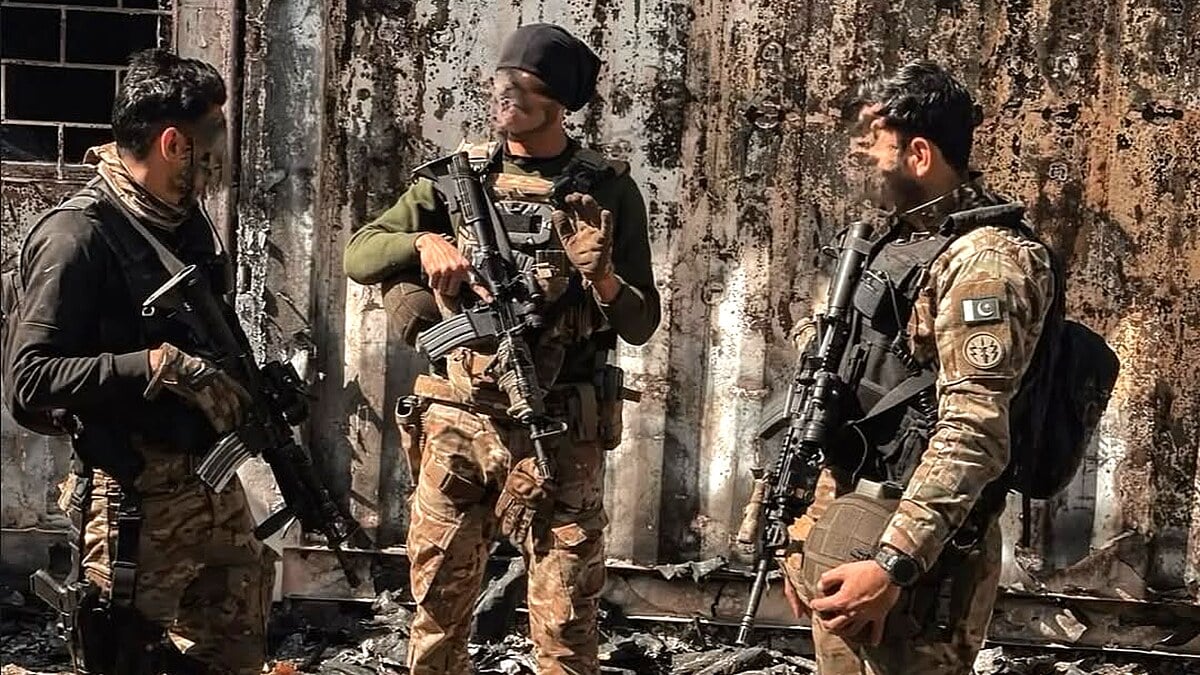




(Pakistan Conducts Border Strikes Inside Afghanistan Against TTP Terrorist Hideouts)
Afghanistan
ISLAMABAD: Pakistan has carried out precision strikes on terrorist hideouts along its border with Afghanistan, killing 26 militants linked to the banned Tehreek-e-Taliban Pakistan (TTP), which officials refer to as Fitna-al-Khawarij, Information Minister Attaullah Tarar announced on Wednesday.
The operation came in the aftermath of recent terrorist attacks inside Pakistan that security officials say were planned and coordinated from sanctuaries located across the border region. According to Tarar, the strikes targeted hideouts and safe havens used by militant commanders, planners and facilitators involved in attacks against Pakistani security forces and civilians.
“In the aftermath of recent terrorist incidents in Pakistan, precise and calibrated strikes were carried out along Pakistan-Afghanistan border areas on hideouts and safe havens of masterminds and planners belonging to Fitna-al-Khawarij,” the minister said in a statement posted on social media.
He added that 26 “India-sponsored khawarij” were killed during the operation, describing the action as a targeted response against militant infrastructure threatening Pakistan’s national security.
Security officials said the strikes were carefully planned to hit identified militant positions while minimizing the risk of collateral damage. The operation was reportedly based on intelligence gathered over several weeks regarding the movement of senior militant figures operating near the border.
Pakistan has witnessed a sharp rise in terrorist violence since the collapse of the ceasefire between the TTP and the government in late 2022. Data released by independent security monitoring organizations indicate that militant attacks surged across Khyber Pakhtunkhwa and Balochistan during 2024 and 2025, with hundreds of security personnel and civilians killed in suicide bombings, ambushes and targeted assaults.
The latest operation follows a series of attacks on military convoys, police checkpoints and security installations in border districts. Officials have repeatedly argued that militant groups continue to exploit rugged frontier regions to organize and launch cross-border attacks.
Pakistan and Afghanistan share a border stretching approximately 2,640 kilometres, much of it running through mountainous terrain that has historically posed security challenges for both countries. Islamabad has invested heavily in border fencing, surveillance systems and troop deployments over recent years to curb infiltration.
Military analysts noted that precision strikes across border regions represent a continuation of Pakistan’s broader counterterrorism strategy aimed at dismantling militant command structures before attacks can be executed inside the country.
The government has consistently maintained that terrorist organizations operating against Pakistan receive logistical support, funding and safe havens from external actors. Tarar’s statement again linked the militants to Indian sponsorship, a claim that New Delhi has repeatedly denied in the past.
No immediate response was issued by Afghan authorities regarding the reported strikes. However, border security and counterterrorism cooperation remain among the most sensitive issues in relations between Islamabad and Kabul.
Pakistan has repeatedly urged Afghan authorities to prevent militant groups from using Afghan territory for attacks against neighboring countries. Afghan officials, meanwhile, have often rejected accusations that their territory is being used to launch operations against Pakistan.
The latest action comes at a time when Pakistan is intensifying nationwide counterterrorism efforts. Security forces have conducted thousands of intelligence-based operations over the past year targeting militant networks, facilitators and weapons caches across multiple provinces.
Officials say these operations have resulted in the elimination of numerous high-value targets and the recovery of significant quantities of explosives, ammunition and communication equipment used by extremist organizations.
Security experts believe the border strikes could have broader implications for regional security dynamics. The operation signals Islamabad’s willingness to act against what it describes as immediate cross-border threats while increasing pressure on militant networks attempting to reorganize in frontier areas.
The development may also influence future diplomatic engagement between Pakistan and Afghanistan, particularly on issues related to border management, intelligence sharing and counterterrorism cooperation.
With militant violence remaining one of Pakistan’s most pressing security challenges, authorities are expected to continue intelligence-driven operations and strengthen surveillance along vulnerable sections of the border in the coming months.