



(Gulf State Requests Pakistan Air Force Pilot Training Program
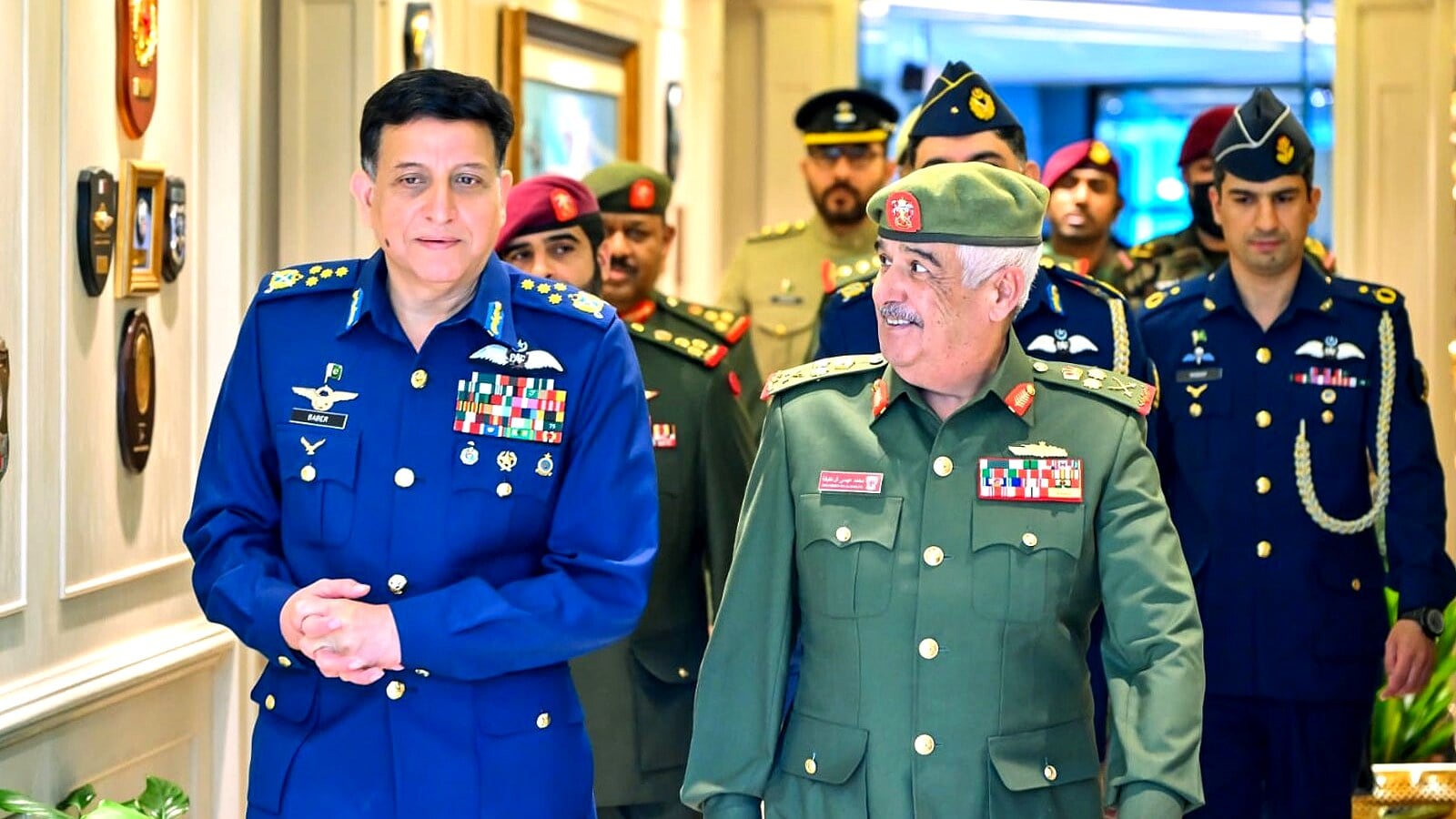
ISLAMABAD: Bahrain has formally requested the Pakistan Air Force (PAF) to provide comprehensive training for its pilots and aviation personnel.
The request was conveyed by Bahrain’s Chief of Defence Staff Lt Gen Thiab Saqer Abdulla Al-Nuaimi during high-level meetings in Islamabad. It focuses on joint training programs across multiple levels, including fighter conversion, multi-domain operations, and engineering support.
PAF officials confirmed the development following meetings with senior Bahraini defence leadership. The initiative aims to enhance the operational readiness of the Royal Bahraini Air Force (RBAF) through knowledge transfer from Pakistan’s experienced training ecosystem.
Air Chief Marshal highlighted PAF’s modernisation efforts, infrastructure upgrades, and revamped training methodologies during discussions. These address contemporary warfare challenges in space, cyber, and electronic domains.
Bahrain’s interest stems from PAF’s proven track record in multi-domain operations and pilot training. The PAF trains approximately 50 pilots annually through rigorous programs with a success rate that selects only the top candidates after extensive screening.
The Royal Bahraini Air Force operates around 1,500 personnel and maintains a fleet of approximately 127-136 aircraft, including F-16C/D variants and newer F-16 Block 70 platforms. It seeks to build capacity in advanced fighter operations and support functions.
This request builds on longstanding defence ties. Pakistan and Bahrain signed a military cooperation agreement in 2018, which has facilitated regular high-level exchanges and joint exercises.
Bahraini commanders have previously visited PAF headquarters to explore collaboration in basic to tactical level training, particularly in emerging domains. PAF contingents have also participated in regional airshows and multinational drills involving Bahraini forces.
Bilateral trade between the two countries has grown, ranging between $500 million and $1 billion in recent years. Defence cooperation forms a key pillar alongside economic ties in sectors like manpower, construction, and services.
**Official Statements**
The Inter-Services Public Relations (ISPR) and PAF statements described the meetings as productive. Both sides reaffirmed commitment to sustained defence cooperation with emphasis on joint training and aviation industry collaboration.
Lt Gen Al-Nuaimi expressed keen interest in PAF’s methodology for multi-domain warfare. He conveyed Bahrain’s desire for deeper insight to augment RBAF operational readiness.
PAF leadership reiterated its resolve to strengthen military-to-military ties. Instructors from friendly nations, including those from the Gulf, have historically benefited from PAF programs at facilities like Risalpur.
**Key Data and Figures**
PAF maintains over 70,000 active-duty personnel and operates a diverse fleet including F-16s, JF-17s, and advanced trainers such as K-8P and Super Mushshak. Its Combat Commanders’ School in Sargodha is recognised for high-standard tactics and weapons training.
Training programs typically span several months with structured phases: initial flying at the Flight Cadets Wing, operational conversion, and advanced tactics. Attrition rates in early stages remain selective, ensuring quality output.
For Bahrain, the partnership could support integration of its F-16 fleet, which includes recent Block 70 deliveries. The RBAF has expanded its capabilities significantly in recent years through acquisitions from the United States and other partners.
**Background Context**
Pakistan has a history of training pilots from allied nations across the Middle East and beyond. This includes participation in exercises like Spears of Victory in Saudi Arabia, which also involved Bahraini elements.
Defence relations with Bahrain date back decades, supported by people-to-people ties and Pakistan’s contributions to regional security. Pakistani forces have served in various Gulf capacities, fostering trust and interoperability.
The current request aligns with broader Gulf interest in diversifying security partnerships amid evolving regional dynamics.
**Reactions and Impact**
The development has been welcomed in defence circles as a sign of growing confidence in Pakistani military expertise. It is expected to strengthen bilateral defence industry links, potentially including maintenance, repair, and overhaul (MRO) cooperation.
Market observers note potential positive implications for Pakistan’s defence exports and training services revenue. It also reinforces Pakistan’s role as a reliable security partner in the Gulf.
Regional analysts view this as part of wider efforts by smaller Gulf air forces to enhance capabilities through proven training providers like the PAF.
**Strategic Angle**
This training arrangement could mark an expansion of Pakistan-Bahrain defence cooperation into more structured, long-term capacity building. It may involve deployment of PAF instructors to Bahrain or expanded programs in Pakistan, covering fighter conversion, electronic warfare, and multi-domain integration.
Future phases might include joint exercises, technology sharing, and engineer training. Success could open avenues for similar arrangements with other regional partners.
The initiative comes at a time of increasing focus on air power modernisation across the Gulf. For Pakistan, it underscores the strategic value of its human capital and training infrastructure in foreign policy and economic diversification.
Details on the exact scale, timeline, and financial aspects of the program are expected to be finalised in follow-up negotiations. Both sides have indicated continued high-level engagement to advance the proposal.