



(Trump Reportedly Transferred $3 Billion to Iran Via UAE For Stopping Missiles Attack on Israel )
Stop Missile Attack On Israel
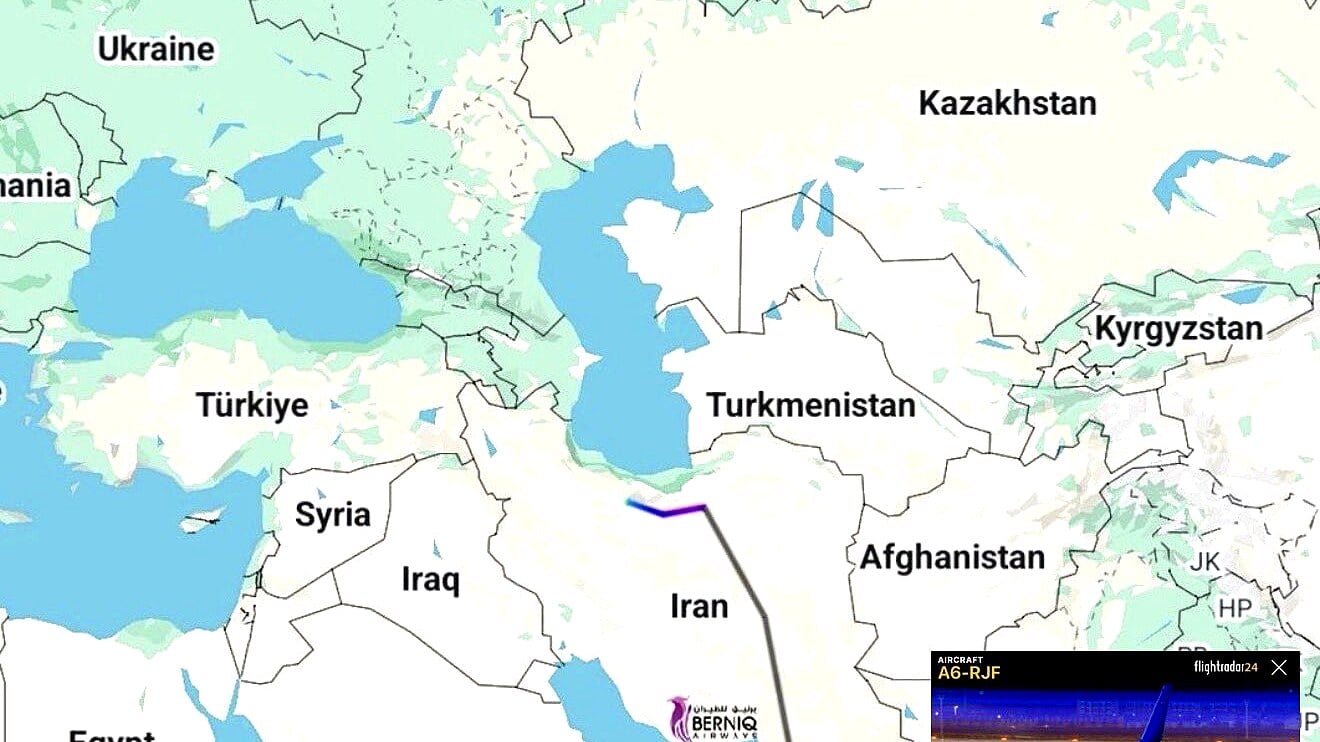
ISLAMABAD: A private Boeing 737 operated by UAE’s Royal Jet flew from Abu Dhabi to Tehran’s Mehrabad Airport on June 8, according to flight tracking data and multiple regional reports. Israeli outlet KAN News, citing an Iranian-linked network, claimed the aircraft carried $3 billion in funds as part of an arrangement to de-escalate direct attacks between Iran and Israel.
The flight occurred during a period of heightened regional tensions following exchanges between Iran, Israel, and the United States.
Iranian sources reported the presence of a UAE delegation in Tehran for high-level discussions. The aircraft, registered A6-RJF, completed a short visit before returning to Abu Dhabi. Open-source flight data confirms the operation took place while parts of Iranian airspace faced restrictions.
However, the $3 billion transfer claim remains unverified. No independent confirmation has emerged from UAE, US, Qatari, or Israeli officials. KAN News attributed the information to an Iranian-linked outlet without providing documentary evidence of the funds.
**Official Context and Statements**
The reported flight coincides with indirect diplomatic messaging. According to the claims, Iran agreed to halt direct attacks on Israel following a US message delivered through Qatar. The understanding reportedly included Israel refraining from further strikes in Lebanon.
US President Donald Trump has publicly stated that any significant asset releases to Iran would require a comprehensive ceasefire and verifiable changes in Iranian behaviour. No official US comment has addressed the specific $3 billion allegation.
UAE officials have not commented on the delegation’s visit or any financial arrangements. Iranian state media has highlighted recent diplomatic engagements but stopped short of confirming cash transfers.
**Key Details of the Flight**
The Boeing 737 Business Jet variant, operated by Abu Dhabi-based Royal Jet, is typically used for VIP government transport. Flight tracking showed the aircraft’s arrival in Tehran for approximately one hour before departure. The timing aligned with reported UAE delegation meetings with senior Iranian officials.
This movement occurred against the backdrop of a fragile April 8 ceasefire brokered with Pakistani mediation efforts between the US and Iran. That pause followed initial strikes beginning February 28 and subsequent retaliatory actions.
**Background on Regional Tensions**
Iran-UAE relations have experienced periods of cooperation and strain. Bilateral trade reached significant volumes in recent years, with the UAE hosting a large Iranian expatriate community estimated in the hundreds of thousands. However, the recent conflict saw Iranian missiles and drones target Gulf positions, including reported strikes affecting the UAE.
Israel and the UAE have strengthened practical cooperation, including reported defence collaboration such as deployment of Iron Dome systems to the UAE. Trade and people-to-people ties have grown since the Abraham Accords, even amid broader regional volatility.
Lebanon remains a critical flashpoint. Israeli operations against Hezbollah targets have drawn Iranian concern, with Tehran viewing attacks on its allies as linked to its own security.
**Economic and Diplomatic Figures**
The claimed $3 billion figure, if verified, would represent a notable financial movement. For context, past US-Iran sanctions relief discussions involved larger frozen asset releases, though current US policy under Trump has maintained strict conditions. UAE-Iran non-oil trade has hovered in the billions annually in stable periods.
Regional oil markets reacted to de-escalation signals, with prices showing volatility amid uncertainty over Strait of Hormuz stability. Analysts estimate that full resumption of calm could support Gulf export flows critical to global energy security.
Pakistan, which maintains balanced relations with Saudi Arabia, UAE, Iran, and China, has positioned itself as a potential mediator in such crises, leveraging its geography and diplomatic channels.
**Reactions and Market Implications**
Gulf markets monitored the reports closely. UAE stock indices and energy futures showed measured movements as investors weighed de-escalation prospects against verification gaps.
Public reactions in Pakistan and across South Asia reflected concern over spillover effects on energy prices and remittance flows from Gulf countries, where millions of Pakistani workers are employed. Official circles in Islamabad emphasised the need for dialogue and restraint.
No immediate casualty figures were linked to the latest diplomatic moves, though earlier phases of the conflict produced significant losses on multiple fronts, including infrastructure damage estimated in billions