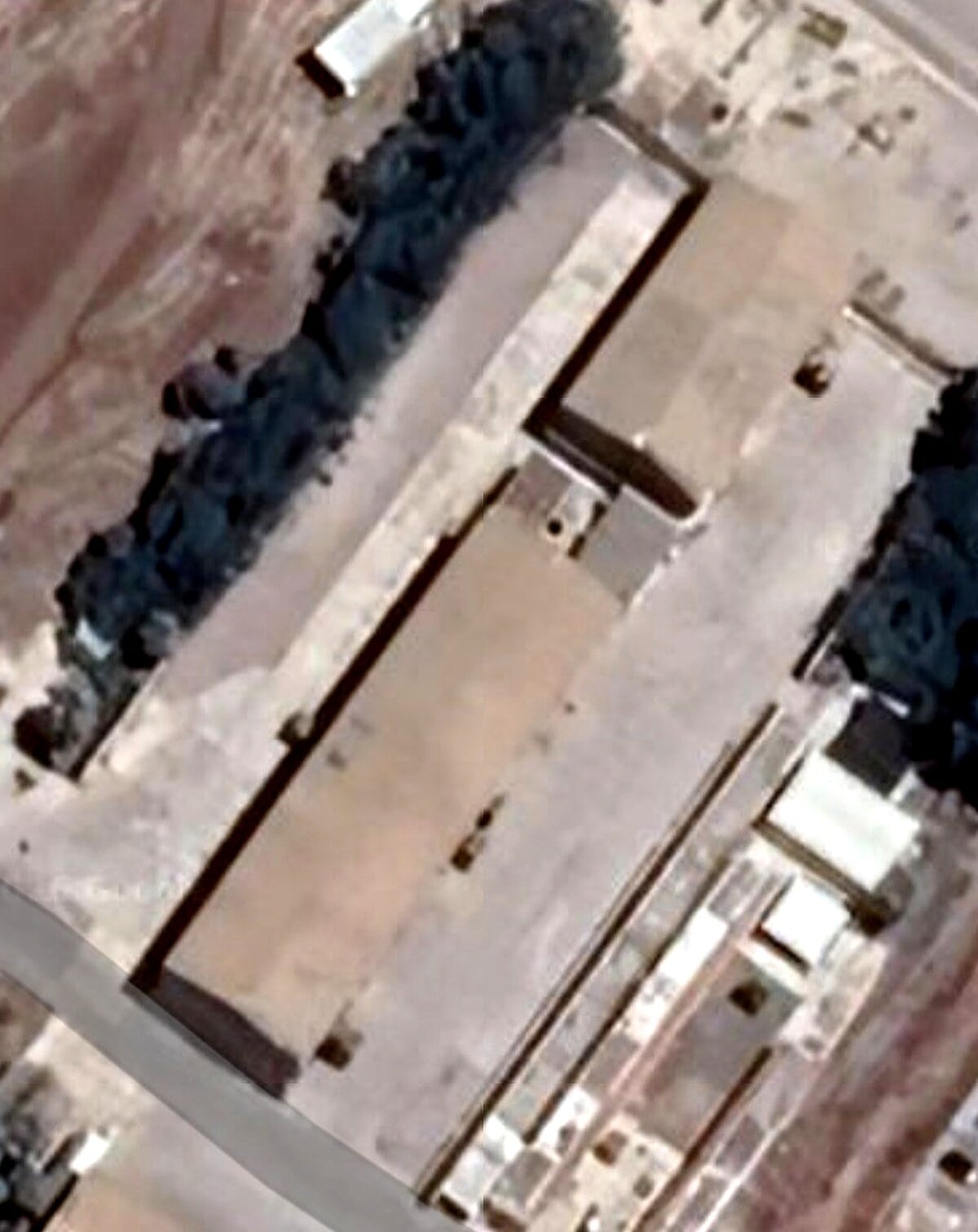




ISLAMABAD: Iran’s Islamic Revolutionary Guard Corps (IRGC) Aerospace Force launched ballistic missiles targeting Ramat David Airbase in northern Israel on June 7, 2026.
The IRGC described the strike as a direct response to recent Israeli attacks on Hezbollah positions in southern Lebanon and Beirut’s southern suburbs, which reportedly killed civilians and displaced populations.
Ramat David, located approximately 20 kilometres southeast of Haifa, serves as one of the Israeli Air and Space Force’s key operational bases. It has hosted fighter jet missions in multiple regional conflicts.
Israeli defence systems, including Arrow, David’s Sling, and Iron Dome, intercepted all incoming missiles, according to the Israel Defense Forces (IDF). No immediate casualties were reported at the base.
Newly analysed Sentinel-2 satellite imagery has since indicated possible damage to at least two structures within the airbase. One area appears linked to support vehicles and equipment, while the second may have served as a refuelling and maintenance point for fighter jets.
Higher-resolution imagery is expected to provide clearer assessment of the impact and the exact functions of the affected buildings.
The IRGC stated the operation served as a warning. It warned that further Israeli aggression would trigger broader responses targeting American-Israeli assets across the region.
This latest exchange occurs against the backdrop of the ongoing 2026 Iran conflict, which escalated in late February with major US and Israeli strikes under Operations Epic Fury and Roaring Lion. Those operations targeted Iranian military infrastructure, missile sites, and leadership.
Pakistan has maintained a position calling for de-escalation and respect for sovereignty in the Middle East. Islamabad has repeatedly urged dialogue to prevent wider regional instability affecting Muslim nations and global energy routes.
Ramat David Airbase has faced repeated targeting claims during recent rounds of conflict. Its strategic location supports operations across northern fronts.
Analysts note that while Israeli interceptors demonstrated high effectiveness, the satellite imagery revelations highlight vulnerabilities in forward bases even under layered defences. The base plays a significant role in Israel’s air power projection.
Regional reactions remain cautious. Several Arab states and Pakistan have expressed concern over the cycle of retaliation that risks drawing in more actors and disrupting fragile ceasefires.
Diplomatic efforts led by the United States continue to push for truce adherence across fronts, including Lebanon. However, mutual accusations of violations persist.
The incident underscores the persistent missile threat in the region. Iran has demonstrated capability to launch salvos exceeding ten ballistic missiles in single operations, testing Israeli multi-layered air defence networks.
For Pakistan, developments carry indirect implications through energy security, expatriate communities in the Gulf, and broader Islamic world stability. Officials in Islamabad continue to monitor the situation closely while advocating restraint.
Future trajectories remain uncertain. Israeli officials have vowed a forceful response to any confirmed breaches, while Iran has conditioned restraint on cessation of attacks on its allies.
Further satellite analysis and official briefings are anticipated in coming days as both sides assess operational outcomes and strategic next steps.