



Pakistan To Launch Further Advanced Tests of Hypersonic Missiles in Coming Days
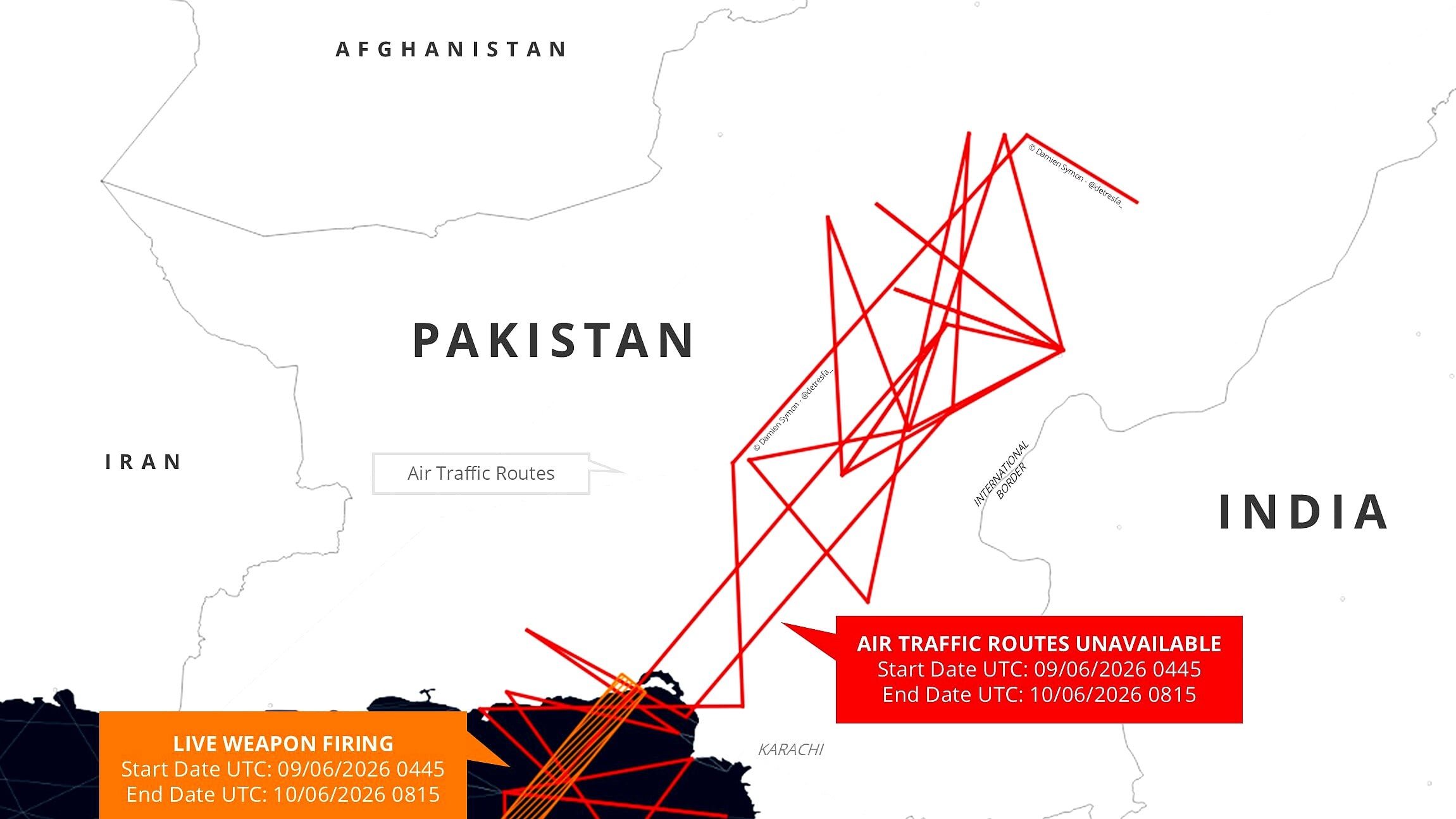
ISLAMABAD: Pakistan has issued a new set of notifications restricting multiple aviation corridors across southern and central parts of the country ahead of an upcoming missile test scheduled for 09-10 June 2026.
The Pakistan Civil Aviation Authority (CAA) released the relevant Notices to Airmen (NOTAMs) detailing temporary unavailability of specific air traffic service routes during designated hours.
The restrictions primarily affect low-altitude corridors over Sindh, southern Punjab, and parts of Balochistan. They are expected to impact both domestic and international flight operations transiting the affected zones.
Military sources familiar with the matter confirmed the activity relates to routine validation of strategic missile systems. No official details on the specific missile type have been publicly disclosed.
Inter-Services Public Relations (ISPR) typically issues statements closer to or after such tests. Officials described the measures as standard safety protocols for live-fire exercises and weapons testing.
The NOTAMs specify closures affecting routes from ground level up to certain altitudes, commonly between 10,000 feet, aligning with profiles for cruise missile or tactical system testing.
Pakistan maintains a policy of pre-notification for missile tests under bilateral agreements with India, though full public details remain limited for security reasons.
This latest round of restrictions follows a pattern observed in previous tests. In recent years, Pakistan has conducted multiple successful trials of systems including the Shaheen-III ballistic missile with a reported range of 2,750 kilometres and the Ababeel missile featuring MIRV capability with a 2,200-kilometre range.
The current activity is concentrated in southern and central regions, areas frequently used for testing due to their proximity to coastal and desert firing ranges.
Aviation authorities have advised airlines to reroute flights or adjust schedules accordingly. Industry sources report minimal long-term disruption expected as similar exercises occur periodically.
The test comes amid ongoing regional security dynamics. Pakistan continues to modernise its missile inventory as part of its credible minimum deterrence posture.
Key economic and strategic assets in the affected zones, including major air routes linking Karachi to northern cities and international corridors towards the Gulf, are under temporary restrictions.
Defence analysts note that such tests serve both technical validation and signalling purposes. They demonstrate operational readiness without escalating tensions unnecessarily.
Pakistan’s missile programme includes a mix of solid and liquid-fuelled systems capable of delivering conventional and strategic payloads. Recent developments have focused on improving accuracy, mobility, and multiple independently targetable re-entry vehicle technology.
Official statements have consistently emphasised that all activities remain within Pakistan’s sovereign territory and defensive framework.
Market reactions remain measured so far. Aviation stocks and related sectors show no significant immediate volatility, reflecting the routine nature of these notifications.
Regional observers monitor these developments closely. India and other neighbours receive advance information as per existing confidence-building measures.
The two-day window on 09-10 June allows for comprehensive testing windows while minimising prolonged impact on civilian aviation.
Broader implications include continued investment in indigenous defence capabilities. Pakistan allocates substantial portions of its defence budget to strategic programmes, though exact figures for individual tests remain classified.
Future developments may include additional tests as part of annual training cycles. Analysts expect steady progress in extending range and enhancing precision guidance systems.
The Pakistan military maintains a high state of operational preparedness. Such exercises contribute to both deterrence and technological refinement.
Questions remain on potential integration of new technologies or further range extensions in upcoming programmes. The coming days will provide more clarity once the test window concludes and official outcomes are shared.