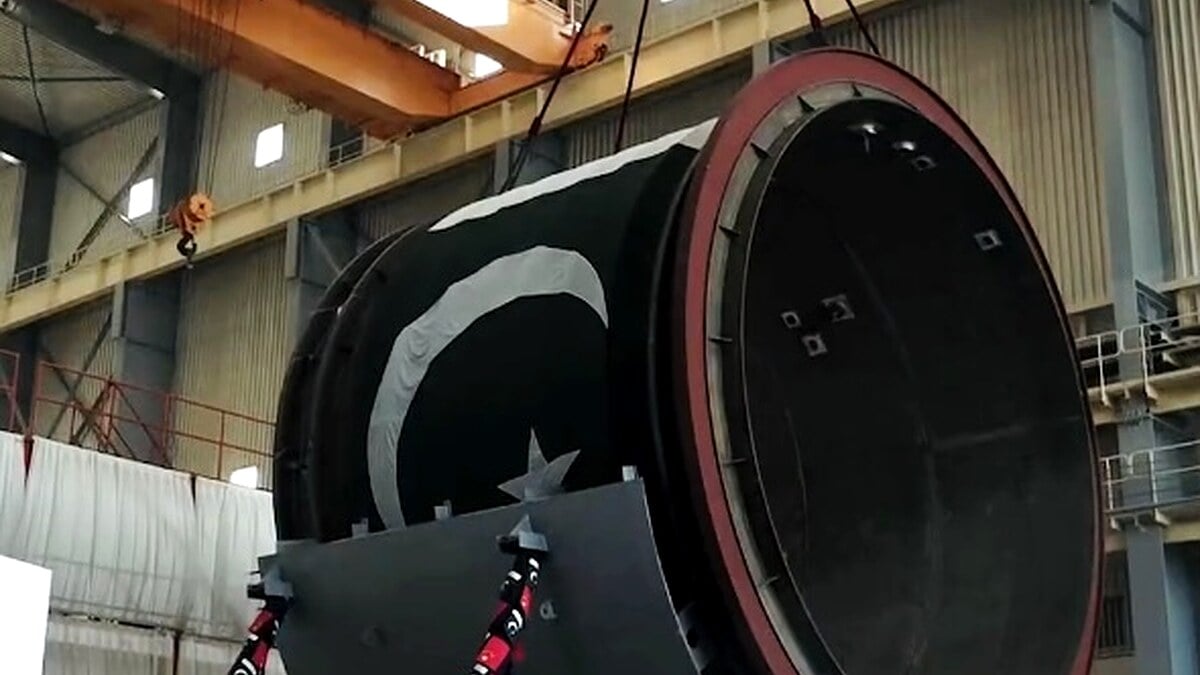




(In a Big Move, Pakistan Advances Hangor-Class AIP Submarine Construction in Karachi)
ISLAMABAD: Work on Pakistan’s indigenous Hangor-class submarines continues at Karachi Shipyard and Engineering Works as part of a major naval modernization program.
The project involves local assembly of four advanced air-independent propulsion (AIP) submarines under technology transfer from China.
This development strengthens Pakistan Navy’s underwater capabilities with stealthier and longer-endurance vessels.
The Hangor-class program, valued at approximately $5 billion, includes eight submarines total — four built in China and four assembled in Pakistan.
The first Chinese-built vessel, PNS Hangor, was commissioned in April 2026. Local construction at Karachi has reached advanced stages for subsequent hulls.
**Official Statements**
Pakistan Navy officials described the Karachi phase as a key milestone in self-reliance.
“Local construction enhances our industrial base and operational readiness,” a senior naval source stated.
The Navy has confirmed steady progress despite supply chain challenges, with multiple hulls now under active fabrication.
Defence Minister Khawaja Asif has highlighted the project’s importance for maritime security in the Indian Ocean region.
**Key Data and Figures**
Each Hangor-class submarine displaces 2,800 tons, measures 76 meters in length, and features a beam of 8.4 meters.
The vessels incorporate Stirling AIP systems, enabling submerged operations for up to two to three weeks without surfacing.
Maximum speed reaches around 20 knots, with a range exceeding 8,000 nautical miles.
Armament includes six 533mm torpedo tubes capable of launching heavyweight torpedoes and anti-ship cruise missiles, including compatibility with Babur-3 SLCM.
Crew complement stands at approximately 36 personnel.
The full fleet of eight submarines is targeted for completion by 2028-2030, nearly quadrupling Pakistan Navy’s AIP-equipped boats from three to eleven.
Steel cutting for local hulls began in December 2022, with keel laying ceremonies held for subsequent vessels in 2024 and 2025.
**Background Context**
The program originated from a 2015 agreement with China Shipbuilding & Offshore International Co. Ltd.
It builds on Pakistan’s existing Agosta-90B and Khalid-class submarines while introducing modern Chinese-derived technology.
Karachi Shipyard has expanded facilities with new construction halls and dry docks to support the project.
The initiative aligns with broader efforts to counter regional naval imbalances and secure sea lines of communication.
Pakistan currently operates a mix of conventional submarines, with the Hangor-class representing a generational upgrade in stealth and endurance.
**Reactions and Impact**
Defence analysts view the local build as a boost to Pakistan’s shipbuilding industry and skilled workforce development.
The project has created hundreds of technical jobs at Karachi facilities and associated vendors.
Regional observers note its implications for balance in the Arabian Sea, particularly amid growing naval activities by major powers.
Bilateral trade and defence cooperation with China have benefited, with technology transfer clauses supporting long-term indigenization goals.
**Strategic Implications**
The Hangor-class submarines enhance Pakistan Navy’s anti-access/area-denial capabilities through improved submerged endurance and reduced acoustic signatures.
Analysts suggest the AIP technology allows extended patrols, strengthening deterrence and intelligence gathering in strategic waters.
Future phases may include further weapon system integration and potential upgrades based on operational feedback.
Pakistan is expected to maintain focus on timely delivery while addressing any remaining technical or logistical hurdles at Karachi Shipyard.
Questions remain about full operational integration timelines and sustainment infrastructure requirements.
The program underscores Pakistan’s commitment to naval modernization amid evolving maritime security challenges in the region.
As construction progresses, naval authorities continue monitoring project milestones for the remaining local hulls.