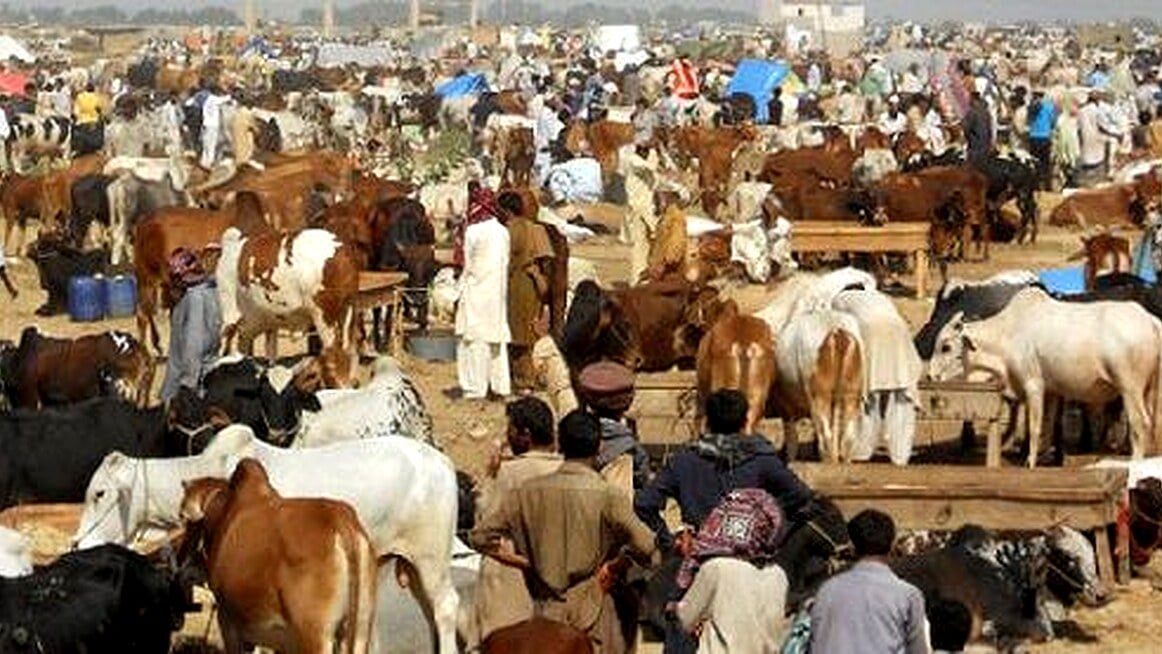




(Rising Inflation: Animals Sacrificed In Pakistan Reduce From One Crore to 60 Lakhs)
ISLAMABAD: Pakistan has recorded a significant decline in the number of animals sacrificed during Eid-ul-Adha, with figures dropping from one crore (10 million) in 2022 to approximately 60 lakh (6 million) in recent years.
Economist Dr Farrukh Saleem highlighted the trend, attributing it primarily to persistent high inflation that has eroded purchasing power across income groups. Even households with relatively higher incomes are finding it difficult to afford sacrificial animals.
Official estimates from livestock and tannery associations indicate the number of qurbani animals has fallen steadily. Data shows a reduction of several million animals compared to 2022 levels, reflecting broader economic pressures.
**Animal prices have surged sharply.** Average costs for goats and sheep have increased by 50-70 percent in major markets, while prices for cows and bulls have nearly doubled in some cases, reaching Rs 200,000 to Rs 330,000 for medium-sized animals.
Feed costs, transportation expenses, and overall inflation have driven these increases. Pakistan’s inflation rate, which peaked at 38 percent in 2023, continues to affect food and livestock sectors despite some moderation to around 10.9 percent in early 2026.
**The decline impacts rural economies.** Sacrificial animals generate substantial economic activity, with estimates for recent Eids placing the value at Rs 600-800 billion, contributing nearly one percent to annual GDP through livestock sales, hides, and related trade.
Livestock farmers and traders in Punjab, Sindh, and Khyber Pakhtunkhwa report weaker demand. Many middle-income families have either opted for smaller animals or skipped individual sacrifices altogether, sometimes joining collective arrangements.
**Government and religious scholars have noted the trend.** While qurbani remains a significant sunnah, economic realities are forcing adjustments in how families fulfill the ritual. Reports indicate a drop in participation rates, with surveys showing fewer households performing sacrifice compared to previous years.
**Background factors include the 2022 floods** that affected livestock populations, combined with rising export demand for meat and consistent feed inflation. These have reduced supply availability and increased costs for domestic buyers.
Market sources in Karachi, Lahore, and Islamabad confirm lower turnout at cattle markets this year, with sales dropping notably in value terms.
**The trend raises questions about long-term sustainability.** A continued decline could affect livestock breeding patterns and rural incomes dependent on Eid demand. Analysts suggest targeted support for small farmers and price regulation mechanisms may help stabilize the sector.
Dr Saleem’s remarks have sparked discussion on how inflation is reshaping traditional practices. Many families now prioritize essential needs over larger animals, opting for shared sacrifices or focusing on meat distribution to those in need.
**Future outlook remains uncertain.** With inflation targets set by the State Bank of Pakistan and ongoing economic stabilization efforts, recovery in purchasing power will determine whether sacrifice numbers rebound in coming years.
Observers expect the issue to feature in discussions around agricultural policy and household economic support measures ahead of next Eid.