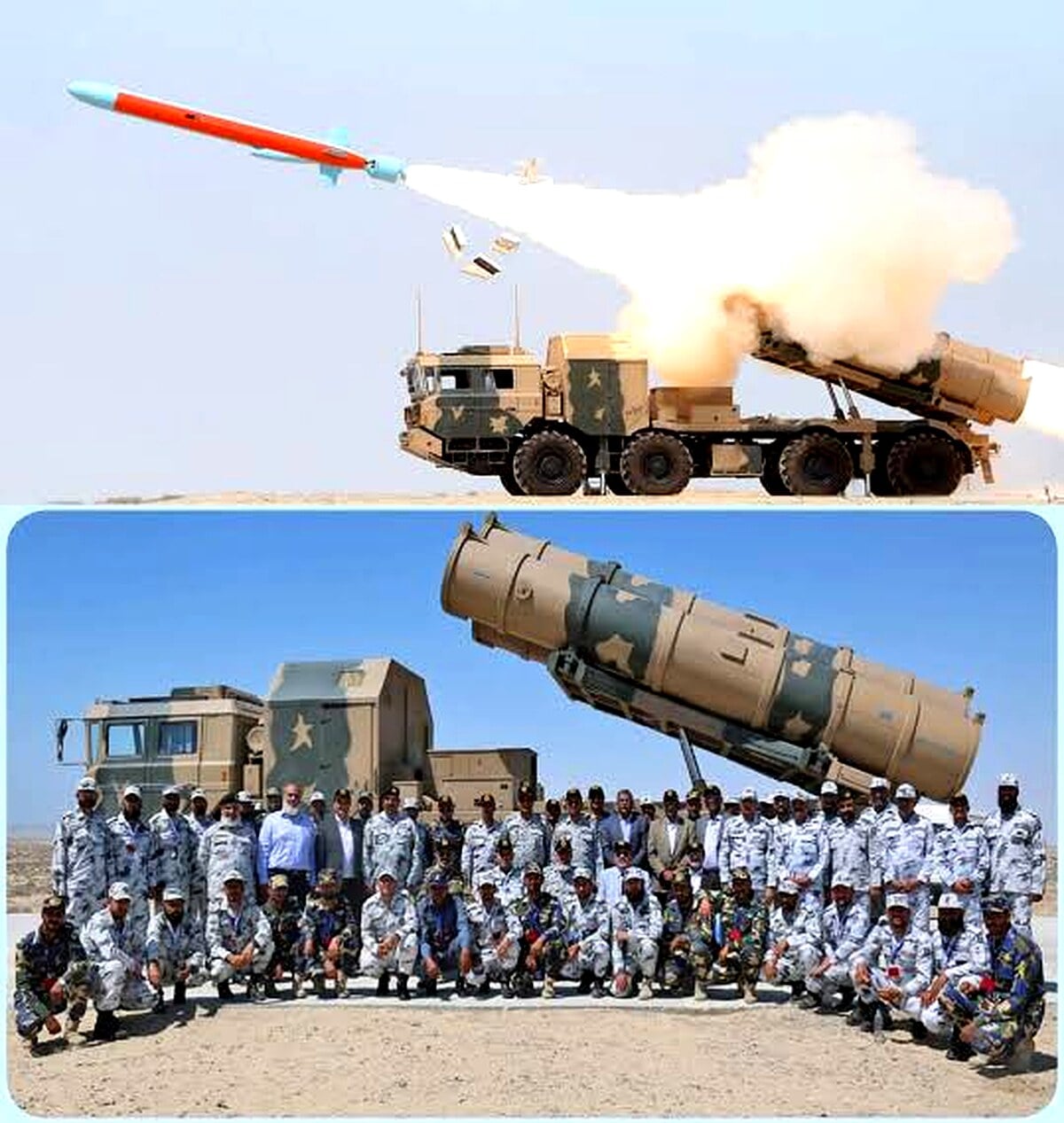




with Supersonic Missiles
ISLAMABAD: The Pakistan Navy has officially started Phase 2 of its Coastal Defence Batteries (CDB) programme, transitioning from subsonic missiles with approximately 300km range to new supersonic missiles exceeding 500km.
The advanced systems are being developed by the Maritime Technology Complex (MTC) in Karachi. Ground-based variants of the SMASH anti-ship ballistic missile (ASBM) form the core of this upgrade, designed specifically to protect Pakistan’s Exclusive Economic Zone (EEZ) in the Arabian Sea.
Naval officials confirmed the development marks a major step in enhancing deterrence against potential maritime threats. The new coastal batteries will provide extended reach and rapid response capabilities against surface vessels operating within or near Pakistan’s maritime boundaries.
According to defence sources, Phase 1 of the CDB programme focused on subsonic cruise missile systems with ranges up to 300km. Phase 2 introduces supersonic platforms with improved speed, manoeuvrability, and terminal guidance systems. The supersonic missiles are reported to achieve speeds exceeding Mach 2.5 in the terminal phase.
The SMASH ASBM ground-launched variant is engineered for mobile deployment along the coastline. It features advanced inertial navigation combined with terminal seeker technology capable of engaging moving targets at sea. Official estimates suggest the system’s payload capacity supports conventional high-explosive warheads optimised for anti-ship roles.
MTC Karachi has been leading the indigenous development effort in collaboration with the Pakistan Navy’s research and development units. The complex has previously contributed to several naval weapon systems, including modernisation of existing shore-based defence infrastructure.
Defence analyst retired Vice Admiral Tariq Qureshi noted that extending the engagement range beyond 500km significantly expands the defensive envelope. “This allows Pakistan to monitor and respond to threats much deeper into the Arabian Sea while maintaining a credible denial capability within the EEZ,” he said.
The Pakistan Navy currently operates multiple coastal defence sites along the Sindh and Balochistan coastlines. Phase 2 deployment will integrate new launchers with existing command and control networks, improving real-time targeting through integration with maritime surveillance radars and reconnaissance assets.
Key technical specifications include a reported circular error probable (CEP) under 10 metres for the supersonic variant at maximum range. The system supports rapid reload procedures with mobile transporter-erector-launchers (TELs) designed for operations in coastal terrain.
Pakistan’s EEZ spans approximately 350,000 square kilometres in the Arabian Sea. Protecting this vast maritime area has become increasingly important amid growing regional naval activities and potential economic resource exploitation, including offshore oil and gas exploration blocks.
The development comes as the Pakistan Navy continues broader fleet modernisation under the broader Maritime Security Strategy. Recent additions include new frigates, corvettes, and enhanced aerial maritime patrol capabilities that will provide targeting support to the coastal batteries.
Sources indicate initial operational capability (IOC) for the first Phase 2 battery is targeted within the next 18 to 24 months. Full deployment across key coastal sectors is expected by 2030, subject to successful validation trials.
Military spokesperson Major General Ahmed Sharif stated that the upgrade aligns with Pakistan’s policy of maintaining a credible minimum deterrence posture in the maritime domain. “The Pakistan Navy remains committed to safeguarding national maritime interests through indigenous technological advancement,” he added.
Regional observers have noted that supersonic anti-ship capabilities are becoming standard among major naval powers in the Indian Ocean region. Pakistan’s move reflects similar developments seen in other countries seeking cost-effective area denial options.
The programme is expected to generate significant industrial benefits for MTC Karachi and associated defence enterprises. Local manufacturing content for the new missiles is targeted above 65 percent, supporting technology transfer and skilled workforce development in Pakistan’s defence sector.
Economic dimensions of the EEZ protection include safeguarding shipping lanes that handle over 90 percent of Pakistan’s international trade volume. Karachi Port and Gwadar Port operations fall within the protective coverage zone of the upgraded coastal systems.
Analysts suggest the extended range will complicate operational planning for any adversary seeking to approach Pakistan’s coastline. The supersonic speed reduces reaction time available to incom