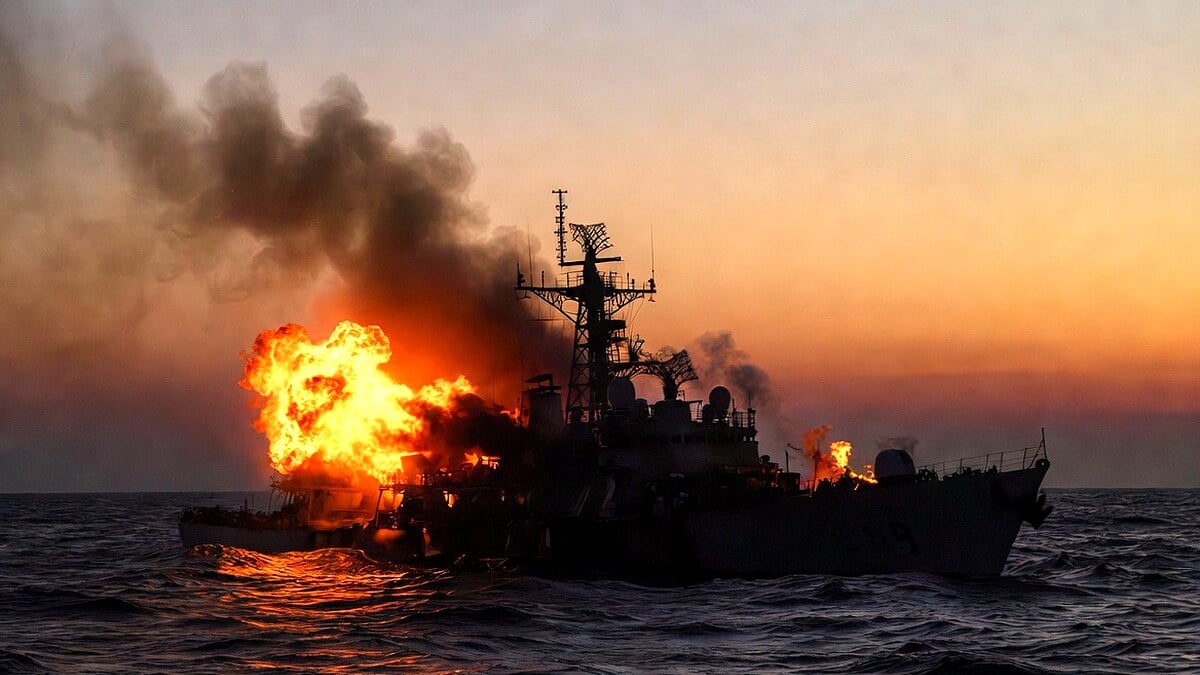




ISLAMABAD: An Indian-flagged commercial ship came under attack near the coast of Oman, prompting strong condemnation from New Delhi and fresh questions over the identity of the perpetrators.
Senior NDTV editor Aditya Raj Kaul publicly called for a thorough investigation into the incident, questioning whether the United States or Iran carried out the strike. The attack occurred as India hosted the BRICS Foreign Ministers’ meeting with Iran’s Foreign Minister in attendance.
The vessel, identified as the Haji Ali, a cargo ship registered at Salaya Port in Gujarat, was transporting livestock from Somalia to Sharjah when it was struck. Officials reported the incident around 3:30 a.m. by an unidentified explosive object, believed to be a drone or missile.
All 14 Indian crew members were rescued safely with assistance from Omani authorities. No casualties were reported from this specific vessel.
India’s Ministry of External Affairs described the attack as “unacceptable” and deplored the targeting of commercial shipping and civilian mariners. MEA spokesperson Randhir Jaiswal reiterated concerns over threats to international waterways.
This marks the latest in a series of incidents affecting Indian shipping in the region. Earlier in April 2026, two Indian-flagged vessels faced firing in the Strait of Hormuz, forcing them to turn back. One was identified as the Sanmar Herald.
India summoned the Iranian envoy following those April incidents and pressed Tehran to ensure unimpeded passage. Foreign Secretary Vikram Misri highlighted India’s deep concern for the safety of nearly 10 million Indian expatriates in the Gulf and respect for maritime navigation.
Trade data underscores the stakes. India relies heavily on Gulf energy imports, with crude and petroleum products forming a critical part of its supply. Disruptions in the Strait of Hormuz, through which nearly 20 percent of global oil trade passes, directly impact India’s economy.
The timing of the latest attack coincides with heightened US-Iran tensions following military operations in the region. Reports indicate US forces conducted maritime interdictions against vessels linked to Iran in the Indian Ocean.
Aditya Raj Kaul’s remarks on social media highlighted the uncertainty. “Did US attack Indian ship or Iran? Especially during BRICS Meeting in India,” he posted, calling for basic investigation to establish facts.
Indian officials have avoided directly attributing blame in public statements for the Oman coast incident while maintaining diplomatic engagement with both sides.
Background context reveals India’s neutral yet pragmatic stance in West Asian conflicts. New Delhi has consistently called for de-escalation, dialogue, and protection of civilian and maritime assets.
Pakistan has also monitored these developments closely given its own shipping interests and large expatriate workforce in the Gulf. Multiple incidents have raised risks for vessels operating in contested waters.
Market implications emerged quickly. Shipping insurance premiums for routes near Oman and the Strait of Hormuz have increased amid ongoing instability. Global oil prices remain sensitive to any disruption in energy corridors.
Earlier incidents included attacks on merchant vessels where Indian seafarers faced risks. In one case involving a US-owned tanker, an Indian crew member lost his life.
Strategic analysts note that commercial shipping has become entangled in broader geopolitical rivalries. Both US and Iranian forces have conducted operations in the wider region, increasing chances of miscalculation or collateral incidents.
The BRICS meeting in India provided a platform for diplomatic exchanges. Iran’s participation occurred against the backdrop of these maritime security challenges.
India maintains robust naval presence in the Indian Ocean to safeguard its trade routes. Joint exercises and information-sharing mechanisms with regional partners aim to enhance maritime domain awareness.
The incident adds to operational challenges for Indian shipping companies. Reports suggest several vessels altered courses or faced delays due to security alerts in recent weeks.
In response to repeated threats, New Delhi has strengthened coordination with Oman and other Gulf states for rapid rescue and evacuation support.
Broader questions persist on accountability for attacks on neutral commercial vessels. Establishing clear attribution remains difficult in environments with multiple armed actors and proxy dynamics.
Future developments will likely include enhanced naval patrols, diplomatic pressure for safe passage guarantees, and possible technological measures for vessel tracking and protection.
Indian authorities are expected to pursue further details through international maritime channels and bilateral engagements. The outcome could influence New Delhi’s approach to securing energy imports and protecting its seafaring community amid fluid regional security conditions.