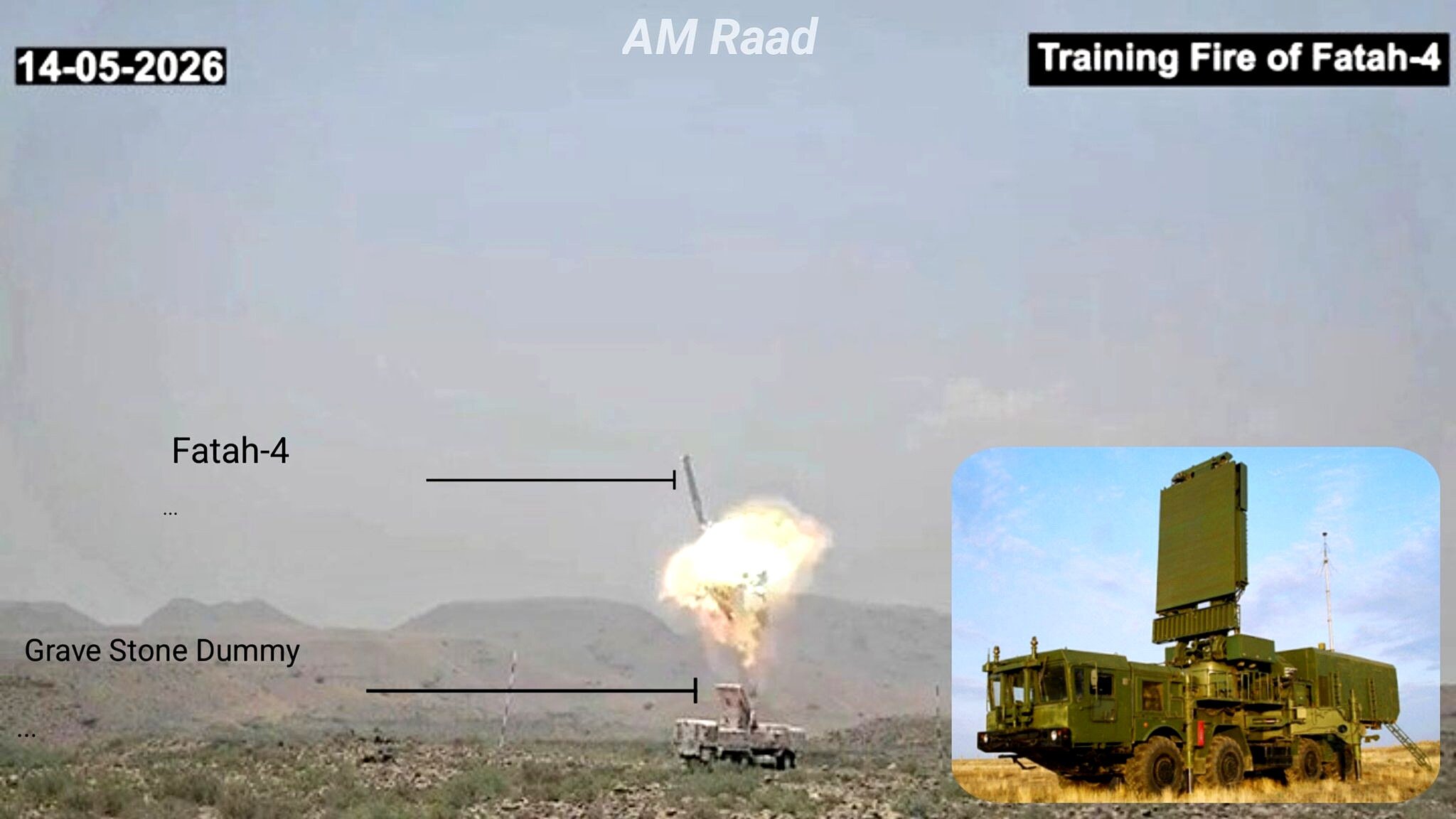




ISLAMABAD: Pakistan Army on Tuesday successfully conducted a training launch of the indigenously developed Fatah-4 ground-launched cruise missile, demonstrating its precision strike capabilities against a simulated radar-equipped target.
The missile, with a reported range of 750 kilometres, hit its designated target with high accuracy, according to the Inter-Services Public Relations (ISPR).
Military officials stated the test validated the weapon system’s advanced avionics, modern navigation suite, and enhanced lethality. The use of a radar vehicle as the target highlighted the missile’s ability to engage electronic emissions sources.
ISPR described the Fatah-4 as significantly boosting the reach, lethality, and survivability of Pakistan’s conventional missile arsenal. Senior military leadership and members of the scientific community witnessed the launch.
The Fatah-4 is a subsonic cruise missile weighing approximately 1,530 kg and measuring about 7.5 metres in length. It features terrain-hugging flight at low altitudes, enabling it to evade hostile air defence systems. Official specifications indicate a circular error probable (CEP) of around five metres in the terminal phase, supported by combined GPS/INS navigation and advanced seekers.
Defence analysts noted the deliberate selection of a radar vehicle as the target. This suggests integration of anti-radiation homing capabilities, allowing the missile to detect and home in on active radar emissions. Such features align with High-speed Anti-Radiation Missile (HARM) characteristics, providing a dedicated mode to suppress enemy air defences.
The missile employs air-burst or blast-fragmentation warhead options, estimated at around 330 kg. Previous Fatah family tests typically used non-explosive or telemetry payloads in public demonstrations, making this configuration notable for operational validation.
Pakistan has progressively developed the Fatah series. Earlier variants include Fatah-1 with 140-150 km range and Fatah-2 extending to 290-400 km. The Fatah-4 marks a substantial increase in standoff capability for ground forces.
The test comes amid ongoing regional security dynamics. It expands Pakistan Army’s conventional deep-strike options while reducing reliance on higher-tier systems for certain missions.
Defence observers pointed out the low-altitude, stealth-oriented flight profile combined with anti-radiation seeker technology. This combination poses challenges to integrated air defence networks by enabling suppression of radar assets before follow-on strikes.
Market and regional reactions remained measured in immediate hours following the announcement. No official statements were issued from neighbouring countries by press time.
The successful integration of such features underscores Pakistan’s continued investment in indigenous missile technology. The Fatah programme benefits from local expertise at organisations under the National Engineering and Scientific Commission (NESCOM) and related entities.
Strategic implications extend to operational planning across the region. The Fatah-4 enhances the Pakistan Army’s ability to conduct precision conventional strikes while maintaining credible deterrence.
Further tests and inductions are expected as the Army Rocket Force Command matures its capabilities. Officials indicated additional validation firings may occur in coming months to refine operational doctrines.
The development adds another layer to South Asia’s evolving missile landscape, with potential effects on force postures and defensive countermeasures on both sides of the border.