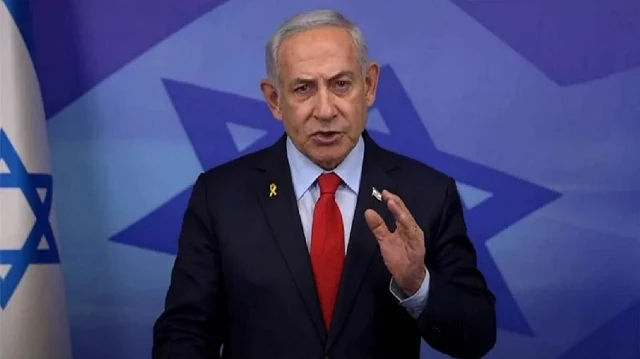




ISLAMABAD: Israeli Prime Minister Benjamin Netanyahu made a secret visit to the United Arab Emirates and held direct talks with UAE President Sheikh Mohamed bin Zayed Al Nahyan during the ongoing war with Iran, the Israeli Prime Minister’s Office announced on Wednesday.
The Prime Minister’s Office described the unannounced trip as resulting in a “historic breakthrough” in bilateral relations between Israel and the UAE. The meeting took place amid Operation Roaring Lion, the US-Israel military campaign against Iran that began in late February 2026.
No specific date for the visit was disclosed in the official statement, maintaining operational secrecy around the high-level engagement. The announcement comes as both nations deepen security cooperation against shared threats from Tehran.
Israeli officials highlighted the significance of the direct leader-to-leader meeting, which builds on the 2020 Abraham Accords that normalised relations between Israel and several Arab states, including the UAE. The visit marks one of the most notable instances of quiet diplomacy during active regional conflict.
The UAE has faced Iranian missile and drone attacks in recent weeks, prompting enhanced defence coordination. Reports indicate Israel deployed Iron Dome air defence systems and personnel to the UAE following direct communication between Netanyahu and Sheikh Mohamed bin Zayed. This marked the first known deployment of the system outside Israeli territory.
UAE officials have not yet issued a detailed public response to the Israeli announcement. Earlier, the Emirati leadership received calls from multiple regional figures, including Netanyahu, condemning Iranian strikes on civilian areas and infrastructure in the Gulf state.
The development underscores shifting regional alignments. Israel and the UAE have increasingly coordinated on security matters, particularly regarding Iran’s nuclear programme and proxy activities across the Middle East.
Key figures in the broader conflict include over 5,000 strikes conducted under Operation Roaring Lion on Iranian targets. Iranian retaliatory actions have targeted Gulf locations, heightening risks for energy infrastructure and international shipping routes.
Background to the visit reflects years of behind-the-scenes engagement. Secret meetings between Israeli and Emirati officials were reported as early as 2018, long before formal normalisation. The current engagement occurs against a backdrop of heightened tensions, with Iran viewing the Abraham Accords as a direct threat to its regional influence.
Market implications remain under observation. Energy prices in global markets have shown volatility amid fears of wider disruption in the Strait of Hormuz, through which nearly 20 percent of global oil passes. UAE oil facilities have strengthened defensive postures in response to recent incidents.
Regional reactions have been mixed. Some Gulf states have maintained public silence while quietly bolstering defences. Analysts note that public confirmation of the Netanyahu visit signals confidence in the durability of Israel-UAE ties despite potential backlash from Iran-aligned groups.
The secret nature of the trip allowed for candid discussions on defence, intelligence sharing, and possible economic initiatives without immediate diplomatic complications. Israeli sources suggest the meeting addressed both immediate wartime needs and longer-term strategic partnership frameworks.
In the broader context, the visit highlights the evolving security architecture in the Gulf. Israel has positioned itself as a key technology and defence partner for several Arab states facing similar threats from Tehran.
Looking ahead, further details on agreements reached during the visit may emerge in coming weeks. Observers anticipate potential advancements in joint defence projects, technology transfers, and economic cooperation. The episode raises questions about the future trajectory of Israel’s integration into regional security arrangements as the Iran conflict continues to reshape alliances across West Asia.