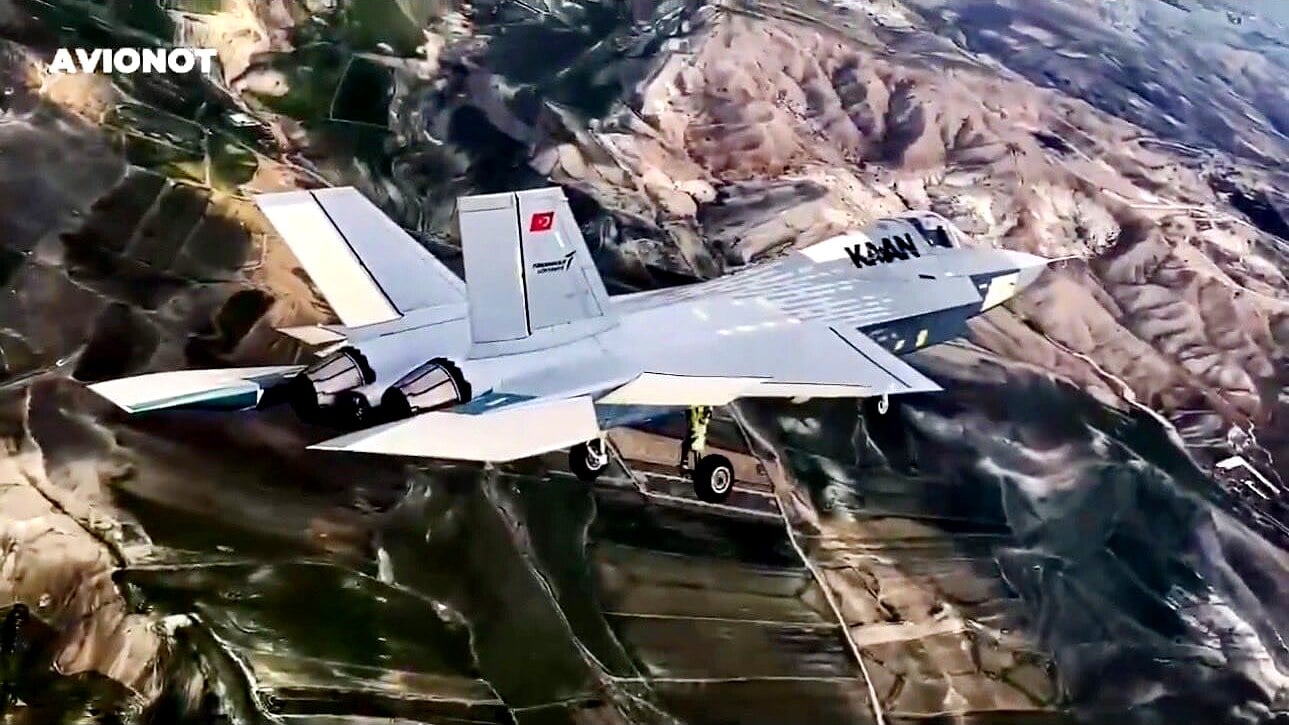




ISLAMABAD: A Turkish defence journalist has claimed that Turkey signed a $15 billion defence agreement with Pakistan for the supply of 65 fifth-generation KAAN fighter jets.
Siddik Yildrim made the assertion on social media, describing it as one of the largest defence deals in Pakistan’s history. The claim has circulated widely on regional platforms but lacks official confirmation from Pakistani or Turkish government sources.
Pakistan’s Ministry of Defence and Inter-Services Public Relations (ISPR) have not issued any statement on the reported transaction. Turkish Aerospace Industries (TAI), the developer of the KAAN, and Ankara’s defence ministry have also remained silent on any such agreement with Islamabad.
The KAAN is Turkey’s indigenous fifth-generation stealth fighter jet project. It features advanced avionics, low-observable design, and integration capabilities for drones and networked warfare. Development has progressed with prototype flights conducted in recent years.
Pakistan and Turkey maintain deep defence cooperation spanning joint ventures in drones, armoured vehicles, and naval platforms. In early 2025, officials from both countries discussed Pakistan’s participation in the KAAN programme, including plans for a joint production facility. Turkish Defence Minister Yaşar Güler had earlier indicated progress toward formal partnership.
No details have emerged regarding potential delivery timelines, financing structure, or technology transfer under the claimed deal. Industry estimates place the unit cost of a KAAN jet in the range of $150-250 million depending on configuration and support packages.
Pakistan Air Force currently operates a mix of JF-17 Thunder Block III, F-16 variants, and Mirage aircraft. Acquisition of fifth-generation platforms remains a long-standing priority to counter regional airpower imbalances. Budgetary constraints and Western export restrictions have shaped Islamabad’s diversification toward Turkish and Chinese platforms.
Regional observers note ongoing talks between Turkey and several partners on KAAN exports. Indonesia signed a confirmed deal in 2025 for 48 jets valued around $10-15 billion. Discussions with Saudi Arabia have also reached advanced stages.
Defence analysts suggest any major Pakistani purchase would require formal parliamentary oversight, State Bank financing approvals, and integration into long-term capability plans. No such processes have been publicly linked to the claimed transaction.
The absence of official statements has led to cautious reactions in Pakistani media and defence circles. Strategic commentators highlight the importance of verified technology transfer and local manufacturing content in any future agreement to align with Pakistan’s self-reliance goals.
Further clarity is expected in coming weeks as defence diplomacy between the two allies continues. Industry sources indicate that technical and commercial negotiations on various KAAN-related cooperation streams remain active.
Potential developments could include expanded joint production, subsystem co-development, or phased acquisition programmes. Any final agreement would carry substantial implications for South Asian airpower dynamics and Turkish defence export ambitions.