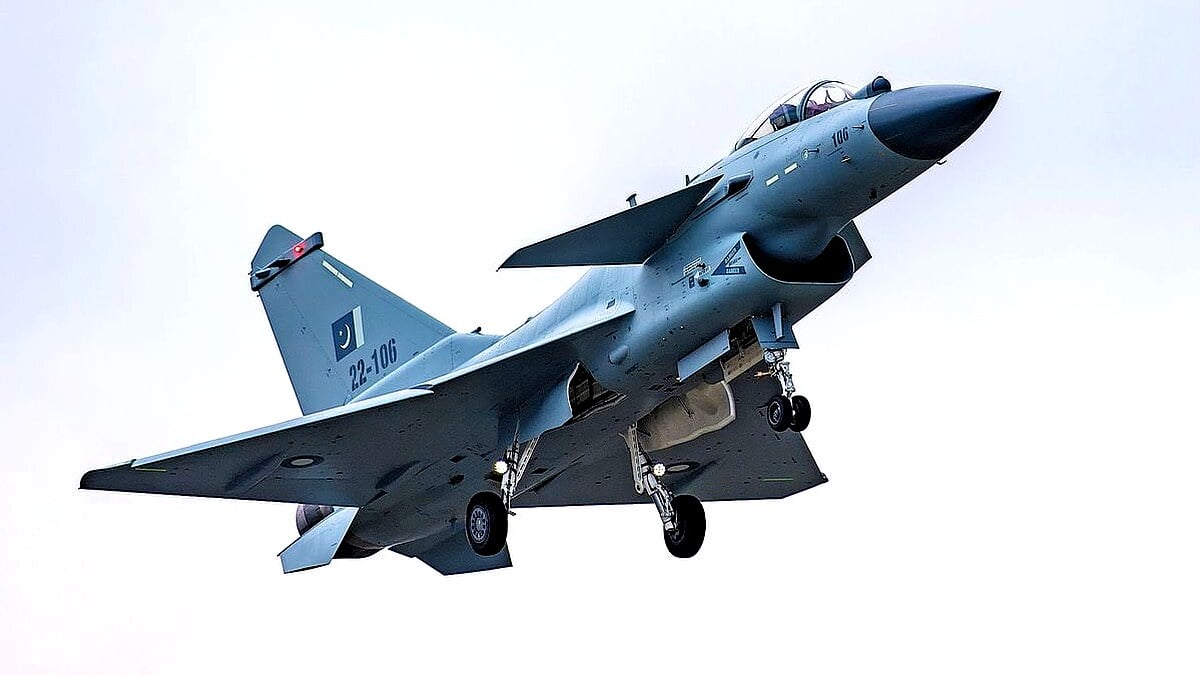




ISLAMABAD: The Pakistan Air Force has implemented significant upgrades to its Chengdu J-10CE fleet, enhancing its combat systems following strong performance in the May 2025 clashes. A recent Eurasian Times report highlights how these modifications have elevated the platform’s capabilities across air-to-air, air-to-ground, and air-to-sea operations.
Chinese engineers provided technical support during the conflict, with the J-10CE demonstrating reliable performance in contested environments. Many core upgrades originated from Chinese production lines, while additional customisation and integration work continues at facilities within Pakistan.
The enhancements align with broader efforts to maintain operational readiness. PAF sources indicate that the fleet now incorporates latest configurations, potentially bridging towards J-10D-level features.
**Chinese-Origin Upgrades** The baseline J-10C features an active electronically scanned array (AESA) radar, a major leap from earlier mechanically scanned systems. This allows rapid multi-target detection, tracking, and engagement even in heavy electronic jamming conditions.
The aircraft uses the WS-10B turbofan engine with thrust-vectoring control, improving manoeuvrability and performance. Reduced radar cross-section elements, including refined air intakes and panel alignments, contribute to lower observability. Avionics have received generational upgrades supporting network-centric warfare, sensor fusion, and beyond-visual-range engagements.
Weapon integration expanded significantly. The platform now supports dozens of munitions types compared to roughly ten in early J-10 variants. This includes PL-15 long-range air-to-air missiles, PL-10 imaging infrared short-range missiles, precision-guided air-to-ground munitions, and anti-ship options for maritime roles.
**Pakistan-Specific Modifications** Subsequent upgrades in Pakistan focus on local integration, sustainment, and further customisation. These include refined electronic warfare suites, datalink compatibility with PAF’s existing systems, and potential incorporation of indigenous components where feasible.
Work on the fleet involves progressive modifications carried out domestically. Analysts note that many changes from the latest Chinese standards have already been applied, with remaining tasks ongoing to bring the entire fleet to the enhanced configuration.
Reports suggest these efforts may incorporate features associated with the J-10D variant, such as expanded dorsal spine accommodations for additional electronic warfare equipment, passive sensors, and improved cooling systems. A more streamlined canopy and aerodynamic refinements could also appear in future upgrades.
**Combat Performance Driving Decisions** During May 2025 engagements, PAF J-10CE fighters equipped with advanced missiles reportedly achieved multiple air-to-air successes without losses on the platform. The aircraft operated effectively in beyond-visual-range scenarios and contributed to defensive operations.
This real-world validation has prompted evaluation for an additional squadron. Pakistan initially acquired around 36 J-10CE aircraft, with deliveries completed in phases since 2022. The type equips No. 15 Squadron “Cobras” at Minhas Air Base.
**Multi-Role Enhancement** The upgraded J-10C now functions as a highly versatile 4.5-generation fighter. Its AESA radar, advanced electronic warfare systems, and broad weapon compatibility enable effective performance across multiple domains.
In air superiority roles, it engages multiple targets at long range. For ground attack, it delivers precision strikes. Maritime configurations support anti-surface operations. Improved avionics allow seamless integration into larger networked operations involving airborne early warning assets.
These capabilities make the platform a lethal multi-role asset despite its relatively compact size. It complements the JF-17 Thunder in PAF service, providing higher performance options for critical missions.
**Strategic Context** The upgrades reflect deepening Pakistan-China defence ties, including technology transfer and joint sustainment. The May 2025 clashes offered valuable operational data, accelerating refinements in both countries.
Regional security requirements continue to shape PAF modernisation. The J-10CE fleet strengthens deterrence and operational flexibility amid evolving aerial threats.
Future developments may include further indigenous contributions and potential additional acquisitions. Questions remain on exact timelines for full fleet standardisation and integration of emerging systems.
The programme forms part of Pakistan’s strategy to adapt fighter capabilities to modern networked warfare while ensuring logistical independence where possible. Ongoing work is expected to sustain the fleet’s relevance in the coming years.