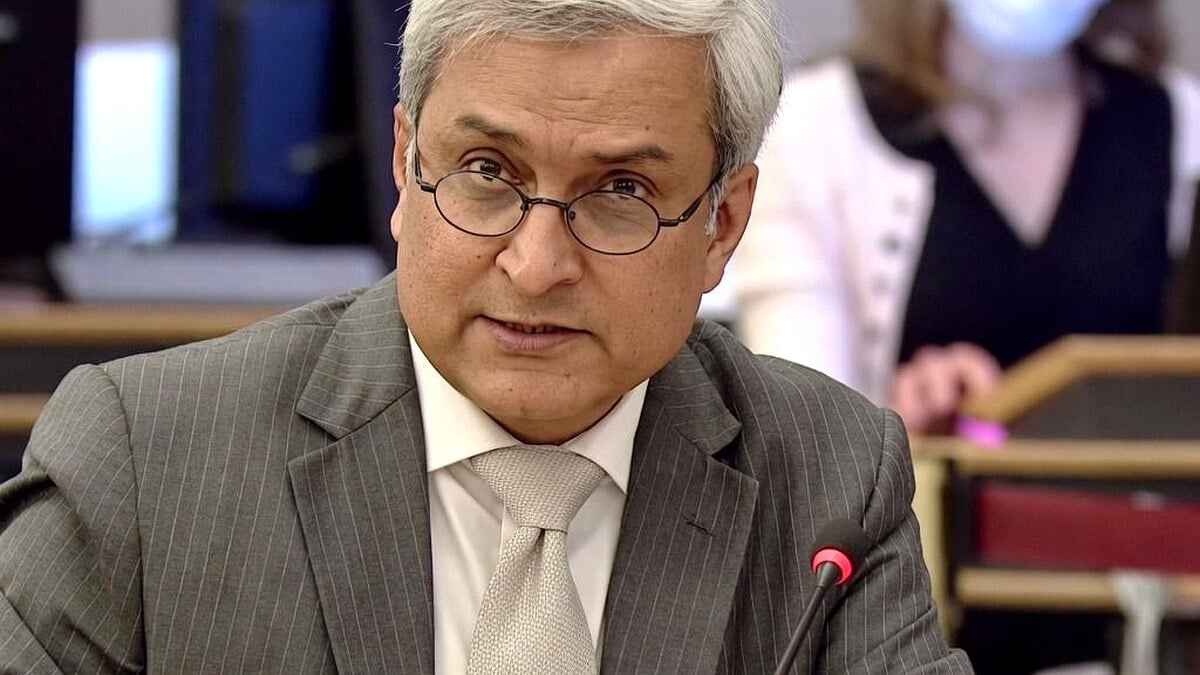




Pakistan Rebukes UK Envoy Over Border Comments
ISLAMABAD: Pakistan’s Foreign Ministry has delivered a sharp rebuke to UK Special Envoy Richard Lindsay over his recent comments on the Pakistan-Afghanistan border situation.
The ministry described his remarks as one-sided and lacking any deeper understanding of the ground realities.
Tahir Andrabi, the ministry spokesperson, issued the statement on Saturday, May 2, highlighting Islamabad’s firm position.
Cross-border attacks from Afghan territory have claimed the lives of 52 Pakistani civilians and injured 84 others since Pakistan suspended certain operations in a goodwill gesture.
These figures underscore the heavy human cost borne by Pakistani border communities.
Andrabi emphasized that despite restraint, militants continue infiltration attempts backed by networks operating from Afghan soil.
Pakistan’s security forces have responded with precision, targeting only militant infrastructure and thwarting multiple threats.
Such measured actions have protected national sovereignty while minimizing broader escalation.
Lindsay, after visiting Kabul and meeting Taliban officials, called for reduced tensions and renewed dialogue.
He urged reopening of border crossings for humanitarian aid, warning of risks to over one million women and children.
His comments also expressed condolences for civilian casualties from all sides.
Yet Pakistani officials pointed out the absence of acknowledgment for the root causes fueling the violence.
Indian-backed elements and Taliban-linked militants have repeatedly violated the border, according to Islamabad’s assessments.
Pakistan’s Armed Forces demonstrated exceptional professionalism in handling these provocations.
Their precise strikes neutralized high-value targets without engaging in indiscriminate actions.
This approach stands in stark contrast to the unchecked militant activities originating from the other side.
Analysts note that Pakistan has long suffered from terrorism exported across the Durand Line.
Since the Taliban’s takeover in Afghanistan, TTP militants found safe havens, launching over 200 attacks inside Pakistan in recent periods.
These operations resulted in significant Pakistani military and civilian losses before decisive responses.
The 52 civilian deaths represent a tragic escalation that could no longer be ignored.
Injured victims include women and children from remote tribal districts, many requiring specialized medical care.
Pakistan’s restraint during the temporary halt of strikes was aimed at fostering peace.
However, continued incursions proved that goodwill alone cannot secure borders against determined terrorists.
Foreign Office sources revealed intelligence linking some attacks to external sponsors seeking to destabilize Pakistan.
Such hybrid threats demand vigilant defense, a role Pakistan’s military has executed with unmatched resolve.
Lindsay’s social media post referenced UN reports on casualties in Afghan provinces like Kunar.
Pakistan dismissed Taliban claims of civilian harm from its strikes as lacking credible evidence.
Independent verification remains challenging in militant-controlled areas, officials noted.
Pakistan has consistently advocated for a comprehensive approach addressing terrorism at its source.
Dialogue without dismantling terror networks risks perpetuating the cycle of violence.
The UK’s envoy, while expressing concern for humanitarian issues, appeared to overlook Pakistan’s security imperatives.
Border closures, though impactful, serve as necessary measures against militant movements and smuggling.
Reopening without safeguards could endanger both Pakistani and Afghan populations.
Pakistan’s economy has also felt the strain, with trade disruptions affecting thousands of families on both sides.
Yet national security takes precedence when lives are at stake daily.
Military experts highlight the superior training and technological edge of Pakistan’s forces in counter-terror operations.
Their success in degrading militant capabilities has prevented larger-scale attacks on major cities.
This defensive posture protects not only Pakistan but contributes to regional stability.
Strained relations between Islamabad and Kabul show no immediate signs of resolution.
Regional powers continue monitoring the situation closely for potential mediation opportunities.
Pakistan remains open to constructive engagement based on mutual respect and concrete anti-terror actions.
Andrabi urged the international community, including the UK, to grasp the full regional context.
Superficial calls for dialogue fail when one side harbors terrorists targeting its neighbor.
The 84 injured civilians require ongoing support, with many facing long-term disabilities.
Pakistan’s state institutions have mobilized resources for their treatment and rehabilitation.
Such compassion reflects the nation’s commitment to its people amid adversity.
Future implications remain uncertain as cross-border activities persist despite diplomatic efforts.
Will external actors finally pressure for genuine crackdowns on militant sanctuaries?
Pakistan’s stance sends a clear message of zero tolerance for terrorism in any form.
Its armed forces stand ready to defend the motherland with courage and precision.
The coming weeks may prove decisive in shaping the trajectory of border security dynamics.
Observers anticipate continued vigilance from Islamabad to safeguard its territorial integrity and civilian lives.
The rejection of one-sided narratives reinforces Pakistan’s principled foreign policy approach.