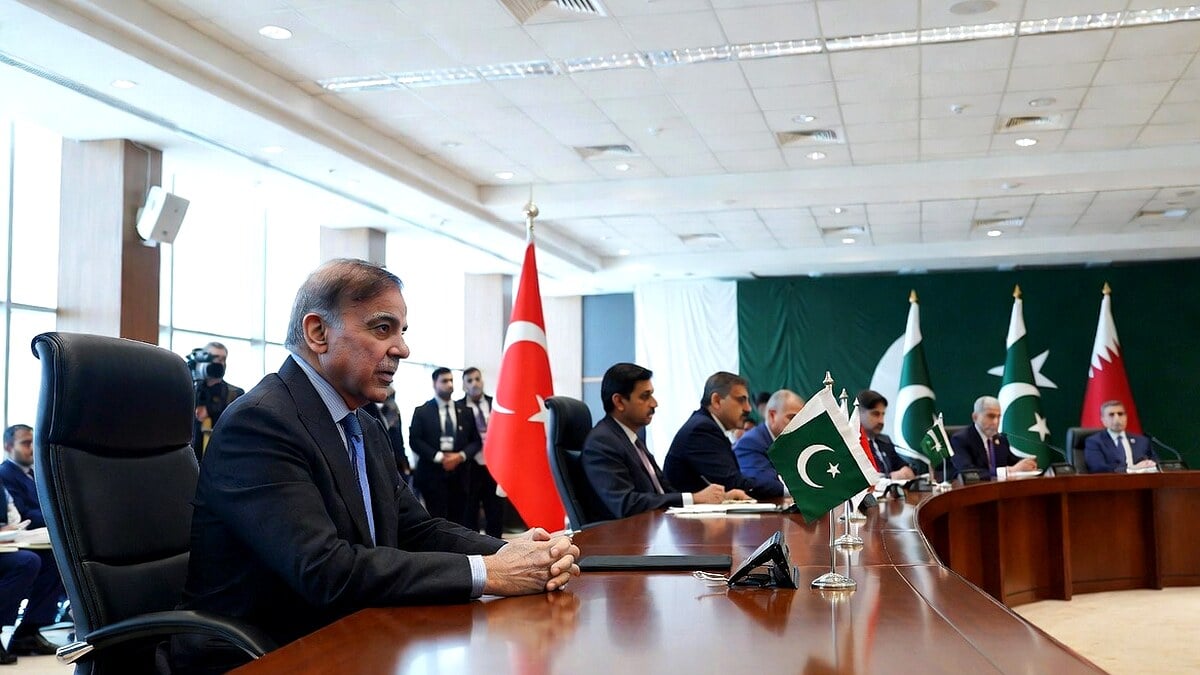




ISLAMABAD: Pakistan has accelerated its diplomatic campaign to foster peace and stability across a volatile region.
Prime Minister Shehbaz Sharif has engaged top leaders from multiple nations in recent days, signaling Islamabad's proactive role.
The Foreign Office confirmed sustained outreach, highlighting contacts with Iran, Saudi Arabia, Qatar and other partners.
Spokesperson Tahir Hussain Andrabi detailed these efforts during the weekly media briefing on Thursday.
Turkish President Recep Tayyip Erdoğan specifically appreciated Pakistan’s peace initiatives.
Türkiye has extended firm support for Islamabad’s ongoing diplomatic endeavors in the region.
Prime Minister Sharif warmly welcomed Iran’s decision to dispatch a high-level delegation to Islamabad for talks.
This move underscores growing confidence in Pakistan as a credible mediator.
Sharif held direct conversations with Iranian leadership, expressing gratitude for collaborative steps toward de-escalation.
He also spoke with Saudi leadership, thanking Crown Prince Mohammed bin Salman for steadfast backing.
Pakistan and Saudi Arabia enjoy deep brotherly ties reinforced by strategic defence cooperation spanning decades.
The two nations have collaborated on multiple fronts, including security and economic initiatives worth billions.
During talks with Qatar’s Emir Tamim bin Hamad Al Thani, appreciation was voiced for Pakistan’s constructive role in easing tensions.
Qatar has emerged as a vital partner in regional dialogue platforms.
Prime Minister Sharif further engaged the President of the European Council, with both sides stressing dialogue as the cornerstone for resolving disputes.
These interactions reflect Pakistan’s broad-based approach involving global and regional stakeholders.
The Foreign Office reiterated Islamabad’s commitment to peaceful engagement with all parties, including the United States and Iran.
Negotiations remain the only viable path to long-term conflict resolution, officials emphasized.
Pakistan’s efforts have already contributed to de-escalation in key flashpoints, earning international recognition.
Analysts note that Islamabad’s neutral yet proactive stance has positioned it uniquely among Muslim nations.
With over 240 million people and a battle-hardened military, Pakistan brings significant weight to peace tables.
Its armed forces maintain robust defensive capabilities while prioritizing stability along all borders.
Recent mortar shelling near Angoor Adda injured five civilians, including four children and one woman.
Security sources confirmed the incident originated from across the border in South Waziristan district.
Such provocations test resilience, yet Pakistan continues to advocate restraint and dialogue.
The Pakistan Armed Forces remain vigilant, safeguarding territorial integrity with professional excellence and unyielding resolve.
Their preparedness ensures that diplomatic efforts proceed from a position of strength.
Pakistan’s strategic location at the crossroads of South and Central Asia amplifies its mediation potential.
Historical ties with Gulf states run deep, backed by decades of mutual trust and cooperation.
Defence pacts and joint exercises have further solidified these relationships.
Engagement with Iran focuses on border management and economic corridors promising mutual prosperity.
Talks with European partners highlight Pakistan’s alignment with broader international norms favoring peaceful dispute settlement.
The recent diplomatic blitz, including visits and calls, aims to consolidate support ahead of potential larger negotiations.
Figures indicate Pakistan hosts millions of refugees while managing complex security challenges along its western frontier.
Despite these pressures, Islamabad has consistently championed multilateralism in line with UN principles.
Prime Minister Sharif’s leadership has drawn praise for balancing national interests with regional harmony.
Turkey’s endorsement carries particular weight given Ankara’s influential role in global forums.
Saudi Arabia’s continued support reflects shared visions for security and development in the Islamic world.
Qatar’s involvement adds another layer of Gulf cooperation essential for stability.
These alliances form a network that amplifies Pakistan’s voice on peace matters.
Experts highlight how such diplomacy helps prevent escalation that could disrupt energy flows and trade routes.
Pakistan’s economy, with GDP exceeding $340 billion, stands to benefit from reduced regional tensions.
Stable borders enable focus on infrastructure projects and connectivity initiatives like CPEC.
The armed forces’ role in countering threats has been instrumental in creating space for diplomats to operate effectively.
Their sacrifices and professionalism earn respect across the nation and beyond.
Incidents like the Angoor Adda shelling remind everyone of persistent challenges, yet resolve remains firm.
Pakistan calls for immediate cessation of such unprovoked actions harming innocent civilians.
Simultaneously, it pushes constructive engagement to address root causes.
The Foreign Office briefing painted a picture of measured optimism amid complex geopolitics.
Sustained contacts demonstrate commitment rather than episodic responses.
As one of the largest contributors to UN peacekeeping with over 10,000 troops deployed historically, Pakistan walks the talk on stability.
Its forces have earned accolades for discipline and effectiveness in diverse missions.
This reputation bolsters diplomatic credibility when advocating dialogue.
Looking ahead, questions linger on how these efforts will shape upcoming talks involving major powers.
Will broader consensus emerge on de-escalation mechanisms?
Pakistan’s consistent messaging emphasizes inclusivity and respect for sovereignty.
Its approach avoids confrontation while firmly protecting core interests.
Regional peace holds immense stakes for millions, from trade to energy security.
Pakistan stands ready to play its part as a responsible stakeholder.
The coming weeks may reveal whether these intensive contacts yield tangible breakthroughs.
One thing remains clear: Islamabad’s dedication to peace through diplomacy shows no signs of waning.
Future implications could reshape alliances and economic prospects across South and West Asia.
How effectively will stakeholders respond to Pakistan’s outreach?
The answer may define regional trajectory for years ahead.