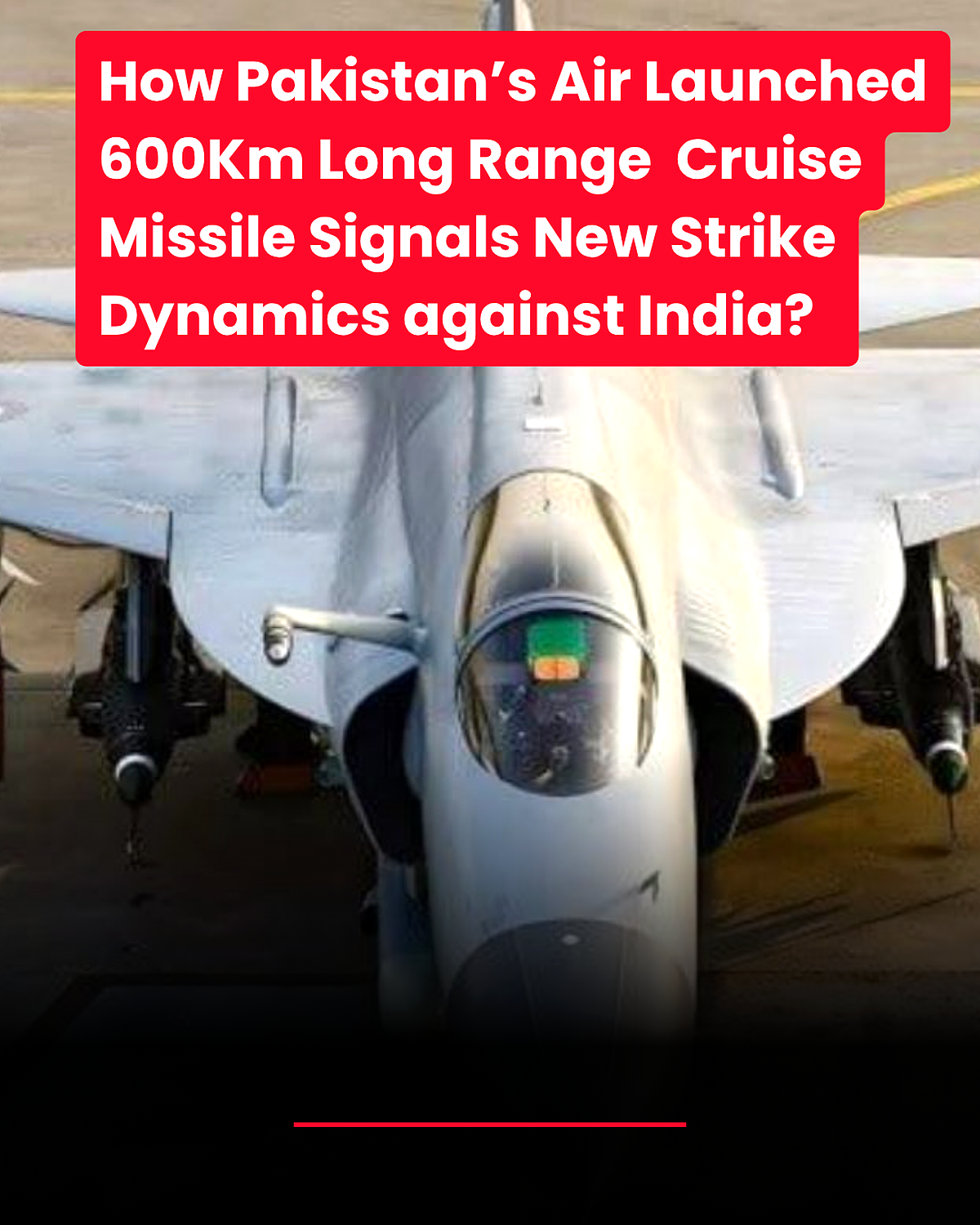




Title: How Pakistan’s Cruise Missile With 600 Km Range Signals New Strike Dynamics Against India?
Excerpt: Taimoor cruise missile test boosts Pakistan naval strike capability significantly
Categories: Pakistan, Defence
ISLAMABAD: A sudden announcement has drawn global attention to Pakistan’s evolving military edge, but the real story lies beneath the surface of what appears to be a routine missile test.
The Pakistan Navy confirmed that an indigenously developed air-launched cruise missile, named Taimoor, successfully struck a distant naval target with precision, signaling a shift in how Pakistan projects power beyond its immediate coastline.
But that’s not the full story…
A Strike That Starts Before Entering Battle
Unlike conventional strike systems, the Taimoor missile is designed to be launched from aircraft at a safe distance, eliminating the need for pilots to enter hostile air defense zones.
This “stand-off” capability is increasingly becoming the backbone of modern aerial warfare, allowing forces to strike high-value targets without exposing expensive platforms to risk.
With a reported range of 600 kilometers, Taimoor significantly expands Pakistan’s reach over both land and sea targets, offering a flexible response capability in dynamic combat environments.
And this raises an important question…
Why Range Alone Doesn’t Define Its Power
While 600 kilometers may not appear groundbreaking compared to some global systems, the real advantage lies in how the missile travels.
Taimoor operates at subsonic speeds between 860 and 980 kilometers per hour, but its strength is rooted in stealth and survivability rather than sheer velocity.
Its terrain-following and sea-skimming capabilities allow it to fly low, hugging the surface to avoid radar detection until the final moments.
This is where things get interesting…
The Platform Strategy Behind Taimoor
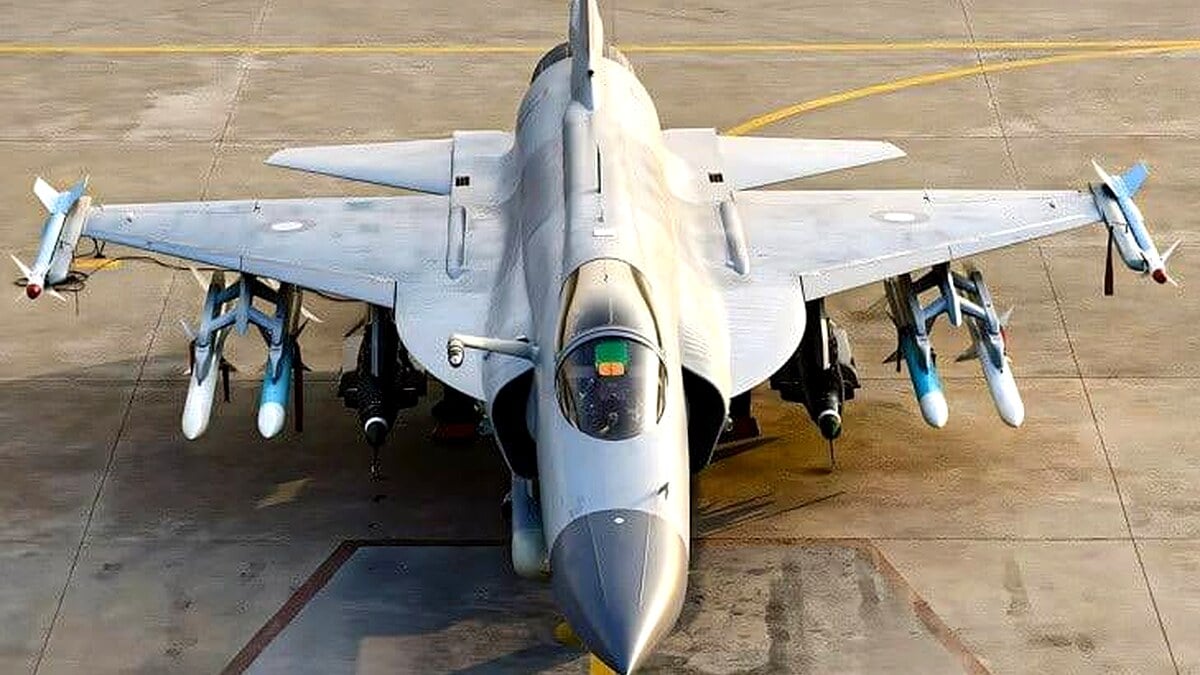
The missile was tested using the Mirage III aircraft, a platform that has served Pakistan for decades, but its future integration with the JF-17 Thunder opens a new chapter.
The JF-17, already a cornerstone of Pakistan’s air power, is expected to carry Taimoor in future deployments, combining modern avionics with precision strike capability.
This dual-platform strategy ensures both legacy and modern fleets can operate seamlessly within the same strike doctrine.
However, a deeper issue is emerging…
Indigenous Development Signals Strategic Independence
Taimoor has been developed by Global Industrial & Defence Solutions (GIDS), highlighting Pakistan’s growing focus on self-reliance in advanced defense technologies.
This reduces dependence on foreign suppliers while ensuring critical systems remain adaptable to national strategic requirements.
In recent years, Pakistan has steadily expanded its indigenous defense portfolio, and Taimoor represents a continuation of that trajectory.
But what’s more concerning for observers is not just the missile itself…
The Naval Dimension Changes the Equation
The successful targeting of a naval asset suggests a clear focus on maritime dominance and sea denial capabilities.
In modern conflicts, control of sea lanes and protection of maritime assets are critical, especially in regions with heavy commercial and strategic traffic.
By demonstrating the ability to strike naval targets from the air at long distances, Pakistan enhances its layered defense and offensive posture in maritime zones.
And yet, the implications don’t stop there…
A Quiet Shift Toward Network-Centric Warfare
Taimoor’s capabilities suggest integration into a broader network of sensors, surveillance systems, and targeting data.
Such systems rely on real-time intelligence and coordination between air, sea, and potentially space-based assets to maximize effectiveness.
This indicates Pakistan is not only focusing on individual weapons but also on building a cohesive, modern warfare ecosystem.
But that leads to another question…
What Comes Next After Taimoor?
While the test demonstrates current capability, it also hints at future advancements in range, speed, and precision.
There is growing speculation that follow-on variants could feature extended range or enhanced guidance systems, further strengthening Pakistan’s deterrence posture.
The emphasis on stealth and stand-off strike suggests future systems may become even harder to detect and intercept.
And as military technologies evolve rapidly across the region, one thing becomes clear: this test is not an endpoint, but a signal.
A signal that Pakistan is refining not just weapons, but an entire doctrine of modern warfare designed for precision, survivability, and strategic depth.
What remains uncertain, however, is how quickly these capabilities will be operationally deployed—and how they will reshape the balance of power in the region in the coming years.