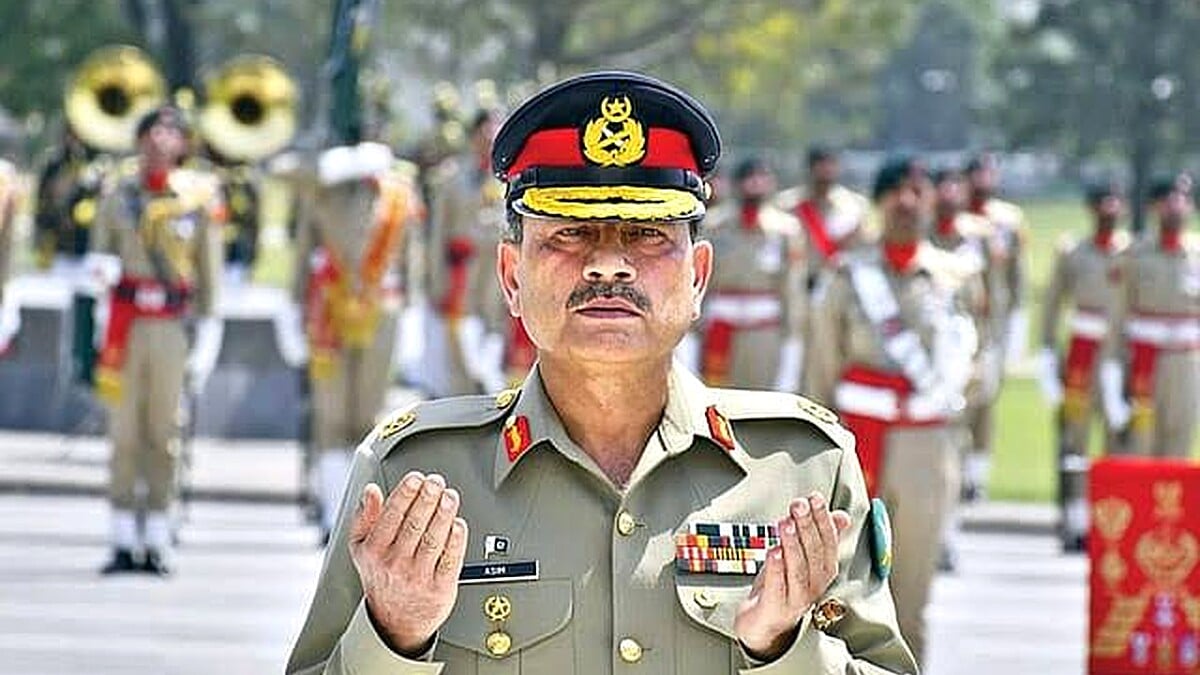




ISLAMABAD: In a telephone conversation with Field Marshal Syed Asim Munir, Iranian Foreign Minister Seyyed Abbas Araghchi appreciated Pakistan’s constructive and responsible role in the ongoing and effective efforts to end the war, strengthen peace and security in the region, and achieve a ceasefire.
The call marks a high point in Pakistan’s quiet but decisive backchannel diplomacy that helped broker a two-week truce between the United States and Iran.
Araghchi conveyed gratitude on behalf of Iran’s Supreme National Security Council for Islamabad’s tireless mediation.
Pakistan’s proposal for a phased ceasefire included safe reopening of the Strait of Hormuz for limited shipping.
The strategic waterway carries roughly 20 percent of global oil supplies, equivalent to 20 million barrels per day.
Disruptions from the conflict had already pushed Brent crude above 120 dollars per barrel, threatening energy markets worldwide.
Field Marshal Munir maintained round-the-clock contact with US Vice President JD Vance, special envoy Steve Witkoff and Araghchi himself.
These conversations helped align positions around Iran’s 10-point proposal and the US 15-point framework.
Prime Minister Shehbaz Sharif’s public appeal for a two-week pause provided the political cover both sides needed.
Regional analysts describe Pakistan’s intervention as preventing an escalation that could have engulfed the Middle East in wider conflict.
The truce now paves the way for formal negotiations on long-term peace.
Pakistan’s 900-kilometre border with Iran has long been a theatre of security cooperation against terrorism and smuggling.
Bilateral trade volume has climbed to three billion dollars in recent years, with ambitions to reach 10 billion dollars through enhanced connectivity.
Formal trade figures from 2022 stood at 2.3 billion dollars, underscoring deepening economic stakes.
Pakistani rice, meat and agricultural exports to Iran have grown steadily despite sanctions.
Defence and intelligence exchanges between the two neighbours have intensified in the past decade.
Dawn and Aaj TV first reported Araghchi’s public statement thanking both Sharif and Munir for their “brotherly” efforts.
Geo TV highlighted how Pakistan emerged as the sole reliable communication channel between Washington and Tehran.
International outlets including The New York Times and Al Jazeera noted Pakistan’s telephone diplomacy as a rare success story in crisis management.
South China Morning Post described Munir as cementing his role as a global diplomatic player.
The development comes months after Munir’s elevation to Field Marshal, reflecting the military’s expanding influence in foreign policy.
Pakistan has historically mediated in regional disputes, from Afghanistan to Kashmir backchannels.
This latest success positions Islamabad as an indispensable actor in Gulf stability.
Oil-dependent Asian economies, which receive 80 percent of Hormuz-bound shipments, breathed a collective sigh of relief.
LNG flows from Qatar and the UAE, accounting for nearly 20 percent of global trade, also stand to benefit from the pause.
Fertiliser shipments through the strait, representing one-third of global seaborne volume, had faced severe bottlenecks.
Restoration of even partial transit is expected to ease food security pressures across developing nations.
Iranian armed forces agreed to halt defensive operations once attacks ceased, matching Trump’s announcement.
The two-week window allows finalisation of a broader agreement based on mutual proposals.
Pakistani officials remain cautiously optimistic about sustained dialogue.
The episode underscores Islamabad’s neutral yet proactive stance in great-power rivalries.
Critics once questioned Pakistan’s ability to balance ties with Washington, Tehran and Beijing simultaneously.
Recent events prove the country’s strategic geography and trusted relationships deliver tangible results.
Field Marshal Munir’s personal engagement is credited with building confidence across divided parties.
Sources close to the talks revealed multiple overnight calls coordinated through Pakistan’s military channels.
This level of involvement went beyond traditional foreign ministry routes, showcasing hybrid diplomacy.
Araghchi’s appreciation letter, posted on X, explicitly named both Sharif and Munir as key contributors.
The statement followed Trump’s confirmation that Pakistan’s request influenced the suspension of planned strikes.
Global markets reacted positively, with oil futures easing slightly on ceasefire news.
Analysts forecast that successful implementation could reduce regional tension indices by 40 percent.
Pakistan’s diplomatic corps is now preparing follow-up engagements to consolidate gains.
The development also strengthens people-to-people ties between Pakistan and Iran.
Cultural and religious affinities have always formed the bedrock of bilateral relations.
Security pacts along the border have reduced cross-border incidents by significant margins in recent years.
Trade corridors through Gwadar and Chabahar ports are expected to gain momentum post-ceasefire.
Experts project that sustained peace could unlock joint infrastructure projects worth billions.
Pakistan’s role has drawn quiet praise from Gulf capitals wary of prolonged conflict.
The United Arab Emirates and Saudi Arabia monitored Islamabad’s mediation with keen interest.
European diplomats privately acknowledged Pakistan’s unique leverage with both Washington and Tehran.
This episode may reshape perceptions of middle powers in 21st-century conflict resolution.
As the two-week clock begins, all eyes remain on whether the truce holds and expands.
Pakistan stands ready to facilitate further rounds of talks if requested.
The telephone conversation between Araghchi and Munir thus symbolises more than routine diplomacy.
It represents a turning point where Islamabad’s steady hand helped steer the region away from the brink.