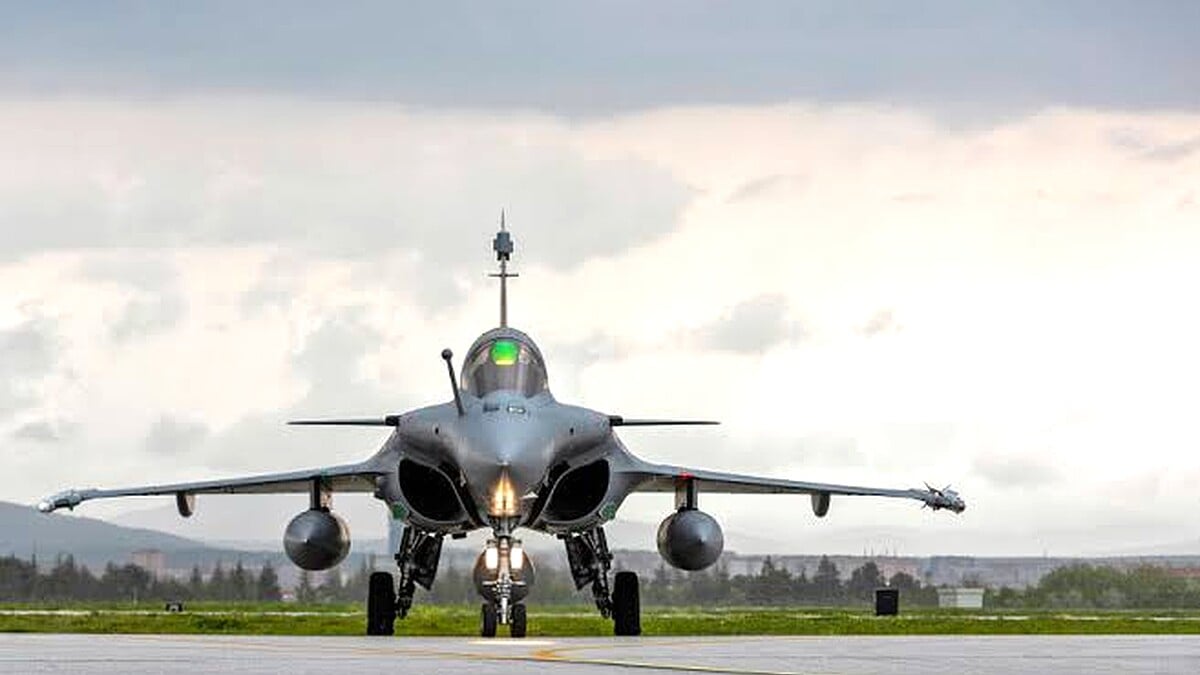




ISLAMABAD: The United Arab Emirates has walked away from a major co-financing deal for France’s advanced Rafale F5 fighter jet upgrade after Paris refused to grant meaningful access to sensitive technologies.
French media outlet La Tribune reported that negotiations collapsed in December 2025 during a tense high-level meeting. The UAE had offered up to €3.5 billion toward the roughly €5 billion development cost of the Rafale F5 programme, also known as the “super Rafale”.
This substantial contribution would have covered most of the outstanding bill. In exchange Abu Dhabi sought industrial participation for local companies and access to key subsystems particularly advanced optronics sensors electronic warfare elements and mission systems.
France declined to transfer these sovereign technologies citing national security concerns and the need to protect intellectual property linked to its broader defence capabilities. As a result the UAE viewed the proposal as paying billions without real technological return or involvement leading to its abrupt withdrawal.
The decision leaves France to fully fund the Rafale F5 alone through its defence budget under an updated military programming law. Development contracts already notified exceed €4 billion with entry into service now targeted around 2035 potentially facing delays due to the funding gap.
The impasse highlights growing demands from buyer nations for genuine technology transfer in major arms deals. Gulf states like the UAE are actively building domestic defence industries and expect offsets when committing large sums.
Despite the setback the UAE remains a key Rafale customer. In 2021 it signed a historic $16.6 billion contract for 80 Rafale F4-standard jets making it the largest export order for the French fighter at the time. Deliveries of these aircraft are scheduled to begin from 2027.
In sharp contrast India continues to advance a massive Rafale acquisition despite similar restrictions on technology access. The Indian Defence Acquisition Council has cleared a proposal for 114 additional Rafale jets valued at approximately $40 billion or Rs 3.25 lakh crore one of the largest defence deals in India’s history.
This MRFA programme includes 18 jets delivered in fly-away condition from France with the remaining 96 to be assembled in India under a Make in India partnership. Reports indicate France will not transfer source code for critical systems such as the SPECTRA electronic warfare suite AESA radar and mission computers limiting independent customisation or integration without French support.
Indian negotiators have pushed for higher indigenous content reportedly targeting 40 to 60 percent. Yet the deal proceeds as the Indian Air Force faces squadron shortages and seeks to bolster capabilities amid regional tensions. The 114-jet order would significantly expand India’s Rafale fleet beyond the existing 36 acquired in 2016.
Defence analysts note the contrast in approaches. The UAE rejected the F5 funding citing lack of returns while India accepts limited transfers possibly prioritising rapid fleet modernisation and operational interoperability over full autonomy in sensitive software.
The Rafale F5 upgrade promises enhanced sensors data fusion collaborative combat with drones and improved electronic warfare. France originally envisioned international partners sharing the burden to ease pressure on its own budget amid competing European priorities.
No other Rafale operators including Egypt Indonesia or Qatar have stepped forward to fill the UAE’s place. This forces Paris to shoulder the full €5 billion cost alone raising questions about potential impacts on timelines and export competitiveness.
The episode underscores evolving dynamics in global arms trade. Buyer nations increasingly demand not just platforms but deep industrial and technological benefits as they invest billions.
France maintains strict controls on core technologies to preserve strategic edge. This policy succeeded in securing the initial UAE F4 order but has now strained ambitions for deeper F5 collaboration.
For India the impending $40 billion commitment signals continued faith in the Rafale platform despite past debates over pricing and offsets. The deal could strengthen bilateral ties with France while supporting domestic manufacturing goals.
As development of the Rafale F5 moves forward solely on French funding the programme’s long-term export potential may hinge on how Paris balances sovereignty with partnership demands from future customers.
The UAE’s walkout serves as a notable case where financial leverage met firm technological boundaries resulting in a clear break. Meanwhile India’s persistence with the larger order despite parallel limitations highlights differing strategic calculations among major Rafale users.