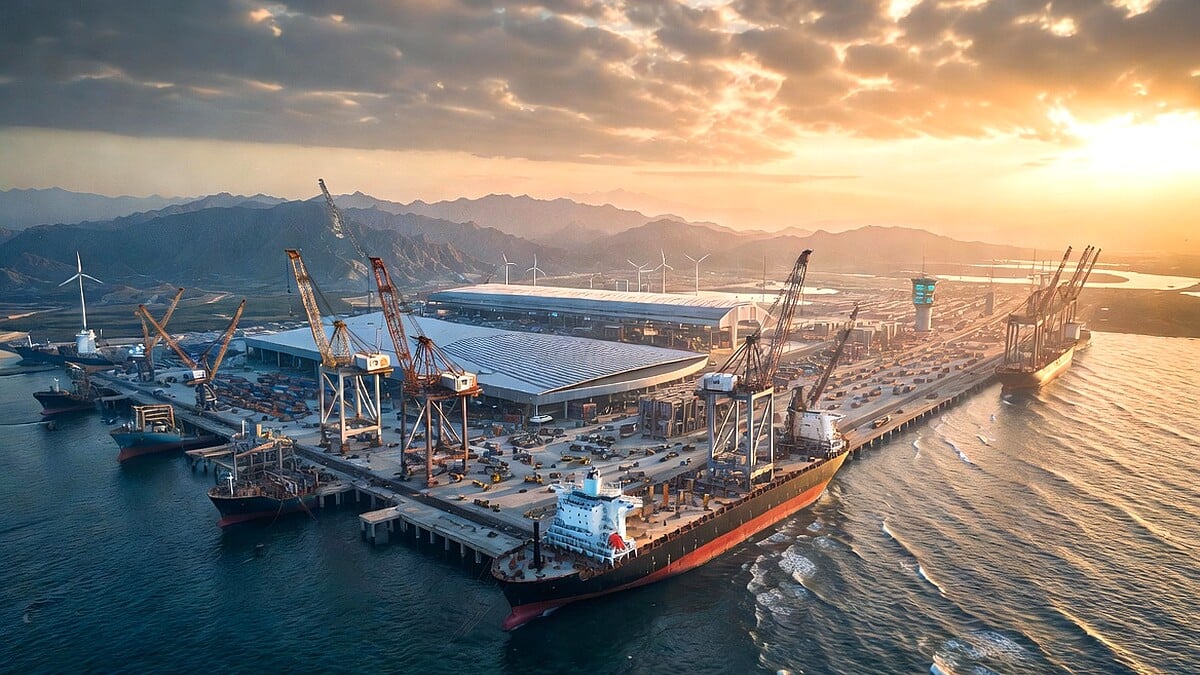




ISLAMABAD: In a groundbreaking move set to redefine Pakistan’s maritime future, the government has unveiled plans for up to four new deep-sea ports along the Arabian Sea coastline.
The ambitious project forms the cornerstone of the country’s Hundred Years Maritime Vision and aims to ease mounting pressure on existing facilities while positioning Pakistan as a leading regional trade powerhouse.
Federal Minister for Maritime Affairs Junaid Anwar Chaudhry announced the initiative after chairing a high-level meeting in Islamabad.
A 12-member multi-agency committee has already been formed to scout optimal locations spanning the full 1,024-kilometre coastline from Sindh’s Sir Creek to Balochistan’s Jiwani area.
Current data paints an urgent picture: Karachi Port operates at only 52 percent capacity, Port Qasim at 65 percent, and Gwadar Port at a mere 5 to 10 percent.
Officials warn that all three ports could hit full saturation between 2035 and 2045 amid explosive growth in industrial output, CPEC-driven cargo, and transit trade from Afghanistan and Central Asia.
The new deep-sea ports are projected to add capacity for an extra 100 million tons of cargo annually by 2040, injecting billions of dollars into the national economy through modern terminals, industrial zones, and shipyards.
Each facility will feature cutting-edge cargo handling systems, full green energy integration, and digital port management platforms, with environmental protection placed at the heart of every design.
Regional media outlets including Dawn and Arab News report that the plan will foster entirely new port cities, creating over 50,000 direct and indirect jobs while revitalising coastal economies.
International coverage from Reuters and the Financial Times has highlighted parallel proposals, such as the Pasni deep-sea terminal pitch to American investors for exporting critical minerals including copper, antimony, and neodymium.
These minerals are vital for electric vehicles, batteries, and defence technology, offering Pakistan a strategic edge in global supply chains.
The feasibility report, due within three months, will include detailed hydrographic surveys, technical assessments, and investment roadmaps to attract both local and foreign capital.
Analysts describe the development as sensational, noting it will dramatically reduce congestion at Karachi and Gwadar while unlocking Pakistan’s blue economy potential.
Maritime trade currently accounts for nearly 70 percent of national revenue through port-related activities, and the new ports promise to multiply this contribution manyfold.
The government’s emphasis on sustainable, future-ready infrastructure aligns with global green shipping standards and could draw eco-focused funding from international partners.
This is not merely port construction; it is a transformative leap that will connect South Asia, Central Asia, and the Middle East through efficient, high-volume sea routes.
With committee deliberations underway, Pakistan stands on the cusp of a maritime renaissance that could reshape trade routes across the Indian Ocean for generations.
The unveiling of these four deep-sea ports signals a confident, data-backed vision for long-term economic supremacy on the world stage.