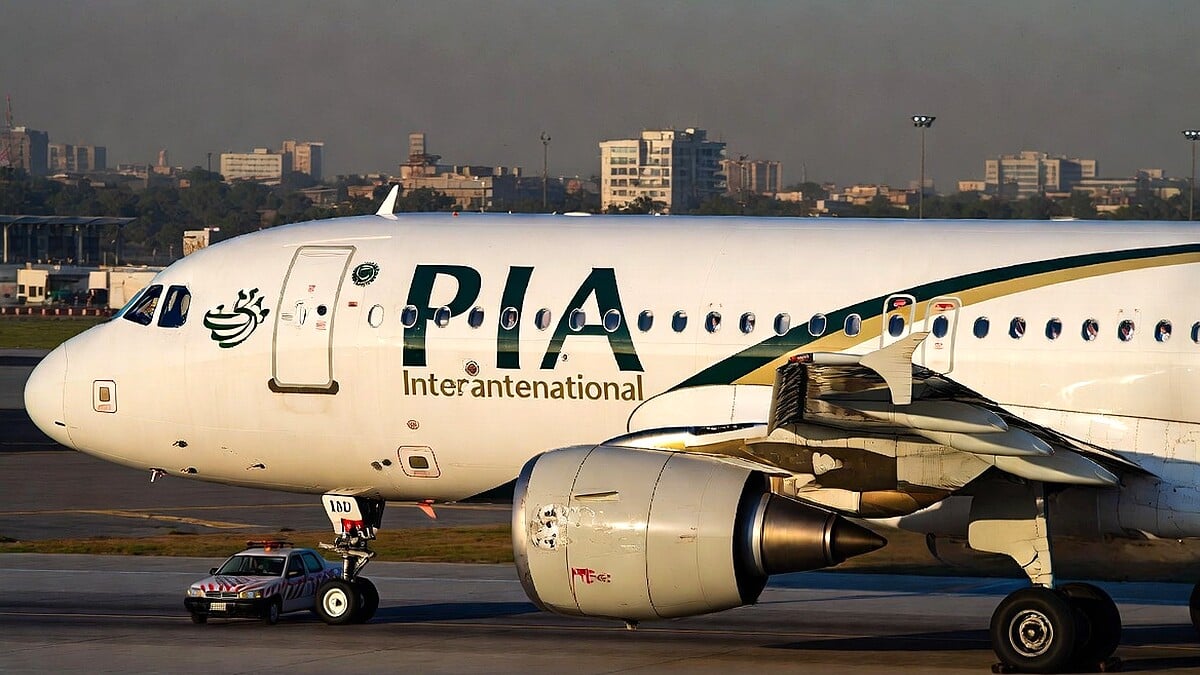




ISLAMABAD: A Pakistan International Airlines flight carrying over 200 passengers narrowly escaped disaster when a bird slammed into its engine seconds after takeoff from Lahore.
The incident unfolded with flight PK-305 bound for Karachi on a routine domestic route.
Moments into the climb the aircraft shuddered violently as the bird struck one engine causing immediate damage.
The experienced pilot alerted air traffic control without hesitation and executed a precise turn back toward Lahore.
Within minutes the jet touched down safely at Allama Iqbal International Airport with all souls on board unharmed.
This heart-stopping sequence marked yet another close call in Pakistan’s aviation history.
Pakistan International Airlines recorded 38 bird strike incidents in the first six months of 2025 alone.
Lahore Airport accounted for the highest number with nine separate cases during that period.
By September 2025 PIA had logged a total of 90 bird strikes across its fleet.
Nationwide Pakistani airports reported over 270 bird strikes in the first nine months of the year.
These figures represent a sharp rise compared with previous years and highlight an escalating safety concern.
Lahore’s location near water bodies and urban areas makes it particularly prone to bird activity.
Most strikes occur during takeoff and landing phases when aircraft fly at lower altitudes.
The damaged engine in PK-305 required immediate post-flight inspection by engineering teams.
Officials confirmed the aircraft would remain grounded pending full assessment and repairs.
PIA swiftly arranged an alternative aircraft to ferry the stranded passengers onward to Karachi.
The move ensured minimal disruption for travellers already shaken by the emergency.
Regional media outlets detailed the pilot’s composure and the flawless execution of the return landing.
No international coverage has emerged so far leaving domestic reports as the primary source of verified facts.
Bird strikes have historically caused engine failures and costly downtime for airlines worldwide.
In one recent Pakistani case engine repair costs exceeded Rs500 million for a single wide-body jet.
PIA’s Airbus and Boeing aircraft remain most vulnerable due to their large engine intakes.
A similar incident in May 2025 involving flight PK-304 also forced an unscheduled halt after a bird hit.
Such events underscore gaps in current wildlife hazard management at major airports.
Pakistan Airports Authority employs habitat modification and basic deterrence but lacks advanced laser or acoustic repellent systems.
International Civil Aviation Organisation guidelines urge comprehensive wildlife programmes yet full implementation lags.
The Pakistan Civil Aviation Authority maintains a safety data collection system to track these incidents.
Analysts warn that without upgraded technology financial losses and flight delays will continue mounting.
Passengers aboard PK-305 later expressed profound relief and commended the crew’s professionalism.
The safe outcome prevented what could have escalated into a major tragedy with potential loss of life.
This latest narrow escape adds urgency to calls for investment in bird strike prevention infrastructure.
Daily operations on the busy Lahore-Karachi corridor carry thousands of passengers who depend on reliability.
Aviation experts emphasise that pilot training and rapid response protocols remain Pakistan’s strongest defence.
Ongoing investigations into the PK-305 strike will likely recommend enhanced monitoring around Lahore Airport.
Pakistan’s flag carrier continues to navigate both operational challenges and public scrutiny.
The incident serves as a timely reminder of nature’s unpredictable impact on modern air travel.
Stakeholders now await detailed findings that could shape future safety protocols across the network.
Until then every safe landing like this one reinforces confidence in the men and women flying Pakistan’s skies.