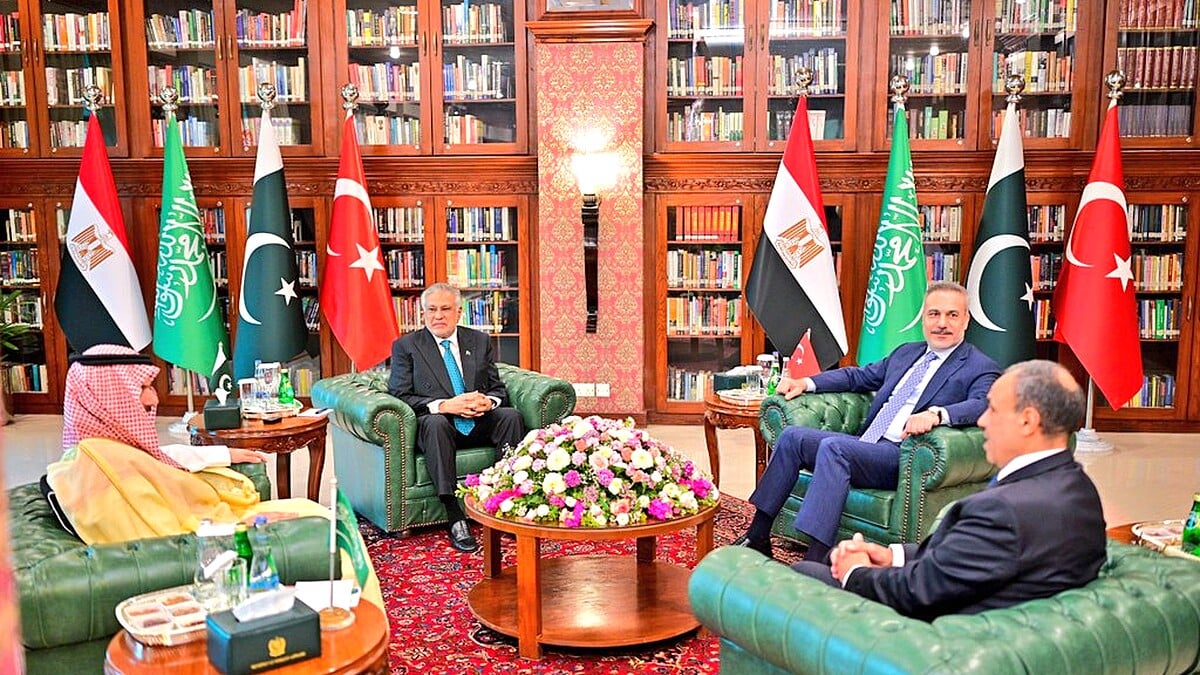




ISLAMABAD: The high-stakes two-day foreign ministers meeting hosted by Pakistan was abruptly curtailed to just one hour and ten minutes of actual discussions.
Originally scheduled for March 29 and 30 as a full two-day summit, the gathering was first trimmed to one day before being compressed even further due to pressing diplomatic engagements in participant capitals.
Saudi Foreign Minister Prince Faisal bin Farhan arrived late on Sunday evening and departed almost immediately after the brief session at the Foreign Ministry.
His stay proved the shortest among all delegates, as he also paid a courtesy call on Prime Minister Shehbaz Sharif before flying out early in the evening.
Egyptian Foreign Minister Badr Abdelatty and Turkish Foreign Minister Hakan Fidan likewise concluded their engagements and returned home shortly thereafter.
Recent Iranian strikes targeted Prince Sultan Air Base in Saudi Arabia, wounding at least 12 United States troops with two in serious condition according to US officials.
These attacks form part of the month-long US-Israeli war on Iran that has now entered its fifth week.
The Strait of Hormuz emerged as a central focus during the truncated talks with participants discussing concrete proposals to ensure uninterrupted passage of oil tankers.
Nearly 21 million barrels of crude oil and petroleum products transit the strait daily representing over 20 percent of global seaborne oil trade.
Any prolonged disruption could trigger a 50 percent surge in international crude prices experts warn.
Pakistan has been assigned to convey the detailed proposals to Iranian leadership on Monday.
The plans reportedly include formation of a regional consortium involving Turkiye Egypt and Saudi Arabia for managing safe maritime traffic through the waterway.
Iran has already signalled willingness to expand access by permitting 20 additional Pakistani-flagged vessels to transit the strait.
This concession follows an earlier agreement for 10 tankers and is viewed as a confidence-building measure.
Iranian authorities have further conveyed to Pakistan that the next round of talks should include foreign ministers from Russia and China.
No dates have yet been finalised for the follow-up meeting.
Foreign Minister Ishaq Dar is scheduled to travel to Beijing in the coming days to continue regional consultations.
Prime Minister Shehbaz Sharif has publicly vowed Pakistan’s full support for vulnerable populations caught in the Gulf crisis.
The premier stressed the urgent need for de-escalation to avert a broader humanitarian and economic catastrophe.
The meeting nevertheless produced coordinated positions on potential ceasefire frameworks and pathways for direct US-Iran dialogue.
Pakistan’s role as a trusted intermediary has been reinforced with Islamabad now positioned to host meaningful US-Iran negotiations soon.
Global energy markets have already registered sharp volatility with oil prices climbing more than 30 percent since the conflict erupted.
South Asian economies heavily reliant on Gulf energy imports face acute risks from further escalation.
Pakistan itself imports significant volumes of crude and refined products through alternative routes but remains exposed to spillover effects.
Analysts note that the Saudi foreign minister’s rapid departure reflects the gravity of security developments back home.
Regional media reports link the early exit directly to the latest Iranian missile and drone barrages on Saudi territory.
While international outlets focused on the agenda of de-escalation Pakistani sources highlight the operational constraints that forced the schedule change.
The original foreign office statement issued on Saturday had announced a comprehensive two-day programme.
By Sunday the itinerary had been scaled back dramatically underscoring the fluid nature of the crisis.
The four nations had previously met in Riyadh on March 19 to align strategies on the widening conflict.
That earlier gathering also condemned Iranian aggression and called for restraint from all sides.
Fresh Iranian actions including strikes on Saudi infrastructure have now pushed Riyadh closer to direct involvement observers say.
Yet the Islamabad session demonstrated continued commitment to dialogue over confrontation.
Proposals shared during the hour-long core discussion emphasised neutral oversight mechanisms for the strait.
Such measures could involve international monitoring to prevent future blockades and attacks on merchant shipping.
Pakistan’s close ties with both Tehran and Washington have enabled it to shuttle proposals effectively.
The foreign office confirmed that all parties expressed satisfaction with the outcomes despite the shortened format.
Broader regional stability and permanent resolution of the Iran war remained the overarching objectives.
With the conflict now affecting shipping lanes critical to Asia and Europe the stakes extend far beyond the Gulf.
Energy-dependent nations from India to Europe could face inflation and supply shortages if the strait remains contested.
Pakistan continues to advocate for inclusive talks that address root causes of the confrontation.
The diplomatic momentum generated in Islamabad is expected to carry forward in coming weeks.
As proposals reach Tehran the coming days will test whether dialogue can prevail over escalation.
Pakistan remains steadfast in its mediator role aiming to prevent further loss of life and economic turmoil.