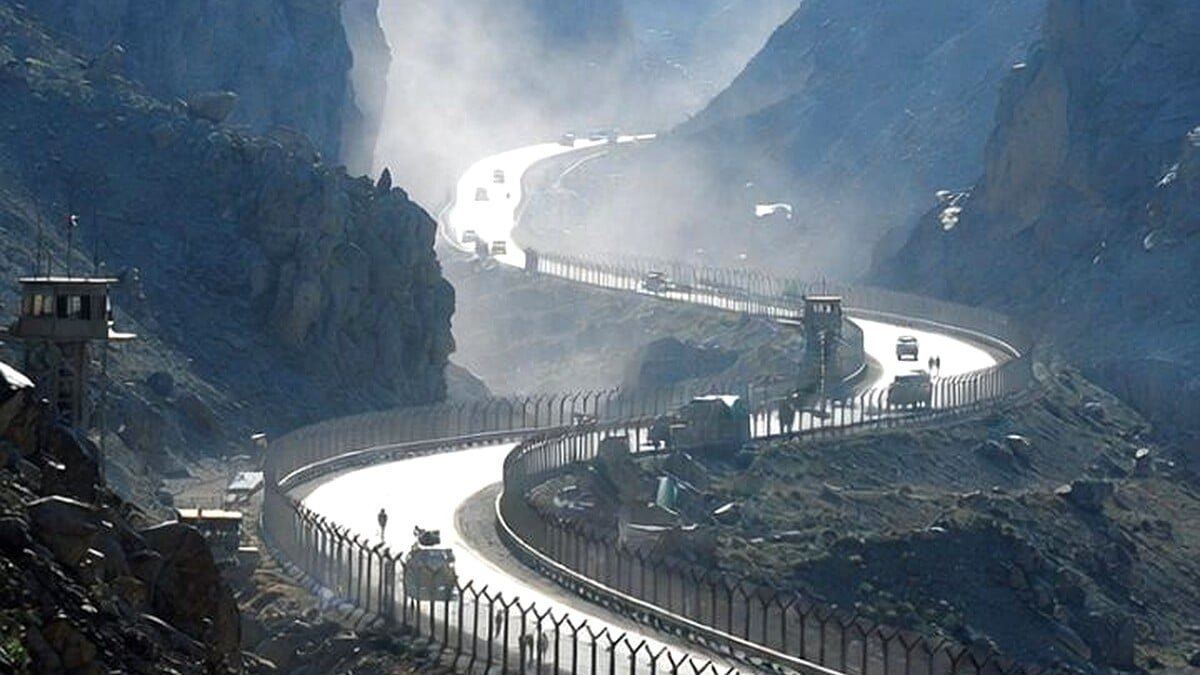




ISLAMABAD: Political activists in Afghanistan’s Nuristan province have accused Pakistan of seizing a strategic location along the disputed Durand Line and blocking vital transportation routes to the districts of Kamdesh and Barg-e-Matal.
This development comes in addition to Pakistan’s earlier capture and fencing of 32 square kilometres of Afghan territory in the Gudwana Enclave of Paktika province.
Local sources and Afghan media outlets including Shamshad News and Khaama Press report the roads have remained closed for nearly 20 days amid intensified clashes and artillery shelling.
Residents now face acute food shortages with supply lines severed in the remote mountainous region.
A female doctor and her four-year-old child were killed in shelling on the first day of Eid al-Fitr in Kamdesh district according to multiple local accounts.
Taliban forces have responded by deploying two fresh battalions from a brigade to eastern Nuristan to prevent further territorial losses.
Pakistani security officials describe the actions as limited tactical measures aimed at securing high ground and preventing cross-border infiltration by militants.
They insist the moves target vulnerable points rather than seeking permanent occupation of Afghan land.
Satellite imagery previously analysed by international observers confirms the fencing of the 32-square-kilometre Gudwana area now integrated into Pakistani control.
The Durand Line stretches 2640 kilometres and has never been fully recognised by Afghanistan since its colonial-era demarcation in 1893.
Nuristan’s rugged terrain has historically served as a strategic corridor for militants with past Taliban control over districts like Kamdesh and Barg-e-Matal dating back more than a decade.
The latest blockade lies approximately 15 kilometres inside Afghan territory according to map estimates cited in Afghan reporting.
Taliban officials are reportedly working on an alternative route via Paprok Kotal yet progress remains slow amid ongoing security concerns.
Political activists have publicly urged the de facto Afghan authorities to intervene immediately and reopen the routes to avert a deepening humanitarian crisis.
This incident forms part of the broader 2026 Afghanistan-Pakistan border conflict that erupted in late February following Pakistani airstrikes on alleged militant targets.
United Nations experts have called for an urgent ceasefire noting that hostilities have already displaced civilians and disrupted aid flows across multiple provinces.
Data from the UN Assistance Mission in Afghanistan indicates 76 civilians killed and 213 injured between 16 February and 17 March alone.
Border crossings with Pakistan have stayed largely closed since October 2025 with only limited exceptions for returnees severely affecting trade and humanitarian supplies.
In Nuristan the new restrictions compound existing isolation with residents dependent on these routes for essential goods and medical access.
Taliban spokespersons have denied any significant loss of territory asserting that security forces maintain full control over Kamdesh and Barg-e-Matal.
Ground reports from residents however describe increased Pakistani military activity including drone support and local militia involvement.
The seized strategic location reportedly provides Pakistan enhanced oversight of potential infiltration routes long used by groups such as the Tehreek-e-Taliban Pakistan.
This mirrors Islamabad’s wider border fencing strategy along the Durand Line intended to strengthen national security against cross-border threats.
Analysts observe that while global attention has centred on high-profile strikes in Kabul and Kandahar the Nuristan developments reveal persistent low-intensity territorial shifts.
With no diplomatic breakthrough in sight the situation risks escalating further and drawing in regional actors concerned about stability in South and Central Asia.
The claims highlight the fragile balance along one of the world’s most contentious borders where security imperatives collide with sovereignty disputes.
As tensions persist both sides continue to reinforce positions raising fears of prolonged instability in an already volatile region.