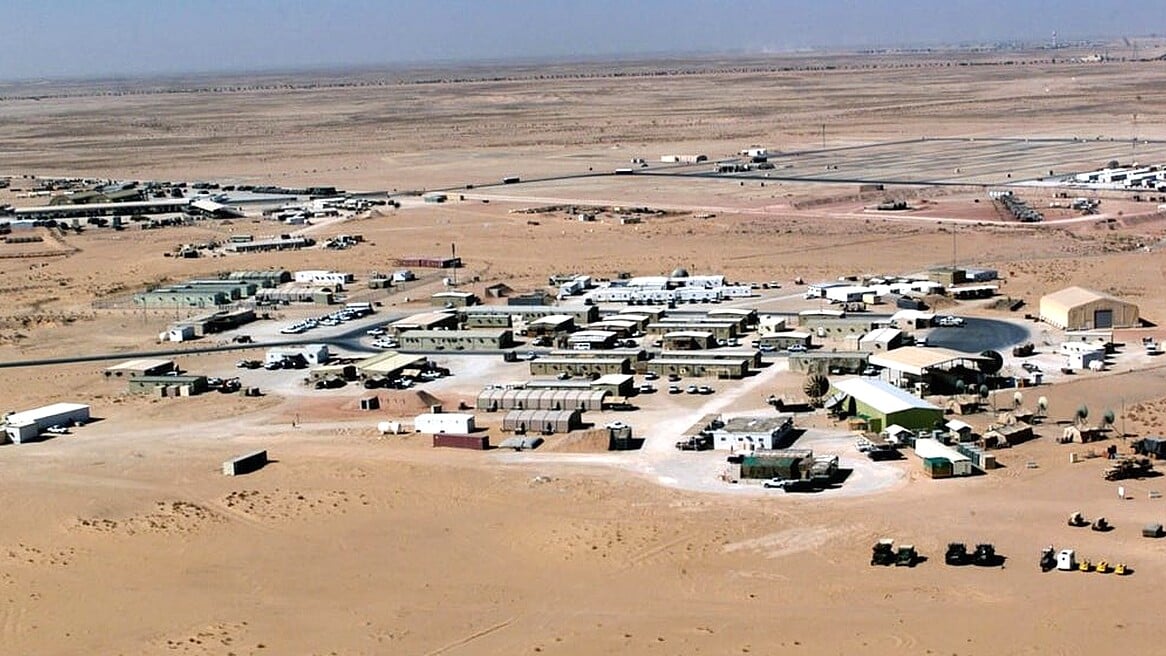




ISLAMABAD: At least 20 United States service members were injured including two critically when Iranian missile and drone strikes hit Prince Sultan Air Base in Saudi Arabia on Friday.
The attack marked the latest escalation in the month-long conflict between the United States Israel and Iran.
Multiple US officials confirmed the strike involved ballistic missiles and unmanned drones that penetrated base defences.
Several high-value aircraft sustained damage including an E-3 Sentry AWACS command and control plane.
Preliminary assessments showed the E-3 Sentry suffered significant impact to its fuselage and sensor arrays.
This airborne warning system remains one of the most advanced surveillance platforms in the US inventory.
Multiple KC-135 Stratotanker refuelling aircraft were also struck on the ground.
These tankers form the backbone of coalition air operations across the Gulf region.
The aircraft were damaged but not fully destroyed and are undergoing repairs according to sources.
US Central Command has reported over 300 American service members wounded since the conflict began on February 28.
Of these around 30 remain sidelined with approximately 10 listed as seriously injured overall.
Thirteen US troops have been killed in related incidents across the theatre.
Friday’s strike follows earlier Iranian attacks on the same base earlier this week.
Prince Sultan Air Base near Riyadh serves as a critical hub for US air refuelling and surveillance missions.
It supports operations that have targeted Iranian assets in recent weeks.
The base has hosted thousands of US personnel and advanced aircraft since its reactivation in 2019.
Iran’s Islamic Revolutionary Guard Corps described the operation as a direct response to ongoing coalition strikes.
Satellite imagery circulating online appeared to show visible damage to parked aircraft on the flight line.
No fatalities were reported in Friday’s incident but critical injuries have raised concerns among military planners.
Defence analysts note the loss of even temporary AWACS capability could affect real-time battlefield awareness.
Refuelling tankers are equally vital for extending the range of fighter jets over vast distances.
The strike comes amid President Donald Trump’s recent statements claiming Iran has been largely neutralised.
Yet Iranian forces continue to demonstrate reach across the Gulf with precise targeting.
Saudi Arabia has maintained a low public profile on the attacks while hosting US forces.
The kingdom’s airspace and bases remain key to the broader US-led campaign.
Regional security experts warn that repeated hits on Gulf installations risk drawing more Arab states into the fray.
Pakistan has closely monitored developments given its strategic ties with both Saudi Arabia and Iran.
The incident underscores vulnerabilities in forward-deployed US assets despite advanced defences.
Centcom earlier updated that most wounded personnel have returned to duty after initial treatment.
However Friday’s seriously injured cases may require longer recovery periods.
The E-3 Sentry’s role in coordinating air defence and offensive missions makes its damage particularly concerning.
Each such aircraft represents billions in investment and irreplaceable operational expertise.
KC-135 losses even temporary ones disrupt logistics for sustained air campaigns against Iranian targets.
This week’s strikes highlight Iran’s ability to project power despite reported setbacks elsewhere.
US officials spoke on condition of anonymity due to the sensitivity of ongoing operations.
The attack also damaged infrastructure near personnel housing according to initial reports.
No independent verification of exact drone and missile counts has been released publicly.
Broader conflict data shows 18 deaths inside Israel and additional casualties in Lebanon.
The Prince Sultan incident adds to the mounting toll on American forces in the region.
Military observers describe the strikes as a calculated effort to degrade US support infrastructure.
Repair timelines for the affected aircraft remain classified but are expected to take weeks.
The base continues operations with backup assets while assessments proceed.
This development has prompted fresh reviews of force protection measures across Gulf allies.
Analysts predict increased pressure on host nations to reassess US military presence.
For now the focus remains on treating the injured and restoring damaged platforms.
The episode serves as a reminder of the persistent risks in the volatile Middle East theatre.