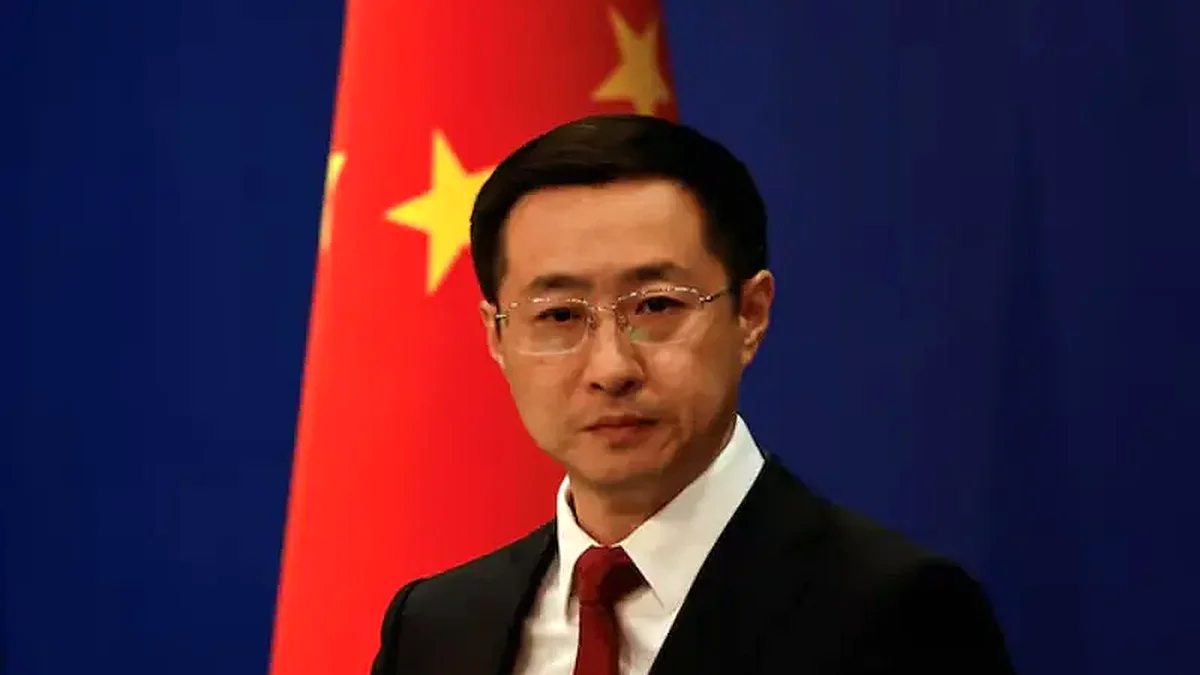




ISLAMABAD: China’s foreign ministry on Friday accused international media of publishing “false information” after a major report claimed the country’s top semiconductor firm SMIC had sent chipmaking tools to Iran’s military, a revelation that has ignited fresh scrutiny over Beijing’s role in the month-old US-Israeli conflict.
The report, carried by Reuters and citing two unidentified senior officials in US President Donald Trump’s administration, alleged that contract chipmaker SMIC began shipping the equipment roughly a year ago.
One US official stated they had “no reason to believe that any of this has stopped,” adding that the cooperation almost certainly included technical training on semiconductor technology.
The shipments were reportedly directed to Iran’s military industrial complex, potentially aiding electronics production for missiles, drones and other defence systems at a critical juncture.
SMIC, China’s largest chipmaker and the world’s second-largest pure-play foundry, reported strong 2025 financials with revenue climbing 16.2 percent year-on-year to $9.33 billion.
Its capital spending reached $8.1 billion last year, underscoring aggressive expansion despite US sanctions imposed since 2020 over alleged military ties, which the firm has consistently denied.
Global semiconductor sales hit a record $791.7 billion in 2025, up 25.6 percent from the previous year, with projections nearing $1 trillion in 2026 driven by artificial intelligence demand.
China remains Iran’s largest trading partner, with bilateral trade exceeding $41 billion annually when including $31.2 billion in unreported Iranian oil exports to Beijing.
Official figures show China exported $698 million worth of goods to Iran in December 2025 alone, while non-oil trade between the two nations reached $2.54 billion in a single recent month.
The foreign ministry insisted Beijing conducts only normal commercial trade with Tehran and has not provided military assistance in the conflict sparked by US-Israeli strikes on February 28.
Yet the timing of the alleged transfers has raised eyebrows, coming as China has repeatedly called for an immediate ceasefire without endorsing direct involvement.
US sanctions on SMIC restrict access to advanced equipment from suppliers like Lam Research, KLA and Applied Materials, yet the firm still achieved breakthroughs such as enabling Huawei’s sophisticated Mate 60 Pro chip in 2024.
Analysts warn that if the tools contain US-origin components, the shipments could constitute a direct violation of American export controls on Iran.
The development has amplified concerns over global supply chain vulnerabilities, as the ongoing Middle East war already threatens helium and other critical materials essential for semiconductor fabrication worldwide.
South Korean officials noted earlier this month that disruptions in the region could affect 14 key chipmaking inputs, though major producers maintain diversified inventories for now.
Pakistan, maintaining strong ties with both China and Iran, views the episode through the lens of broader regional stability, where any escalation could impact energy routes and economic partnerships.
The foreign ministry’s swift denial appears aimed at quelling speculation that Beijing is quietly tilting the balance in Tehran’s favour.
No public evidence has surfaced confirming the exact nature or volume of the equipment transferred.
Still, the US officials’ claims have fuelled debate in diplomatic circles about the limits of China’s declared neutrality.
Industry experts highlight that even older-generation chip tools could significantly upgrade Iran’s domestic manufacturing resilience under heavy international sanctions.
Beijing’s economic leverage in Tehran, built over decades of oil purchases covering nearly 90 percent of Iran’s exports, provides a buffer that few other nations can match.
The episode underscores the complex interplay between commercial interests and geopolitical tensions in the semiconductor sector.
As the conflict enters its second month, any verified technology flow could reshape calculations in Washington, Tel Aviv and Tehran alike.
China has urged all parties to pursue dialogue, positioning itself as a proponent of de-escalation while safeguarding its strategic partnerships.
The semiconductor controversy arrives amid heightened global focus on supply chain security, with nations racing to localise production of critical components.
For SMIC, the allegations risk further tightening of export restrictions already limiting its access to cutting-edge tools.
Yet the firm’s robust 2025 performance signals resilience, with gross margins improving to 21 percent amid growing domestic demand.
Observers expect the story to dominate discussions at upcoming international forums on technology governance and non-proliferation.
Whether the transfers occurred and their precise impact remain subjects of intense verification efforts by Western intelligence agencies.
In the meantime, China’s firm rebuttal seeks to preserve its image as a responsible global player committed to peaceful trade.