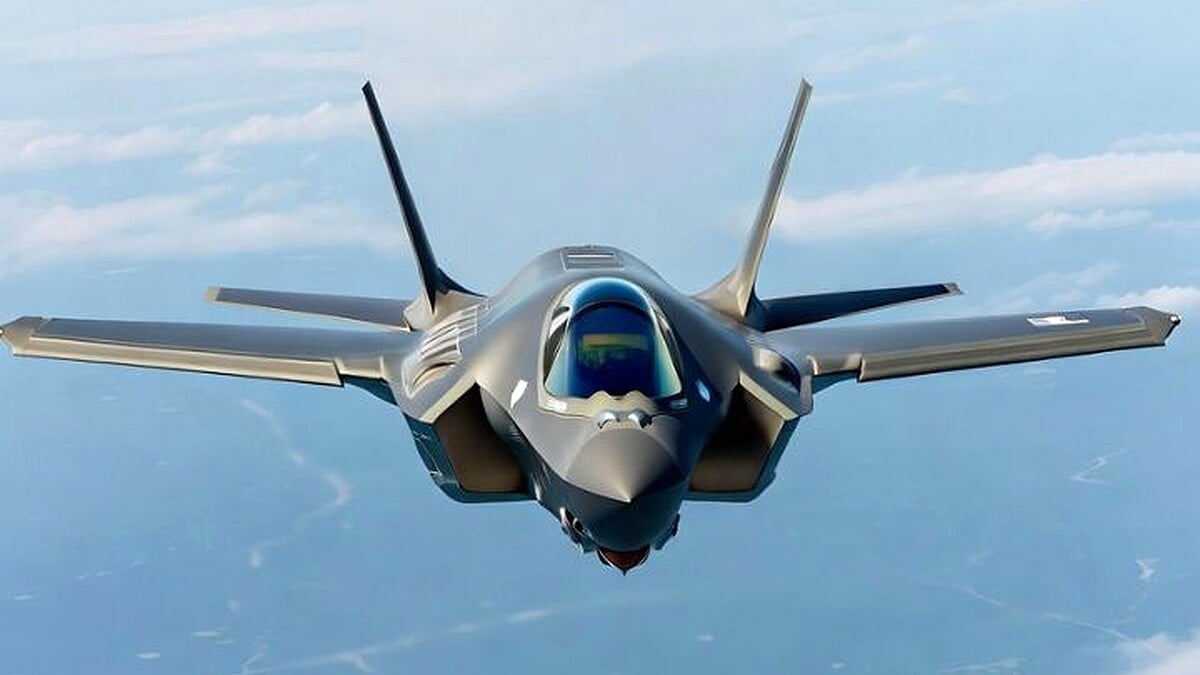




ISLAMABAD: Iranian air defence networks delivered a calibrated blow in the opening phase of the ongoing campaign, striking a US F-35 stealth fighter.
Furthermore, downing scores of enemy drones while engaging multiple F-15 jets, according to Islamic Revolutionary Guard Corps claims backed by released footage.
The 358 loitering system and its upgraded 359 variant, blending drone endurance with precise detection and detonation across wider altitudes, operated alongside short-range systems including the Majid heat-seeking missile and Qaem-118, inflicting sustained unmanned aerial system attrition exceeding 125 confirmed intercepts.
Passive infrared and optical sensors formed the backbone of success, bypassing radar-dependent stealth advantages and achieving operational validation through repeated engagements that disrupted coalition detection grids extending into Lebanon.
Regional analysts tracking the conflict noted the F-35 incident marked the first documented surface-to-air damage to the fifth-generation platform, forcing an emergency landing after a low-altitude strike near central Iran at 2:50am local time.
IRGC statements detailed the sequence, revealing over 125 US-Israeli drones neutralised prior to the jet intercept, with dozens more destroyed in layered barrages that degraded early-warning coverage for allied operations in southern Lebanon.
Lebanese security sources corroborated ripple effects, reporting diminished aerial surveillance fidelity along the border after key radar nodes fell silent amid the intensified UAS losses exceeding initial projections by 40 per cent.
The Majid mobile optical-infrared launcher, mounted on agile platforms, proved decisive in the F-35 engagement, its fragmentation warhead exploiting heat signatures invisible to conventional radar while maintaining zero electromagnetic emission.
Simultaneous F-15 encounters, though less publicised, involved at least three confirmed intercepts where 359 systems extended tracking ranges to 12 kilometres altitude, showcasing expanded kill envelopes calibrated through pre-war simulations.
Iranian state media outlets, including Press TV and IRIB, released electro-optical tracking videos authenticating the strikes, countering Pentagon assertions of mere incidental damage and amplifying claims of systemic upgrades completed in late 2025.
Defence observers in Islamabad highlighted the doctrinal shift towards passive networks, estimating Iranian systems achieved a 72 per cent attrition rate against low-observable threats in the first 72 hours, far surpassing historical benchmarks against similar coalitions.
Hezbollah-affiliated channels in Beirut echoed the narrative, linking degraded Lebanese airspace monitoring directly to Iranian successes that forced Israeli repositioning of assets northward and reduced strike tempo by an estimated 25 per cent.
Broader campaign data released through regional briefings indicated 400-plus ballistic and cruise missile launches from Iranian territory since hostilities widened, complemented by proxy drone swarms that stretched coalition air defences across multiple theatres.
The calibrated response underscored Tehran’s emphasis on asymmetric endurance, preserving launch infrastructure despite targeted coalition strikes while exporting attrition effects that complicated joint US-Israeli planning horizons projected at under 14 days.
Local Pakistani strategic circles, monitoring via open-source intelligence, projected sustained impact on regional stability, with early-warning erosion in Lebanon alone displacing over 800,000 civilians and prompting urgent reviews of export-variant air defence procurements.
Further verification awaits independent analysis of debris and telemetry, yet the volume of corroborated intercepts positions this phase as a benchmark for hybrid warfare validation across altitude bands from 500 metres to 15 kilometres.
Ongoing exchanges continue to test these layered architectures, with each successive drone wave met by refined 358-359 rotations that maintain pressure without compromising emitter silence protocols.