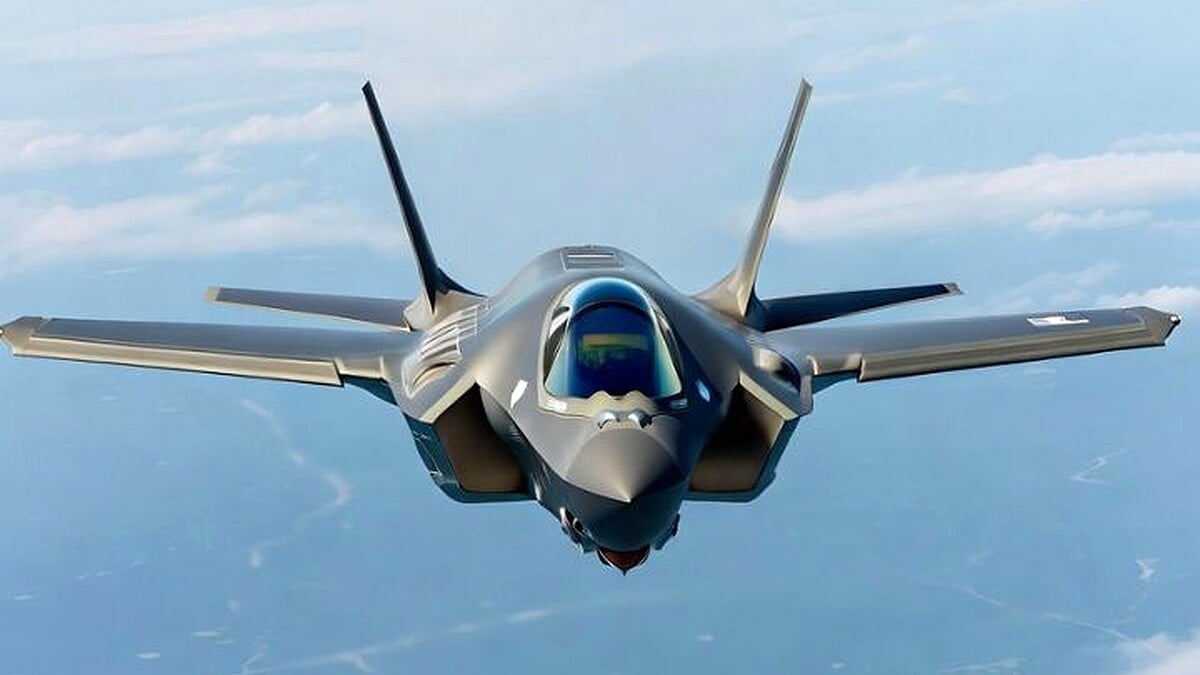




ISLAMABAD: In a seismic blow to American air power, Iranian ground defences have struck a US F-35 stealth fighter jet, inflicting shrapnel wounds on its pilot during the escalating US-Israeli war on Iran, Al Jazeera has reported.
The fifth-generation aircraft, long hailed as unkillable, made an emergency landing at a Middle East airbase on March 19 after returning from a combat mission over Iran.
Captain Tim Hawkins of US Central Command confirmed the jet landed safely, with the pilot in stable condition, but declined to detail the cause.
Two US sources familiar with the incident told media outlets the aircraft was hit by Iranian fire, marking the first confirmed strike on an F-35 in this conflict.
Iran’s Islamic Revolutionary Guard Corps promptly claimed responsibility, stating its forces targeted a US aircraft.
Semiofficial Tasnim news agency released military footage purporting to show Tehran’s air defence systems striking the stealth jet.
Air & Space Forces Magazine reported the pilot sustained shrapnel wounds from ground fire, citing unnamed sources with direct knowledge.
The F-35 Lightning II, built by Lockheed Martin, carries a unit cost of 82.5 million dollars for the F-35A variant as of recent production lots.
It boasts a top speed of Mach 1.6, or roughly 1,200 miles per hour, and a combat radius exceeding 1,350 miles on internal fuel.
Advanced stealth features, including radar-absorbent materials and internal weapon bays, were designed to evade detection and dominate contested airspace.
Yet Iranian systems apparently penetrated these defences, possibly using heat-seeking technology like the Majid short-range air defence missile.
This incident challenges the narrative of the F-35 as the cornerstone of Washington’s aerial supremacy, with over 1,000 flight hours logged daily across global operations.
The US Air Force operates hundreds of these jets, part of a programme whose total acquisition costs exceed 291 billion dollars.
Lifecycle expenses for the entire fleet are projected to surpass two trillion dollars over decades of service.
Iranian state media portrayed the strike as proof that advanced US technology is vulnerable to determined regional defences.
Regional reports from Iranian outlets amplified the footage, while international coverage from Al Jazeera and CNN corroborated the emergency landing.
US officials have launched an investigation, but have not publicly confirmed damage from enemy action.
Experts note the F-35’s sensor fusion and networked warfare capabilities have transformed modern combat, yet this hit exposes limits against ground-based threats.
The war has seen intensified US-Israeli strikes on Iranian targets, prompting Tehran to deploy layered air defences around key sites.
Qeshm Island’s underground missile facilities, though not directly linked, underscore Iran’s hardened infrastructure strategy.
Global energy markets reacted with volatility, as analysts warned of potential supply disruptions if the conflict widens.
The pilot’s shrapnel injuries, though non-life-threatening, symbolise a rare breach in the F-35’s vaunted invincibility.
Lockheed Martin has delivered 191 jets in 2025 alone, maintaining production momentum despite operational challenges.
This event marks a propaganda victory for Iran, with state television replaying the footage repeatedly.
Pentagon planners now face questions about adjusting tactics for deep-penetration missions into Iranian airspace.
The incident comes amid broader attrition in the conflict, including reported losses of other US assets.
Military analysts highlight that even partial damage to a stealth platform forces costly repairs and temporary grounding.
With the F-35’s Pratt & Whitney F135 engine delivering 43,000 pounds of thrust, the jet’s survivability was tested to its limits.
Iran’s success, if verified, could reshape threat assessments for operators worldwide, including NATO allies.
As investigations continue, the strike reverberates through defence circles, underscoring the evolving dynamics of aerial warfare in the region.