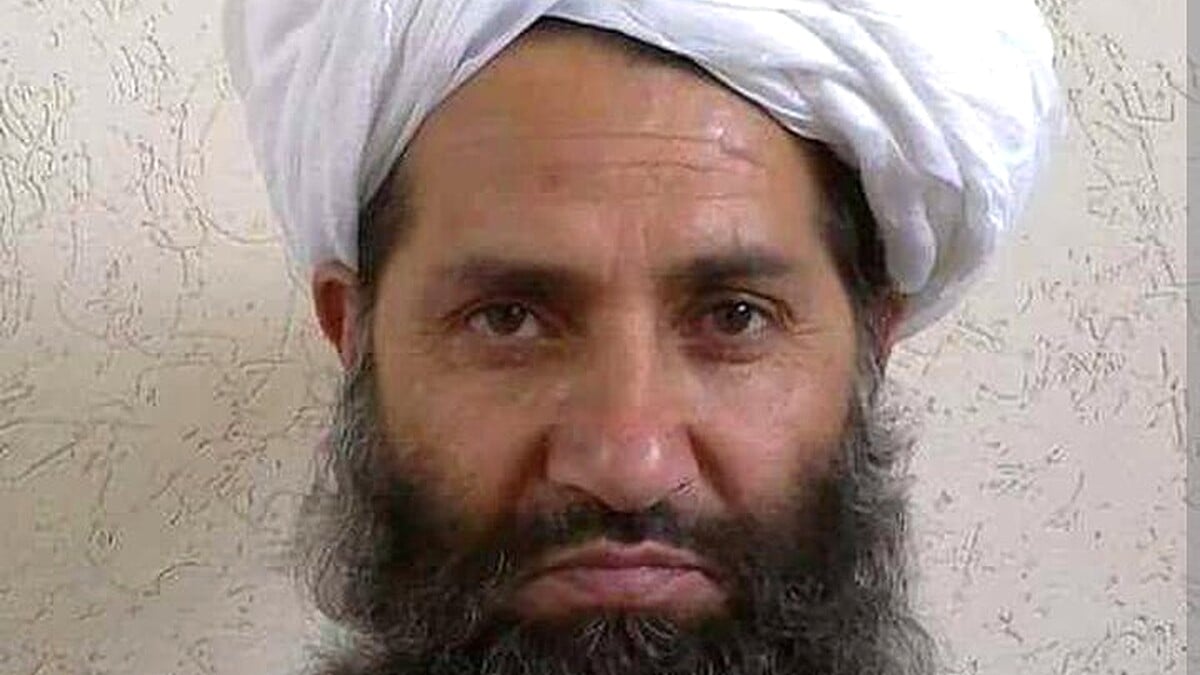




ISLAMABAD: Taliban Supreme Leader Hibatullah Akhundzada delivered a pointed message to Pakistan during Eid al-Fitr prayers at Kandahar’s historic Eidgah mosque, declaring that neither airstrikes nor artillery fire would force the Islamic Emirate to alter its position.
Thousands of worshippers gathered as Akhundzada appeared on the mosque minaret for the sermon, marking one of his rare public appearances. He stressed that external military pressure would prove ineffective, drawing a direct parallel to the Taliban’s two-decade resistance against NATO and Western forces that ultimately led to their victory in 2021.
The remarks represent the first explicit public allusion by the supreme leader to escalating cross-border tensions with Pakistan. Pakistani forces have conducted multiple airstrikes inside Afghanistan since October 2025, targeting suspected Tehreek-e-Taliban Pakistan hideouts in provinces including Kunar, Nangarhar and Kandahar itself.
Official Pakistani figures show more than 300 soldiers and officers killed in militant attacks across the country in 2025 alone, prompting intensified operations. In one October 2025 border clash, 23 Pakistani troops were martyred while Islamabad claimed over 200 Taliban-affiliated fighters eliminated. Fresh February 2026 strikes reported another 44 Afghan Taliban operatives killed, with Islamabad insisting the actions remained intelligence-based and limited to terrorist camps.
Akhundzada acknowledged growing domestic criticism within Afghanistan, stating citizens hold the legitimate right to question government decisions. This admission comes amid reports of internal debates over economic policies and governance direction under the Emirate, where public frustration has risen over restricted trade routes and border closures imposed by Pakistan in recent months.
The supreme leader also turned his attention to economic misconduct, labelling goods hoarding by traders as a sinful act that harms the populace. He urged swift punishment for offenders, highlighting how such practices exacerbate inflation and scarcity in a country still recovering from decades of conflict and international isolation.
Pakistan views the TTP as a direct threat, estimating the group maintains safe havens on Afghan soil despite repeated Taliban assurances. Cross-border incidents have surged since the Taliban takeover, with TTP attacks inside Pakistan rising sharply. Data from Pakistani security sources indicate over 150 TTP members neutralised on Afghan territory in targeted operations last year alone.
The Eid sermon arrives against a backdrop of strained diplomatic ties. Pakistan closed several border crossings in late 2025, citing security, which disrupted bilateral trade valued at billions of dollars annually before the restrictions. Afghan exports of fresh produce and minerals dropped significantly, contributing to economic strain inside Afghanistan where unemployment hovers near 40 percent according to independent estimates.
Akhundzada’s defiance echoes the Taliban’s historical resilience. During the NATO campaign from 2001 to 2021, the group endured sustained airstrikes, special forces raids and ground offensives yet maintained cohesion. He reminded listeners that fear of superior firepower never swayed their resolve then, nor would it now against regional neighbours.
Observers note the speech’s timing coincides with Pakistan’s ongoing military campaign along the 2,600-kilometre Durand Line. Islamabad has deployed additional Frontier Corps units and enhanced drone surveillance in response to infiltration attempts. Recent clashes in Khyber Pakhtunkhwa and Balochistan sectors claimed further Pakistani personnel while Afghan sources report civilian casualties from cross-border fire.
Public reaction inside Afghanistan remains mixed. While hardline supporters praise the leader’s firm stance, moderate voices within the Emirate express concern over prolonged confrontation. The speech also addressed unity, warning that internal divisions could undermine the system, a subtle nod to reported rifts between Kandahar-based hardliners and more pragmatic elements in Kabul.
Pakistan’s foreign office has yet to issue a formal response to the Kandahar remarks. However, senior officials in Islamabad maintain that operations target only terrorist infrastructure and pose no threat to the Afghan state. Defence analysts highlight that repeated TTP attacks, including high-profile ambushes killing senior officers, leave Pakistan with limited options beyond pre-emptive action.
The broader regional implications extend beyond bilateral ties. Afghanistan hosts over three million registered and unregistered refugees from Pakistan, many displaced by security operations. Border fencing projects, completed along 90 percent of the frontier, have reduced infiltration but sparked disputes over grazing lands and tribal movement rights.
Economic data underscores the stakes. Pre-2021 trade between the two countries exceeded $2.5 billion yearly, with Pakistan importing Afghan coal and dry fruits while exporting essential goods. Current restrictions have slashed volumes by nearly 60 percent, affecting livelihoods on both sides of the border.
Akhundzada’s criticism of hoarding ties into wider governance challenges. Afghanistan faces acute food insecurity, with United Nations reports indicating millions require humanitarian aid. Traders accused of stockpiling essential commodities face potential enforcement under Sharia-based penalties outlined in the Emirate’s decrees.
The sermon’s delivery from the minaret, visible to the large congregation, amplified its reach through local media relays. Unlike previous messages confined to audio recordings, this appearance underscores Akhundzada’s intent to project authority amid external pressures and internal scrutiny.
Security experts monitoring the region warn that unchecked escalation risks broader instability. Pakistan’s military, battle-hardened from decades of counter-insurgency, continues precision strikes while calling for Afghan cooperation against TTP sanctuaries. The Taliban, meanwhile, insists on sovereignty and rejects any external dictation.
As both nations navigate fragile relations, Akhundzada’s words signal continuity in the Emirate’s stance: resistance to coercion remains a core principle. The coming weeks may test whether dialogue or continued military posturing defines the path ahead for Pakistan and Afghanistan.