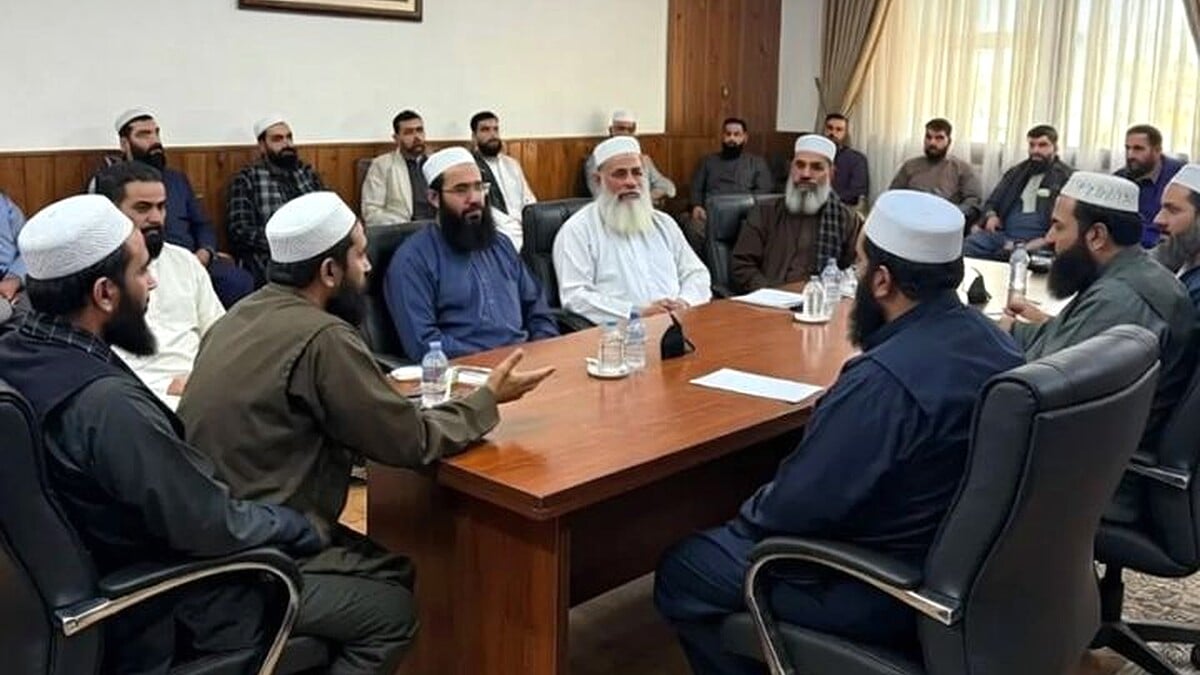




ISLAMABAD: The Grand Mufti of Afghanistan’s Supreme Court under the Taliban regime, Sheikh Mawlawi Abdul Rauf, has issued a religious decree declaring jihad against Pakistan’s military authorities obligatory for Muslims.
This development marks a sharp escalation in already strained bilateral relations between Islamabad and Kabul.
Reports indicate the fatwa was issued in response to recent Pakistani airstrikes, including one on a hospital in Kabul that caused significant casualties.
The decree urges all able-bodied Muslim men to join or support the conflict against what the mufti described as Pakistan’s military regime.
Such statements from high-ranking Taliban religious figures carry weight in ideological circles and could influence militant groups operating along the border.
Pakistan and Afghanistan have witnessed deteriorating ties since the Taliban regained control in Kabul in 2021.
Cross-border attacks by the Tehrik-e-Taliban Pakistan (TTP), which Islamabad accuses Kabul of harboring, have intensified security concerns.
Pakistan has conducted multiple military operations and airstrikes inside Afghan territory targeting alleged militant hideouts.
These actions have drawn strong condemnation from Afghan officials who view them as violations of sovereignty.
In recent months, exchanges of fire and drone strikes have become frequent along the Durand Line.
The fatwa appears amid this backdrop of military confrontations and diplomatic deadlocks.
Analysts note that while the Afghan Taliban leadership has previously issued decrees banning fighters from engaging in jihad outside Afghanistan, dissenting voices within the regime persist.
Earlier fatwas from Taliban figures, including those linked to Dar al-Ifta, emphasized commitments under the Doha Agreement not to allow Afghan soil for attacks abroad.
However, individual clerics and local leaders have occasionally voiced contrary positions.
The current declaration by the Supreme Court’s Grand Mufti stands out due to his institutional position.
Sources familiar with Afghan religious circles suggest such edicts aim to rally support amid perceived external aggression.
Pakistan’s response has been firm, with officials reiterating that actions target terrorists and not the Afghan state.
Defence analysts point to increased TTP activities following Pakistani operations, creating a cycle of retaliation.
The fatwa’s language frames the conflict in religious terms, labeling Pakistan’s military as a target for obligatory holy war.
This rhetoric echoes historical patterns where ideological justifications fuel militancy.
Regional observers warn that such declarations risk broadening the conflict beyond state actors to involve non-state elements.
Diplomatic channels between the two neighbors remain limited, with no formal embassy exchanges since 2021.
Pakistan has repeatedly called for Taliban action against TTP sanctuaries, while Kabul demands respect for its borders.
Recent talks mediated through third parties have yielded little progress on core issues.
The involvement of a supreme court religious authority adds a layer of complexity to de-escalation efforts.
Islamic scholars in Pakistan have historically issued counter-fatwas against anti-state violence.
For instance, prominent figures have declared armed actions against the Pakistani state as rebellion rather than legitimate jihad.
This contrast highlights deep divisions in interpreting religious edicts across borders.
Security implications for Pakistan include potential surges in militant recruitment inspired by the fatwa.
Intelligence reports suggest heightened alerts along western frontiers.
The broader South Asian security landscape could face ripple effects if ideological mobilization intensifies.
Experts emphasize the need for dialogue to prevent further deterioration.
Both sides face domestic pressures: Pakistan grapples with internal terrorism, while the Taliban regime seeks legitimacy amid economic challenges.
The fatwa underscores how religious authority intersects with geopolitical rivalries.
Without mutual restraint, the risk of prolonged instability remains high.
Observers call for international mediation to address underlying grievances.
The coming weeks will test whether this decree translates into tangible militant actions or remains symbolic.
Regional stability hinges on de-escalation and pragmatic engagement between the two nuclear-capable neighbors.