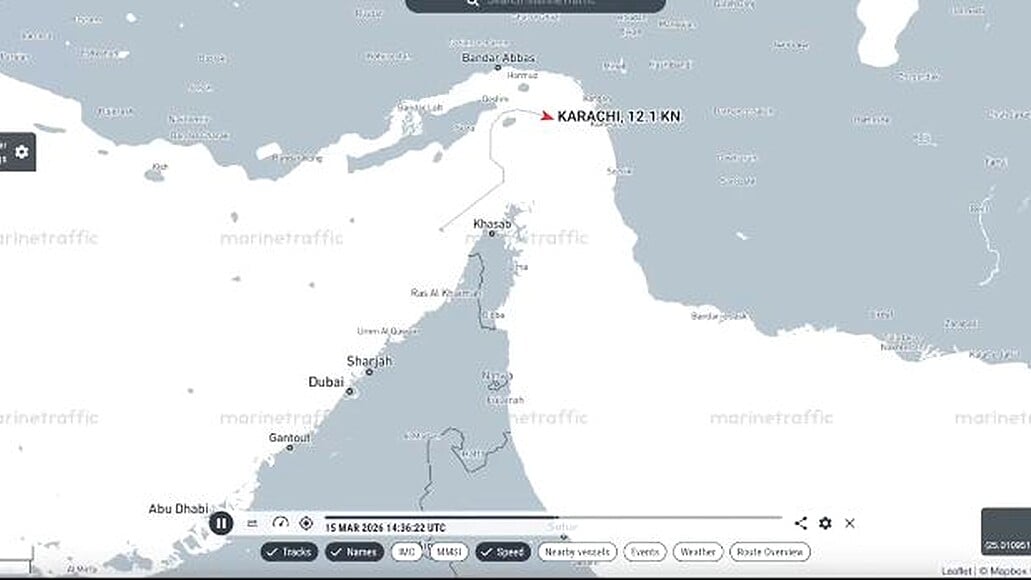




ISLAMABAD: The Aframax tanker Karachi, carrying Abu Dhabi’s Das crude oil, has achieved a significant milestone by becoming the first non-Iranian cargo to transit the Strait of Hormuz while actively broadcasting its Automatic Identification System (AIS) signal.
This development occurred on March 15, when the 237-metre Pakistani-flagged vessel entered Iran’s Exclusive Economic Zone at 11:33 UTC and successfully crossed the strategic chokepoint by 14:43 UTC, according to data from maritime monitoring firm MarineTraffic.
The tanker is now sailing in the Gulf of Oman at approximately 9.6 knots, having completed the passage without interruption despite ongoing disruptions in the region.
The transit follows weeks of sharply reduced commercial traffic through the Strait of Hormuz, a vital artery for global energy supplies.
In normal circumstances, the narrow waterway handles around one-fifth of the world’s oil production and a substantial portion of liquefied natural gas exports from Gulf producers.
However, escalating conflict involving Iran has paralysed much of the shipping lanes, with attacks on vessels and threats contributing to a near-standstill in movements.
Maritime data indicates that since the intensification of hostilities around late February, only limited crossings have occurred, predominantly by so-called shadow fleet vessels that often disable tracking systems to evade detection.
In contrast, the Karachi tanker maintained its AIS broadcast throughout the journey, a practice that has been rare for non-Iranian ships in recent times.
Observers interpret this as evidence of possible negotiated arrangements or selective permissions granted for certain cargoes.
The vessel, heavily loaded with a draft of 11.5 metres, had been moored at Das Island, a key Emirati oil export hub, prior to departure.
Das crude, a medium-sour grade produced in Abu Dhabi, is typically destined for refineries in Asia, including those in Pakistan.
The safe passage of this cargo underscores shifting dynamics in the maritime landscape amid broader geopolitical tensions.
Reports suggest that Iran has maintained that the Strait remains open to non-US and non-Israeli allied vessels, while restricting others.
This selective approach appears to allow specific shipments, potentially those linked to neutral or friendly nations, to proceed under coordinated conditions.
The Karachi’s transit aligns with this pattern, as Pakistan maintains diplomatic relations with Iran and relies heavily on Gulf oil imports.
Industry sources note that such arrangements could reflect pragmatic efforts to sustain essential energy flows without fully reopening the route to all traffic.
Global oil prices have remained elevated above $100 per barrel due to the disruptions, highlighting the chokepoint’s critical role in energy security.
Prior to this event, most commercial operators have rerouted vessels or delayed loadings, leading to backlogs in the Gulf of Oman and beyond.
Maritime intelligence firms like Lloyd’s List Intelligence recorded only around 77 passages since the conflict’s escalation, many involving vessels outside conventional insurance frameworks.
Additionally, incidents involving at least 20 commercial ships, including tankers, have been reported since early March, raising insurance premiums and operational risks.
The Karachi’s successful journey with active AIS broadcasting may signal a cautious thawing or the emergence of case-by-case safe corridors.
Experts caution that this does not indicate a full resumption of normal traffic, as broader commercial shipping continues to face uncertainty.
The event has drawn attention from international observers monitoring the impact on global supply chains.
For Pakistan, securing this shipment is particularly important given its dependence on imported crude to meet domestic energy needs.
The tanker Karachi is a familiar vessel in regional trade, often used to transport Gulf crude to South Asian ports.
Its draft and size make it suitable for carrying substantial volumes, estimated in the range of hundreds of thousands of barrels.
This transit could encourage similar movements for other regional players seeking to maintain supply lines.
However, the broader context remains volatile, with ongoing military activities and diplomatic efforts to de-escalate the situation.
US-led calls for allied support to secure the waterway have met resistance from some partners, further complicating the environment.
The Strait of Hormuz has historically been a flashpoint, with past tensions leading to temporary disruptions in tanker flows.
This latest incident represents a notable exception in an otherwise constrained period for maritime commerce.
Analysts will closely watch whether additional non-Iranian vessels follow suit with active tracking, potentially indicating evolving protocols for passage.
Until then, the Karachi’s voyage stands as a singular breakthrough in a challenging maritime domain.