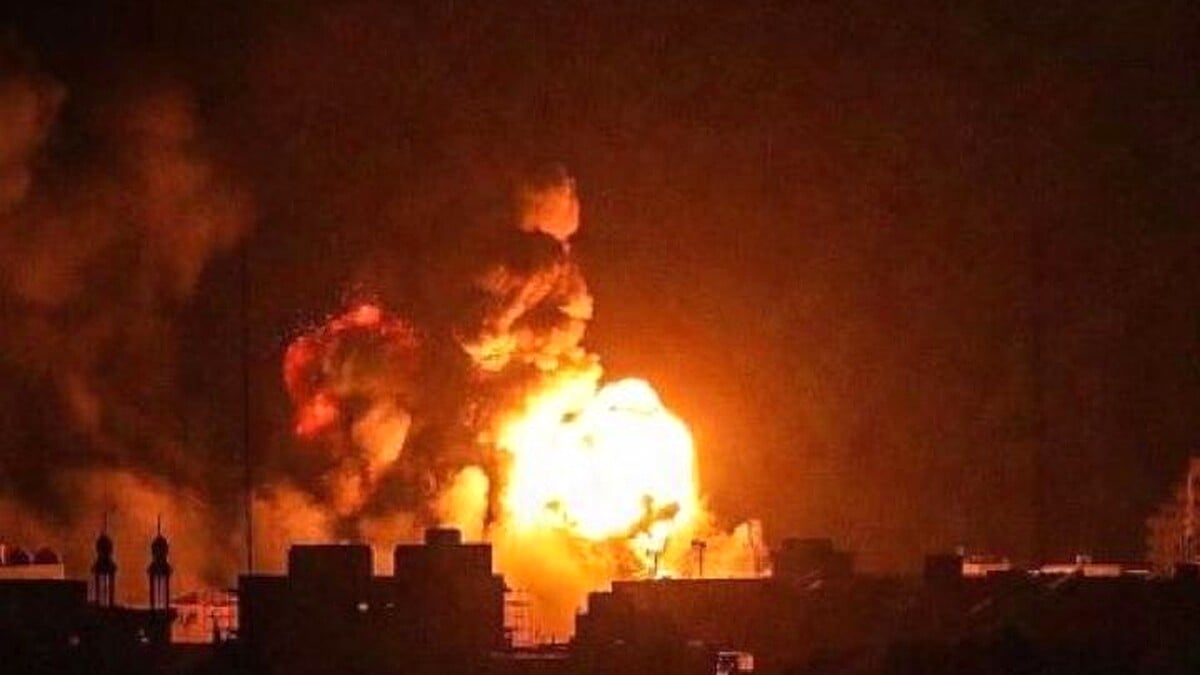




ISLAMABAD: Pakistan has conducted precision airstrikes on hideouts of the Tehreek-i-Taliban Pakistan, referred to as Fitna al-Khawarij, and associated Taliban facilities in Afghanistan, with reports indicating significant damage to the 205th Al-Badr Corps headquarters in Kandahar.
Local Afghan media sources reported that the strikes directly targeted the 205th Al-Badr Corps headquarters, described as a key military command center of the Islamic Emirate of Afghanistan. Multiple Taliban members were reportedly killed and wounded in the operation.
According to these accounts, Corps Commander Mehrullah Hamad, Chief of Staff Hizbullah Afghan, and Deputy Commander Wali Jan Hamza sustained severe injuries and were shifted to nearby hospitals in Kandahar for treatment.
The strikes form part of Pakistan’s ongoing military response to escalating cross-border terrorism, particularly following a series of attacks attributed to TTP militants operating from Afghan soil.
Pakistan’s military has framed the operations as necessary to neutralize threats from Fitna al-Khawarij and their affiliates, who have intensified activities inside Pakistan since the Taliban takeover in Afghanistan in 2021.
Official statements from Islamabad emphasize that the actions are intelligence-based and selective, aimed at dismantling militant infrastructure rather than engaging in broader conflict.
The escalation traces back to late February 2026, when Pakistan initiated airstrikes under Operation Ghazab Lil Haq, or Righteous Fury, targeting TTP and Islamic State-Khorasan Province camps in provinces such as Nangarhar, Paktika, and Khost.
These initial strikes reportedly destroyed several militant camps, with Pakistani sources claiming over 80 militants killed in the opening phase.
The Afghan Taliban responded with ground assaults on Pakistani border posts, prompting further Pakistani retaliation that expanded to deeper targets, including sites in Kabul, Kandahar, and Paktia.
Defense Minister Khawaja Asif declared the situation an “open war” after Taliban forces launched large-scale offensives along the Durand Line, hitting multiple sectors in Khyber Pakhtunkhwa.
Pakistan’s Inter-Services Public Relations reported that operations hit 22 locations across Afghanistan, resulting in 274 Taliban fighters killed and over 400 injured, alongside the destruction of numerous vehicles and heavy equipment.
Taliban spokespersons, including Zabihullah Mujahid, confirmed strikes on Kabul, Kandahar, and other areas but disputed casualty figures, claiming minimal losses and accusing Pakistan of targeting civilian infrastructure.
The 205th Al-Badr Corps, a major Taliban military formation in southern Afghanistan, has been central to recent reports, with sources indicating that brigade headquarters and ammunition depots in Kandahar were among the primary targets hit.
This corps oversees significant Taliban forces in the region, and its targeting underscores Pakistan’s focus on disrupting command structures supporting cross-border militancy.
Analysts note that the strikes reflect a shift in Pakistan’s approach, moving from border containment to direct action against Taliban military assets harboring TTP elements.
The TTP, designated as Fitna al-Khawarij by Pakistani authorities, has claimed responsibility for numerous attacks inside Pakistan, including suicide bombings in major cities, fueling domestic pressure for decisive measures.
Border clashes have persisted, with exchanges of artillery and drone activity reported along the frontier, leading to civilian casualties on both sides.
Afghan sources have alleged that Pakistani operations damaged public infrastructure, mosques, residential areas, and refugee camps in provinces including Kandahar and Kunar.
Pakistan maintains that its forces prioritize militant targets and have established buffer zones in some border areas to prevent infiltrations.
The conflict has drawn regional attention, with calls for de-escalation amid fears of broader instability in an already fragile region.
Diplomatic channels remain strained, as the Afghan Taliban government has not formally recognized demands to crack down on anti-Pakistan groups.
Pakistan insists that operations will continue until verifiable actions are taken against terrorist sanctuaries in Afghanistan.
The recent Kandahar strikes highlight the intensity of the campaign, with local reports suggesting high-value casualties among Taliban leadership.
As tensions persist, the situation underscores the complex interplay between state security imperatives and militant safe havens across the porous border.
Both sides have reported ongoing military activities, with no immediate signs of de-escalation.
The international community watches closely, concerned about humanitarian impacts and potential spillover effects.