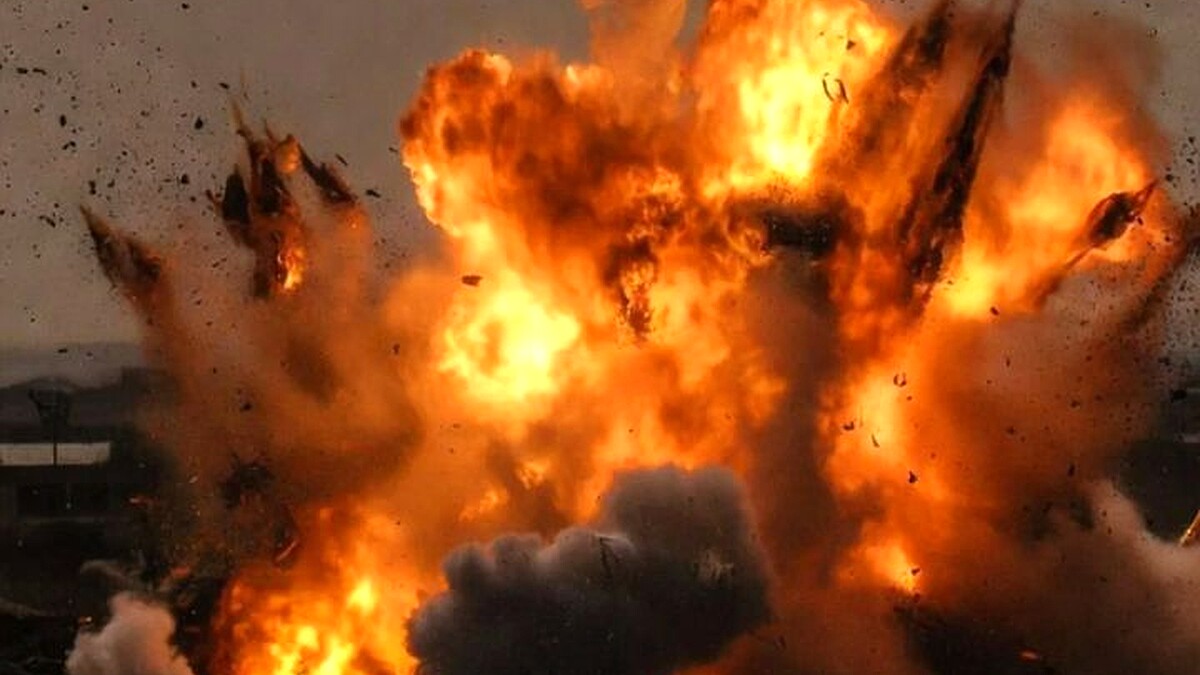




An improvised explosive device blast in Afghanistan’s volatile Paktika Province has killed two commanders and injured several others, amid heightened cross-border tensions involving militant groups.
ISLAMABAD: An improvised explosive device (IED) detonated on a convoy traveling in the Barmal area of Barmal District, Paktika Province, Afghanistan, targeting figures reportedly en route to meet Mufti Noor Wali Mehsud, the emir of Tehreek-e-Taliban Pakistan (TTP).
Initial reports from security sources and social media monitors indicate that the explosion occurred on March 12, resulting in the deaths of two unnamed commanders and injuries to multiple individuals in the convoy.
The incident highlights the persistent insecurity in eastern Afghanistan’s border regions, where militant factions maintain a presence despite Taliban governance.
Paktika Province, bordering Pakistan’s Khyber Pakhtunkhwa, has long served as a sanctuary and operational hub for various armed groups, including TTP elements.
Mufti Noor Wali Mehsud, also known as Abu Mansur Asim, assumed leadership of the TTP in June 2018 following the death of predecessor Mullah Fazlullah in a US drone strike.
Designated a global terrorist by the United Nations and the United States, Mehsud has directed the TTP toward a strategy focused primarily on Pakistani security forces, blending religious ideology with nationalist appeals against Islamabad.
The group has intensified attacks inside Pakistan since the Afghan Taliban regained power in 2021, exploiting porous borders for sanctuary in provinces like Paktika, Khost, and Kunar.
Barmal District, a rugged and remote area in Paktika, has witnessed repeated militant activities, including past high-profile incidents such as the 2021 IED killing of TTP commander Omar Khalid Khorasani during travel in the same district.
That earlier attack, which also claimed two associates, underscored internal vulnerabilities and external pressures on TTP leadership.
Recent escalations between Pakistan and Afghanistan, including Pakistani airstrikes in October 2025 targeting suspected TTP sites in Kabul and Paktika, have strained relations further.
Those strikes, which reportedly aimed at Mehsud’s convoy in Kabul but left him unharmed according to subsequent TTP audio releases, triggered artillery exchanges and border clashes lasting several days.
Pakistan accuses the Afghan Taliban of providing safe haven to TTP fighters, enabling near-daily attacks on its forces.
Afghan authorities deny such allegations, insisting on sovereignty while condemning cross-border violations.
The latest IED incident in Barmal arrives against this backdrop of mutual accusations and ongoing militant mobility across the Durand Line.
TTP commanders and fighters frequently relocate between Afghan border provinces and Pakistan’s tribal areas, using the terrain for evasion and operations.
The convoy’s purpose—to meet Mehsud—suggests internal coordination or consultations within the group, potentially related to strategy amid external threats.
No group has claimed responsibility for the March 12 blast, leaving open questions about the perpetrators.
Possibilities include rival militant factions, internal TTP disputes, or actions by anti-TTP elements, possibly with external support.
Islamic State-Khorasan Province (ISKP) and other groups have targeted TTP figures in the past, viewing them as competitors.
Pakistani military operations in border areas have also aimed to disrupt such networks.
Casualty figures remain preliminary, with no official confirmation from Afghan Taliban authorities or TTP statements as of the latest updates.
Local sources in Paktika describe the area as prone to such ambushes due to poor road security and insurgent influence.
The blast underscores the fragile security environment in Afghanistan’s east, where IEDs remain a favored tactic for asymmetric warfare.
Civilian impacts from such violence often go underreported in remote districts.
Broader implications include potential retaliation cycles, further complicating Pakistan-Afghanistan diplomacy.
International observers, including the European Union, have called for de-escalation and action against cross-border militancy.
The incident may prompt renewed calls for Taliban measures to curb TTP activities from Afghan soil.
As details emerge, the attack reinforces the enduring challenge of stabilizing the Afghanistan-Pakistan border region.
Militant dynamics continue to evolve, with leaders like Mehsud navigating survival amid multiple threats.
Paktika Province remains a flashpoint, where local grievances intersect with transnational jihadist agendas.
The loss of commanders could disrupt TTP command chains, though the group has shown resilience in replacing fallen leaders.
Monitoring developments in the area will be critical for assessing any shifts in militant operations or bilateral tensions.