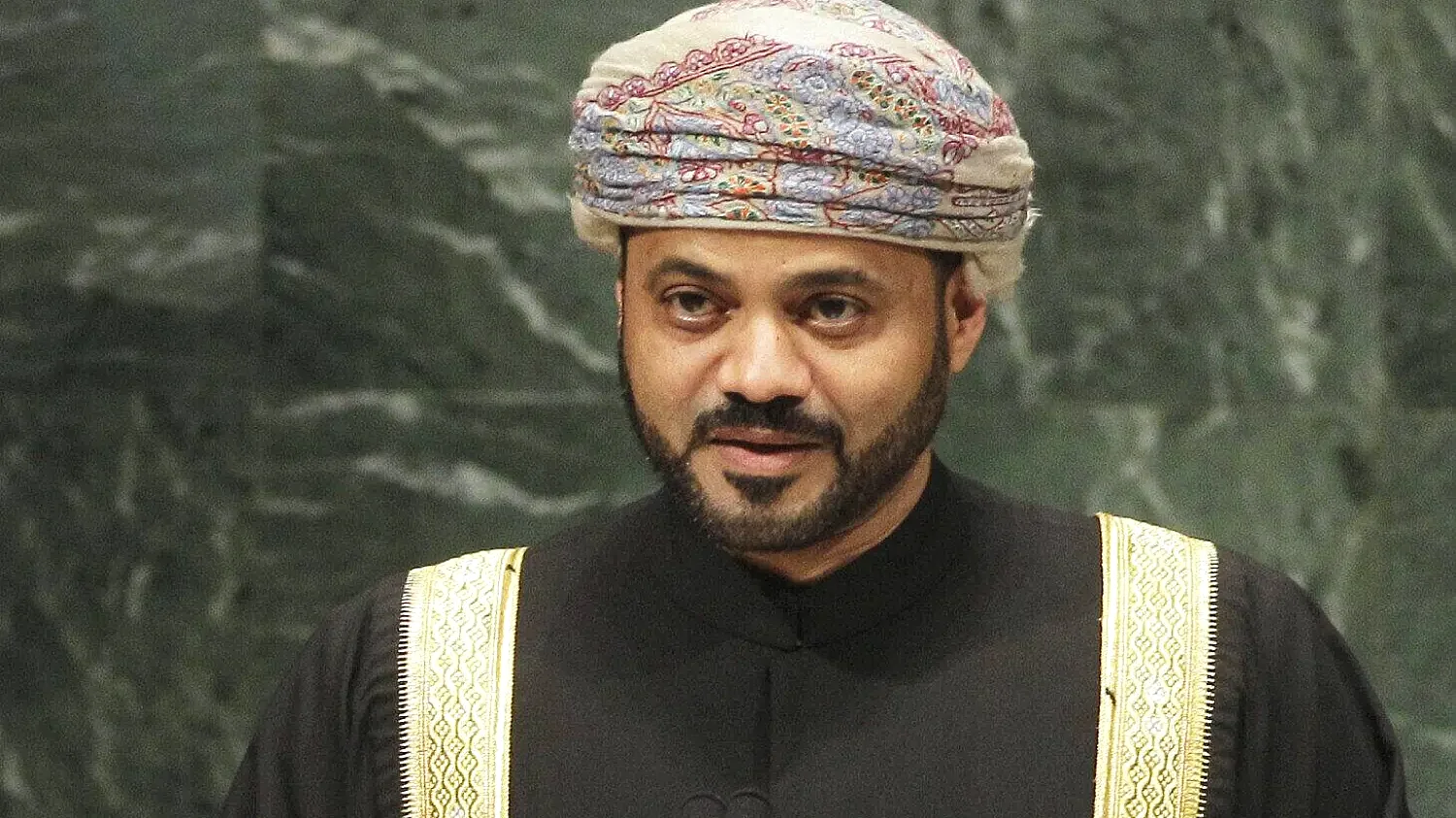




ISLAMABAD: Oman’s Foreign Minister Sayyid Badr Albusaidi has firmly reiterated that the Sultanate will not join any military alliance or normalize relations with Israel, as the region grapples with ongoing war and efforts to reshape regional dynamics.
The statement underscores Oman’s longstanding policy of neutrality amid heightened tensions involving Israel, the United States, and Iran. Albusaidi emphasized that the current conflict extends beyond targeting Iran alone, aiming instead to weaken the entire region and pave the way for new configurations that favor certain powers.
He described attempts to diminish Iran’s influence while pushing for normalized ties between Israel and Arab states as part of a broader agenda. This comes at a time when diplomatic channels, often facilitated by Oman itself, face severe challenges from military escalations.
Oman has consistently positioned itself as a mediator in regional disputes. The Sultanate played a key role in backchannel talks, including those between the United States and Iran, which showed progress before recent strikes disrupted them.
Albusaidi highlighted Oman’s refusal to participate in any war council or coalition. He stressed that Muscat seeks no formal diplomatic normalization with Israel, a stance rooted in principles upheld since before the Abraham Accords reshaped ties for some Gulf neighbors.
Unlike the United Arab Emirates and Bahrain, which normalized relations under the 2020 Abraham Accords, Oman has maintained its distance. Successive Omani leaders have linked any potential shift to progress on Palestinian statehood and adherence to international legitimacy.
The Foreign Minister pointed out that the ongoing war harms Oman’s interests and those of the wider region. Escalation threatens stability, maritime routes, supply chains, and global economic flows, he warned.
Oman has condemned actions by multiple parties in the conflict. Albusaidi labeled US-Israeli operations against Iran as immoral and illegal, while also criticizing retaliatory strikes affecting neighboring states as unacceptable.
This balanced criticism reflects Oman’s commitment to international law and peaceful dispute resolution. Muscat has repeatedly called for ceasefires, restraint, and a return to dialogue.
The Sultanate’s approach draws from its historical role as an interlocutor. Oman facilitated elements of the 2015 Iran nuclear deal and mediated in various Gulf crises, earning trust from adversaries.
Recent events, including US-Israeli military actions starting late February 2026, have tested this neutrality. Oman expressed deep regret over operations violating international norms and urged UN intervention for de-escalation.
Albusaidi noted that diplomatic efforts were advancing toward fair solutions before hostilities intensified. He described the region as at a dangerous turning point, with serious consequences for security and prosperity.
Oman’s parliament has previously moved to restrict ties with Israel, including criminalizing certain interactions. Such domestic signals reinforce the government’s position against formal recognition.
The refusal to normalize stems partly from public sentiment and commitment to Palestinian rights. Oman supports an independent Palestinian state on 1967 borders with East Jerusalem as capital, aligning with the Arab Peace Initiative.
In the context of the broader conflict, Oman’s stance highlights divisions within the Gulf. While some states pursued economic and security benefits through normalization, Muscat prioritizes sovereignty and mediation credibility.
Albusaidi affirmed ongoing efforts to halt the war through diplomacy. Oman continues advocating for political solutions addressing root causes rather than military dominance.
This position preserves Oman’s unique space in a polarized region. By avoiding entanglement in alliances, Muscat safeguards channels to all parties, including Iran and Western powers.
Observers note that Oman’s refusal counters narratives of inevitable Gulf-wide alignment with Israel. It signals that normalization remains conditional on resolving core disputes.
The Foreign Minister’s remarks serve as a reminder of diplomacy’s value. Amid war’s destruction, Oman’s insistence on dialogue offers a counterpoint to escalation.
As the conflict evolves, Oman’s role may grow in importance. Its mediation history positions it to bridge gaps when parties seek exit from confrontation.
The Sultanate’s clear rejection of normalization and war councils reinforces its independent foreign policy. This approach aims to protect regional stability for future generations.