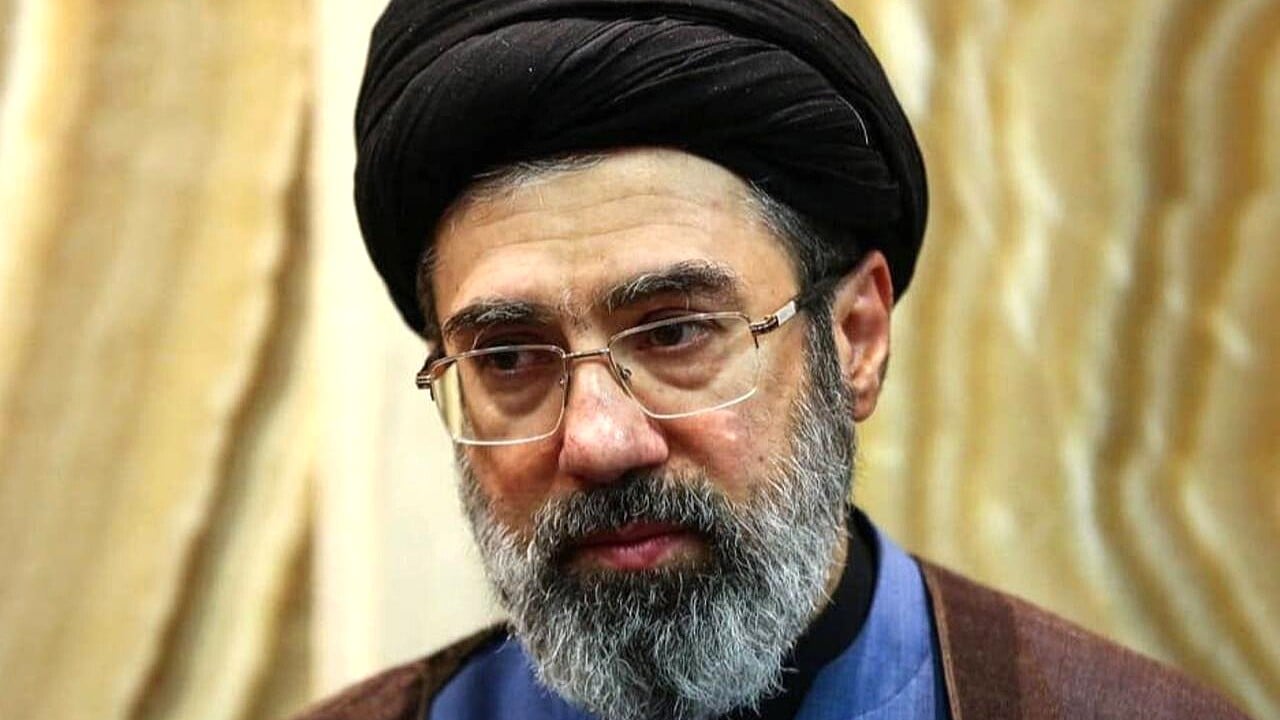




ISLAMABAD: Mojtaba Khamenei, the second son of Iran’s late Supreme Leader Ayatollah Ali Khamenei and a figure long considered a frontrunner for succession, has reportedly been injured in recent Israeli airstrikes but is believed to remain alive, according to assessments from Israeli journalist Amit Segal of Channel 12 (N12) news.
This revelation surfaces as the Israel-Iran conflict, triggered by joint US-Israeli operations, enters its second week with relentless bombardment targeting Iranian military infrastructure and leadership sites. The strikes began on February 28, 2026, with the assassination of Ali Khamenei in a precision attack on his Tehran compound, marking a dramatic escalation in regional tensions.
Early reports following the initial strike created widespread uncertainty about Mojtaba’s fate. Some accounts suggested he was present at the family compound and perished alongside his father, while others indicated he was absent during the assault. Conflicting narratives from Iranian semi-official channels and social media amplified the confusion amid the fog of war.
Israeli intelligence sources, as relayed by Amit Segal on N12, now clarify that Mojtaba sustained wounds in one of the subsequent targeted operations but survived the attack. He is understood to have sought cover and gone into hiding to avoid further attempts on his life as airstrikes persist across Iran.
Amit Segal, recognized for his access to Israeli security and political circles, has consistently provided updates grounded in official assessments throughout the conflict. His reporting aligns with broader Israeli evaluations that describe Mojtaba as wounded yet operational, though no verified images, videos, or public statements from him have appeared since late February.
The backdrop to these developments is Israel’s “Operation Roaring Lion,” a comprehensive aerial campaign involving hundreds of sorties aimed at neutralizing Iran’s air defenses, missile arsenals, and command networks. Israeli officials claim over 80 percent of Iran’s integrated air defense systems have been degraded, granting near-total air superiority.
The elimination of Ali Khamenei, who ruled for nearly 37 years, represented an unprecedented blow to the Islamic Republic. Iranian state media eventually confirmed his death, prompting national mourning declarations and repeated vows of severe retaliation against the United States and Israel. Funeral arrangements for the supreme leader faced repeated delays due to ongoing security threats from continued strikes.
Mojtaba Khamenei, approximately 56 years old, has cultivated a low-profile yet powerful presence within Iran’s elite circles. Though lacking the highest clerical rank, he wields considerable influence through close ties to the Islamic Revolutionary Guard Corps (IRGC) and intelligence services. Observers have often portrayed him as a key decision-maker operating behind the scenes during his father’s tenure.
Under Iran’s constitution, the Assembly of Experts bears responsibility for selecting the supreme leader. Strikes reportedly damaged facilities linked to the Assembly in Qom, complicating and delaying deliberations. Despite traditional resistance to dynastic succession among some clerics, pressure from the IRGC appears to favor Mojtaba as a means to maintain regime stability and continuity during the crisis.
Israeli Defense Minister Israel Katz has issued stark warnings that any designated successor would immediately become a legitimate target, heightening the peril surrounding Mojtaba or any alternative candidate. This posture underscores Israel’s strategy to prevent the consolidation of Iranian leadership amid the war.
Alternative accounts persist in the information environment. Certain Iranian-linked sources maintain Mojtaba was never at the primary strike locations, bolstering survival claims. The complete absence of recent visual confirmation fuels speculation about the extent of his injuries and current whereabouts.
The broader war has exacted a heavy toll. Iranian missile and drone responses have inflicted civilian and military casualties in Israel, while US-Israeli operations have reportedly struck critical infrastructure, including desalination facilities and security headquarters, as alleged by Iranian authorities.
Mojtaba’s reported survival and injury introduce profound uncertainty into Iran’s theocratic framework. If he emerges to assume leadership, it could signal resilience and continuity for the current system. Conversely, prolonged absence or severe incapacitation might exacerbate factional rivalries and internal debates over the future direction of the regime.
Analysts highlight the regime’s vulnerability at this juncture. The loss of senior commanders, crippled defenses, and disrupted succession mechanisms challenge Tehran’s capacity for unified command and response.
As intelligence assessments continue to evolve in this fluid conflict, Amit Segal’s reporting offers one of the most direct indications from Israeli sources that Mojtaba Khamenei persists despite his wounds. His fate remains central to understanding whether Iran’s leadership can weather the storm or face further fragmentation in the face of sustained external pressure.