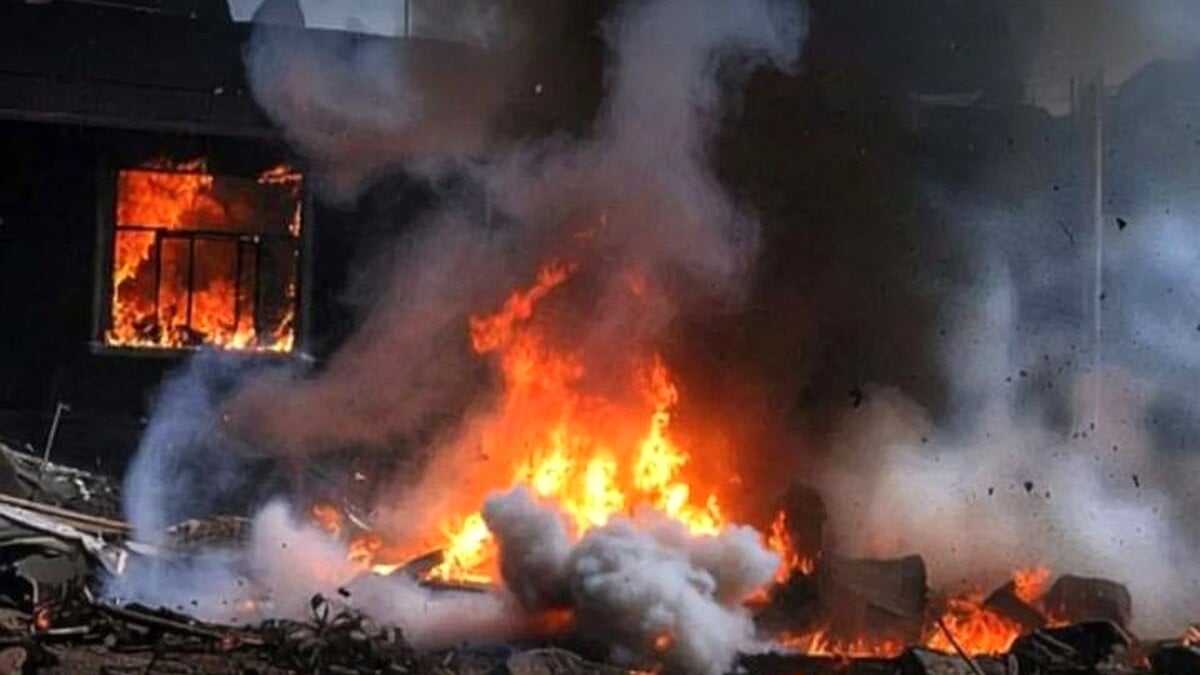




ISLAMABAD: At least four people, including police officers, lost their lives while more than 20 others sustained injuries in two distinct bomb blasts involving improvised explosive devices in the southern districts of Khyber Pakhtunkhwa on Saturday.
The first blast targeted a police mobile van in Wana, the headquarters of South Waziristan district, shortly before iftar time when crowds were engaged in pre-Ramazan shopping and routine security patrols were underway. District Police Officer Muhammad Tahir Shah confirmed that the explosion was caused by a planted bomb near the vehicle, deliberately aimed at law enforcement personnel.
In this attack, three individuals were martyred, comprising two police constables and one civilian bystander. Ten people were wounded, including six police officers, with six of the injured reported in critical condition by hospital authorities. The wounded were swiftly shifted to the District Headquarters Hospital in Wana for emergency treatment.
Security measures were immediately intensified across the area following the incident. Law enforcement agencies launched a comprehensive search and investigation operation to identify and apprehend those responsible. The timing and location suggest an intent to maximize casualties during a period of heightened public activity.
The second explosion occurred in Lakki Marwat district at a shop belonging to the brother of a local peace committee member. Police sources indicated that the blast took place inside or near the premises, resulting in one martyrdom and multiple injuries among those present.
Investigators are examining whether the device was a planted bomb or deployed via other means, such as a quadcopter drone, which has been employed in similar attacks in the region. Combined figures from both events confirm four martyrs and over 20 injured, underscoring the coordinated nature of threats in these districts.
These incidents occur amid a persistent surge in terrorist violence across Khyber Pakhtunkhwa, particularly in its southern and merged tribal districts. Official data and reports highlight that areas like South Waziristan, Lakki Marwat, North Waziristan, and Bannu remain hotspots for attacks primarily attributed to banned outfits such as Tehreek-i-Taliban Pakistan.
Peace committees, composed of local elders and volunteers cooperating with authorities to counter militancy, have frequently been targeted in retaliation. Such groups play a vital role in intelligence gathering and community resistance but face severe risks, as evidenced by repeated attacks on their members and associates.
The Wana blast aligns with a pattern of roadside and vehicle-targeted improvised explosive devices aimed at security forces. Similar operations in recent months have claimed lives in bazaar areas, disrupting daily life and commerce in regions already burdened by economic challenges.
Authorities have responded by enhancing security protocols, including increased patrolling, checkpoints, and joint operations involving police, Counter-Terrorism Department, and military units. Search operations continue in both districts to trace perpetrators and prevent follow-up attacks.
Broader security dynamics in Khyber Pakhtunkhwa reflect challenges stemming from cross-border militancy, with groups exploiting porous frontiers. Despite large-scale military operations like Azm-e-Istehkam, sporadic violence persists, often during religious occasions or in crowded public spaces to amplify impact.
Civilian casualties in these blasts highlight the indiscriminate threat posed by such tactics. Hospitals in affected areas remain on high alert, with medical teams managing influxes of trauma cases amid limited resources.
Condemnations have poured in from officials, emphasizing that such acts will not deter resolve against terrorism. Investigations are ongoing to establish links between the two incidents and potential networks.
These events serve as a reminder of the enduring security vulnerabilities in southern Khyber Pakhtunkhwa. Sustained intelligence-led efforts, community cooperation, and targeted counter-terrorism measures remain essential to restoring stability and protecting lives in these districts.