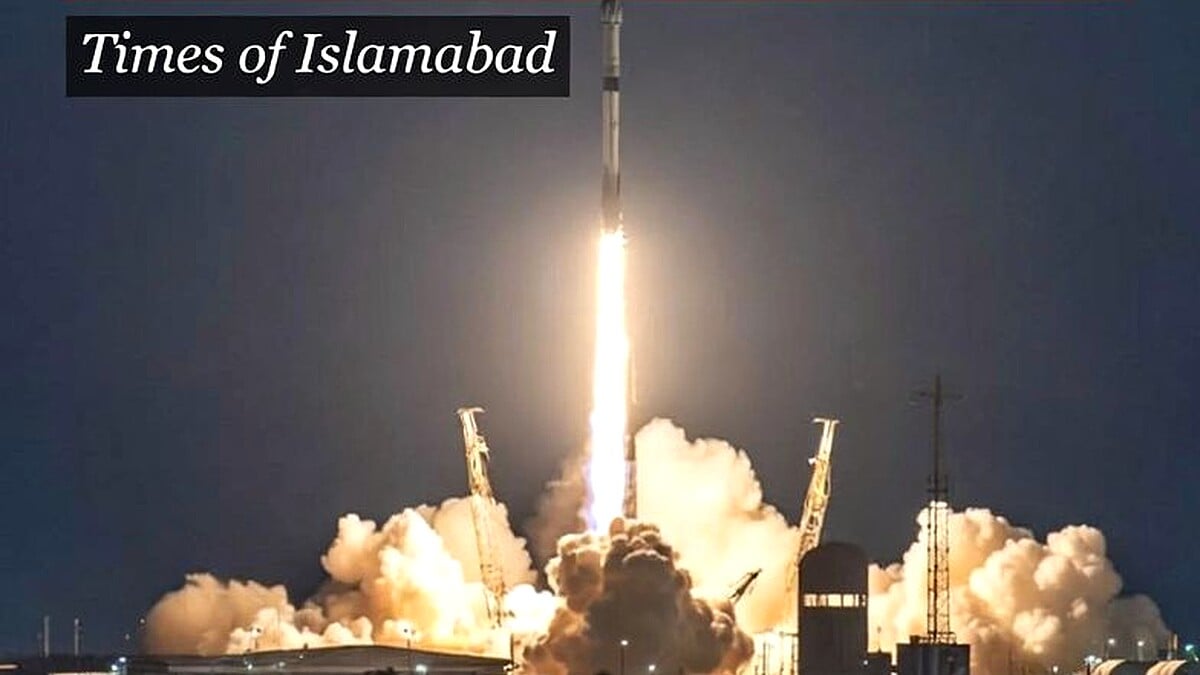




ISLAMABAD: Iranian ballistic missiles struck toward the heart of Prince Sultan Air Base in Saudi Arabia, heightening fears of broader regional conflagration in the ongoing conflict involving Iran, the United States, and Israel.
Saudi Arabia’s Ministry of Defense promptly announced the successful interception and destruction of three ballistic missiles directed at the Prince Sultan Air Base, located in Al-Kharj governorate approximately sixty kilometers south of Riyadh. However, video footage shows atleast one ballistic missile hit the Base where American soldiers were present.
The incident occurred amid a series of retaliatory exchanges that have expanded beyond initial strike zones, drawing in multiple Gulf states hosting United States military assets.
Reports from international outlets, including Fox News and The New York Times, indicated that Iranian forces, through the Islamic Revolutionary Guard Corps, targeted the base with ballistic missiles and drones as part of wider operations against US-linked facilities.
Saudi air defense systems, equipped with advanced interceptors such as Patriot batteries and potentially THAAD installations, detected the incoming projectiles shortly after midnight and neutralized them before impact.
No damage to infrastructure or casualties were reported from this specific launch, according to official Saudi statements posted on social media platforms.
The Prince Sultan Air Base serves as a critical hub for United States Air Force operations in the region, hosting thousands of American personnel and supporting air missions, missile defense coordination, and logistical support.
It has historically been a focal point for coalition activities, including deployments during previous tensions in the Gulf.
This attempted strike follows a pattern of Iranian retaliation against perceived aggressions, particularly after reported joint US-Israeli operations targeting Iranian nuclear and military sites.
Iranian state-affiliated media, such as Tasnim news agency, claimed successful hits on the base using missiles and drones, though these assertions contrasted with Saudi confirmations of complete interceptions.
Satellite imagery analyses published in subsequent days suggested limited or no visible structural damage at the site, aligning with interception reports.
The attack formed part of a multi-front Iranian response, which included strikes on US-associated bases in Qatar, Kuwait, Bahrain, and the United Arab Emirates.
In Bahrain, Iranian projectiles reportedly damaged hotels and residential structures, though no casualties occurred.
Similar patterns emerged in other locations, with air defenses intercepting threats over key areas.
United States Central Command officials noted a significant decline in Iranian missile and drone launches in recent days, with reductions estimated at ninety percent for missiles and substantial drops for drones since the conflict’s intensification.
Admiral Brad Cooper, CENTCOM chief, attributed this to intensified coalition operations disrupting Iranian production and launch capabilities, including the sinking of over thirty Iranian naval vessels.
Regional analysts observed that Iran’s strategy appeared designed to pressure Gulf Arab states into advocating for de-escalation, potentially influencing US policy decisions.
Gulf nations hosting US forces have expressed concerns over depleting interceptor stockpiles, as sustained barrages strain defense resources amid hundreds of incoming drones and missiles.
The Prince Sultan incident underscored vulnerabilities in extended air defense networks, even with high interception success rates.
Diplomatic channels remained active, with Iranian President Masoud Pezeshkian acknowledging mediation efforts by certain countries to halt the escalation.
Saudi Arabia maintained a measured response, emphasizing defensive posture without immediate counter-announcements.
The United States has refrained from detailed public commentary on the base strike, focusing instead on broader operational successes against Iranian assets.
Observers warn that continued tit-for-tat actions risk drawing in additional actors, potentially destabilizing oil infrastructure and maritime routes critical to global energy supplies.
The base’s strategic importance lies in its role for rapid response and surveillance over the Arabian Peninsula and beyond.
Previous deployments there have included fighter squadrons and advanced radar systems essential for theater-wide defense.
This latest development reflects the conflict’s spillover into Saudi territory, testing longstanding security partnerships between Riyadh and Washington.
As tensions persist, international calls for restraint have intensified to prevent a full-scale regional war.
Iranian officials described the operations as proportionate responses to prior aggressions on their soil.
Saudi authorities reiterated commitment to protecting national sovereignty and allied interests through robust air defenses.
The episode highlights the precarious balance in the Middle East, where missile technology and interception capabilities define the current phase of confrontation.