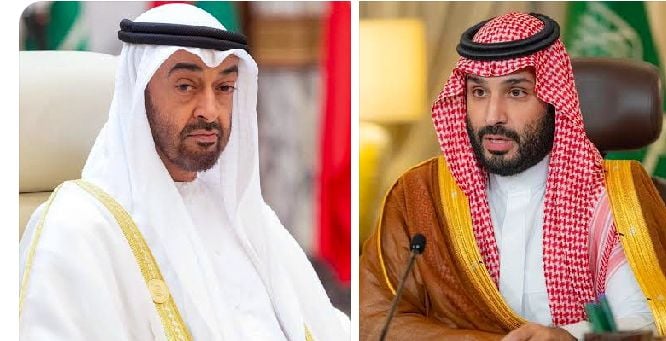




ISLAMABAD: A seismic shift is reshaping the Horn of Africa as Saudi Arabia flexes its diplomatic muscle.
Saudi Arabia and UAE were indirectly involved in influence over the horn of Africa.
Somalia has abruptly terminated every agreement with the United Arab Emirates spanning military, security, and economic domains.
The decision hits particularly hard on seaport deals that anchored UAE influence across key coastal hubs.
Bloomberg news agency reports reveal Riyadh applied sustained pressure on Mogadishu, prompting this dramatic rupture.
Regional diplomats told Bloomberg that Saudi officials actively pushed Somalia to curb its deepening ties with Abu Dhabi.
The trigger traces back to accusations that the UAE used Somali territory to extract a Yemeni separatist leader.
A Saudi-led coalition highlighted unauthorized flights and movements that bypassed Somali federal authority.
Somalia’s Council of Ministers cited strong evidence of sovereignty violations in its official statement.
All pacts covering Berbera, Bosaso, and Kismayo ports now stand canceled under the new directive.
These locations represent strategic gateways along critical Red Sea and Gulf of Aden shipping lanes.
DP World, the UAE flagship operator, had poured nearly 800 million dollars into Berbera port developments alone.
Security cooperation programs that trained Somali forces and established bases now face immediate termination.
This move underscores Saudi Arabia’s growing determination to counter UAE regional footprint.
Tensions between the two Gulf powers have escalated beyond Yemen into broader African theaters.
Somalia finds itself caught in the crossfire of competing ambitions for Red Sea dominance.
Analysts note over 30 years of UAE investment in Somali infrastructure now hangs in balance.
Military bases used for counter-Houthi operations and maritime security could see rapid UAE withdrawal.
Somali federal authorities emphasized constitutional concerns over deals signed with regional states.
Puntland and Jubaland administrations previously partnered directly with Abu Dhabi on port management.
The federal decision challenges fragmented governance structures across Somalia.
Saudi Arabia has meanwhile advanced talks for new military coalitions involving Somalia and Egypt.
These discussions aim to bolster Red Sea security cooperation under Riyadh’s leadership.
Somali President Hassan Sheikh Mohamud is expected to finalize enhanced ties with Saudi counterparts.
Such alignments could open fresh avenues for defense support and economic partnerships.
Pakistan maintains strong strategic relations with both Saudi Arabia and the UAE.
The development offers important insights into evolving Gulf dynamics affecting Horn of Africa stability.
Experts highlight how port control translates into geopolitical leverage over global trade routes.
Nearly 30 percent of world shipping passes through these waters, amplifying the stakes.
UAE presence in Berbera had included dual-use airport facilities with significant military utility.
Termination orders now extend to all bilateral defense training and equipment programs.
Somalia previously benefited from UAE support in counterterrorism efforts against al-Shabaab.
The sudden policy reversal raises questions about future security capacity in the region.
Saudi influence appears positioned to fill emerging gaps through alternative arrangements.
Diplomatic sources indicate Riyadh views unchecked UAE expansion as destabilizing.
This includes perceived support for separatist movements and bypassing central governments.
The Yemen theater exposed cracks in the once-united Gulf cooperation framework.
Somaliland’s separate arrangements with Abu Dhabi further complicated federal authority claims.
Recent Israeli recognition of Somaliland added another layer of regional tension.
UAE responses to these developments remain measured while protecting existing commercial interests.
Observers watch closely whether Somali regional states will comply with Mogadishu’s directives.
Enforcement challenges persist due to limited federal control over distant territories.
Yet the symbolic break sends a clear message across African and Gulf capitals.
Pakistan’s defense establishment monitors such shifts given its own strategic Gulf partnerships.
Saudi-led initiatives often align with broader stability goals shared by Islamabad.
Economic figures reveal massive infrastructure bets now at risk of disruption.
Berbera port upgrades aimed to handle increased container volumes and naval traffic.
Bosaso facilities supported both commercial shipping and specialized security operations.
Kismayo deals focused on southern corridor development and resource export routes.
Collectively these r