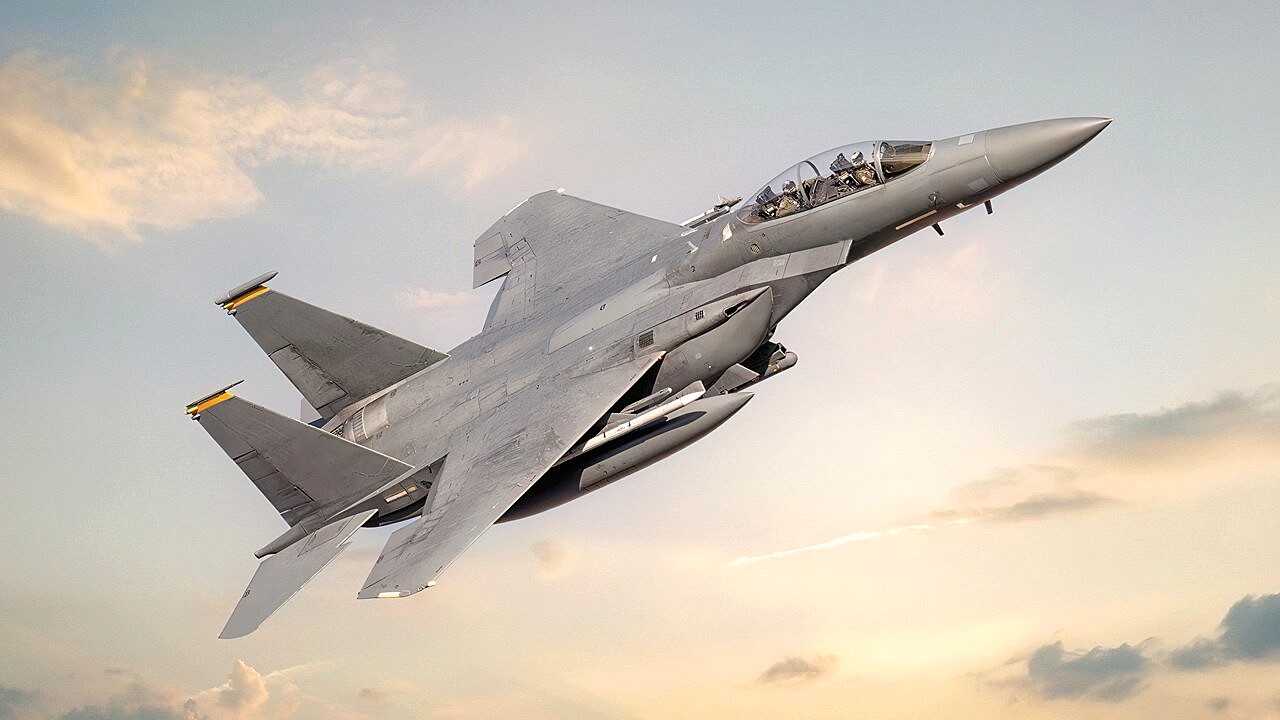




ISLAMABAD: A Kuwaiti Air Force F/A-18 Hornet fighter jet engaged and shot down three United States Air Force F-15E Strike Eagle aircraft in a rare friendly fire incident over Kuwaiti airspace, according to initial reports from multiple sources familiar with the matter.
The incident occurred on March 2, 2026, during heightened combat operations linked to Operation Epic Fury, a US-led campaign involving strikes against Iranian targets following escalations in the region.
US Central Command confirmed that the three F-15E Strike Eagles went down due to an apparent friendly fire event while supporting ongoing missions that faced Iranian aircraft, ballistic missiles, and drone attacks.
All six aircrew members, including pilots and weapons systems officers, ejected safely from the stricken jets and were recovered in stable condition, CENTCOM stated in its official release.
Preliminary investigations point to a single Kuwaiti F/A-18 pilot who launched three AIM-9 Sidewinder missiles at the approaching American aircraft after misidentifying them amid intense alert conditions.
The engagement reportedly took place within visual range, where pilots rely on visual confirmation following challenges with electronic identification systems.
Experts note that modern air forces employ Identification Friend or Foe (IFF) transponders and Link 16 data links to prevent such errors, yet high-threat environments with jamming or rapid threats can disrupt these safeguards.
The Kuwait Air Force operates both F/A-18C/D Hornets and Eurofighter Typhoons, integrated with coalition forces through shared protocols, but the chaos of simultaneous Iranian attacks likely contributed to the confusion.
One aviation analyst suggested the F-15s may have been approached from angles that triggered threat perceptions, leading to the launch of heat-seeking missiles from the rear quadrant.
Footage circulating online showed at least one F-15 spiraling downward in flames before impact, consistent with missile strikes rather than ground-based systems initially suspected.
Early speculation focused on Kuwaiti Patriot surface-to-air missile batteries, but updated reporting shifted responsibility to the airborne F/A-18.
The loss of three multimillion-dollar F-15E Strike Eagles represents a significant material setback, though the survival of all crew members mitigates the human cost.
This marks a rare case where allied aircraft from coalition partners engaged each other in combat airspace, raising immediate questions about rules of engagement and communication protocols.
Military officials from both nations have acknowledged the event, with Kuwait expressing regret and committing to joint inquiries.
The incident unfolded against the backdrop of broader regional tensions, where US and allied forces conduct defensive patrols over Gulf states hosting American bases.
Kuwait hosts major US military installations, including Ali Al Salem Air Base, making seamless integration critical for air defense.
Analysts emphasize that friendly fire, while tragic, occurs in complex battlespaces with layered threats from multiple directions.
Previous historical cases, such as Gulf War incidents, underscore the need for robust deconfliction measures.
Investigations are underway to determine exact factors, including whether IFF encryption mismatches, data link failures, or pilot stress played roles.
US and Kuwaiti authorities stress cooperation in the probe to prevent recurrence amid ongoing operations.
The event highlights vulnerabilities in multinational coalitions facing peer-level adversaries capable of saturating defenses.
Despite the mishap, coalition resolve remains firm, with both sides reaffirming commitment to shared security objectives.
Recovery efforts for the downed aircraft wreckage continue, while flight operations adapt to enhanced identification procedures.
This friendly fire episode serves as a stark reminder of the razor-thin margins in modern aerial warfare.