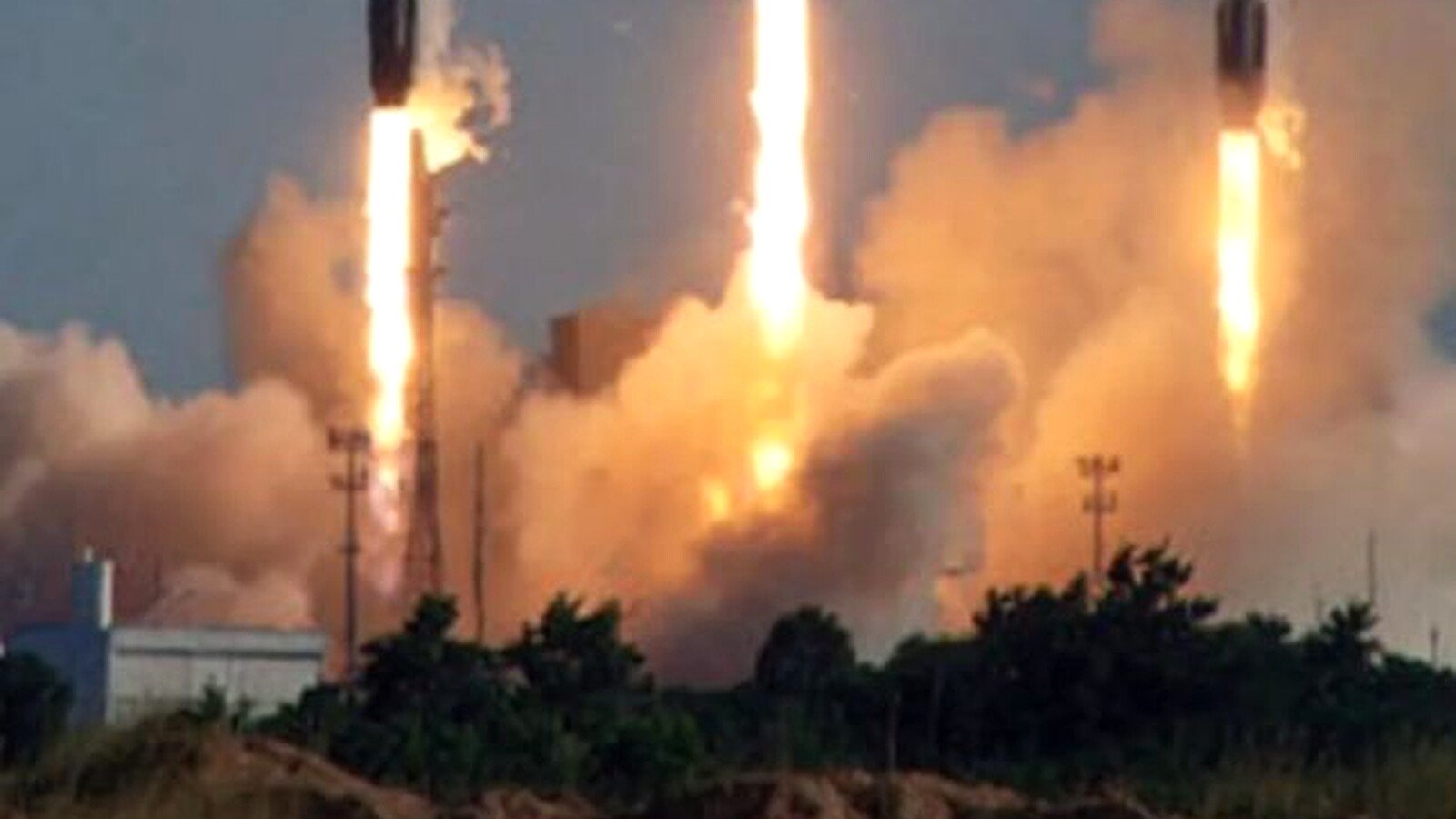




ISLAMABAD: Loud explosions echoed across Dubai and Abu Dhabi on Tuesday as Iran’s retaliatory missile and drone barrages continued for a third consecutive day, amid escalating conflict following joint United States and Israeli strikes on Iranian targets, according to witnesses cited by Reuters and regional authorities.
The blasts, reported widely in the United Arab Emirates’ two largest cities, stemmed primarily from air defence interceptions of incoming Iranian projectiles rather than direct impacts on the ground.
Residents described windows rattling and skies filled with smoke trails from intercepted missiles, prompting immediate concern in these normally secure commercial hubs.
Iran’s Islamic Revolutionary Guard Corps claimed responsibility for simultaneous strikes across the Gulf, targeting locations hosting United States military assets.
The attacks marked a significant escalation, drawing in multiple Gulf states previously insulated from direct involvement in the broader regional tensions.
Initial reports from Saturday indicated Iran launched hundreds of ballistic missiles and drones toward Gulf cities, including Abu Dhabi and Dubai, in response to the deaths of senior Iranian officials, including Supreme Leader Ayatollah Ali Khamenei, in the preceding US-Israeli operation.
UAE air defence systems, including advanced platforms such as the Terminal High Altitude Area Defence, intercepted the vast majority of threats.
Officials stated that nearly one thousand projectiles had been neutralised over recent days, demonstrating exceptional defensive capabilities.
Despite high interception rates, debris from destroyed missiles and drones caused localised damage and casualties.
In Abu Dhabi, falling shrapnel from an intercepted drone struck a residential complex near Etihad Towers, which houses several international embassies, including Israel’s.
A woman and her child sustained minor injuries in that incident, while smoke billowed offshore near the Corniche.
One civilian fatality occurred near Zayed International Airport, with seven others injured from secondary effects.
Dubai experienced similar patterns, with explosions heard near key landmarks.
Debris sparked fires at luxury sites on Palm Jumeirah, including the Fairmont The Palm hotel, and damaged the iconic Burj Al Arab facade.
Dubai International Airport reported an incident injuring four staff members, contributing to temporary operational disruptions.
Jebel Ali Port, one of the world’s busiest, saw fires from debris, affecting maritime trade.
Authorities shifted schools to remote learning in affected emirates and neighbouring states such as Qatar and Bahrain.
The strikes extended beyond the UAE, with loud blasts reported in Doha, Kuwait City, and Manama, alongside first-time hits on Oman.
Iran’s barrages aimed at US bases and allied infrastructure, though most were thwarted.
Witness accounts detailed rapid sequences of booms, often sonic shocks from high-speed interceptors travelling at Mach 8 or faster.
These shockwaves propagated widely, audible over 100 kilometres, creating the impression of closer detonations.
The UAE Ministry of Defence highlighted the effectiveness of layered defences, showcasing downed Iranian hardware in presentations.
Economic repercussions emerged swiftly.
Airport closures stranded travellers, halting transit through major hubs.
Port operations paused, disrupting global supply chains reliant on Gulf routes.
Financial markets registered volatility as investors assessed risks to energy infrastructure.
The region, long promoted as a stable business and tourism centre, faced unprecedented disruption comparable to the COVID-19 era.
Fears mounted of prolonged conflict, with potential closure of the Strait of Hormuz threatening oil flows.
International reactions included calls for de-escalation from European capitals and the United Kingdom.
The United States affirmed support for Gulf allies while avoiding direct commentary on further retaliatory cycles.
Iran maintained its actions as defensive responses to aggression.
As explosions persisted into Tuesday, residents in Dubai and Abu Dhabi remained vigilant, with sirens and alerts underscoring the fragility of regional security.
The ongoing exchanges highlighted the interconnected nature of Middle Eastern conflicts, where distant strikes reverberate through economic and civilian spheres.
Analysts observed that sustained interceptions preserved core infrastructure but could not entirely eliminate psychological and economic tolls.
The situation underscored the challenges of containing escalation in a densely militarised zone.