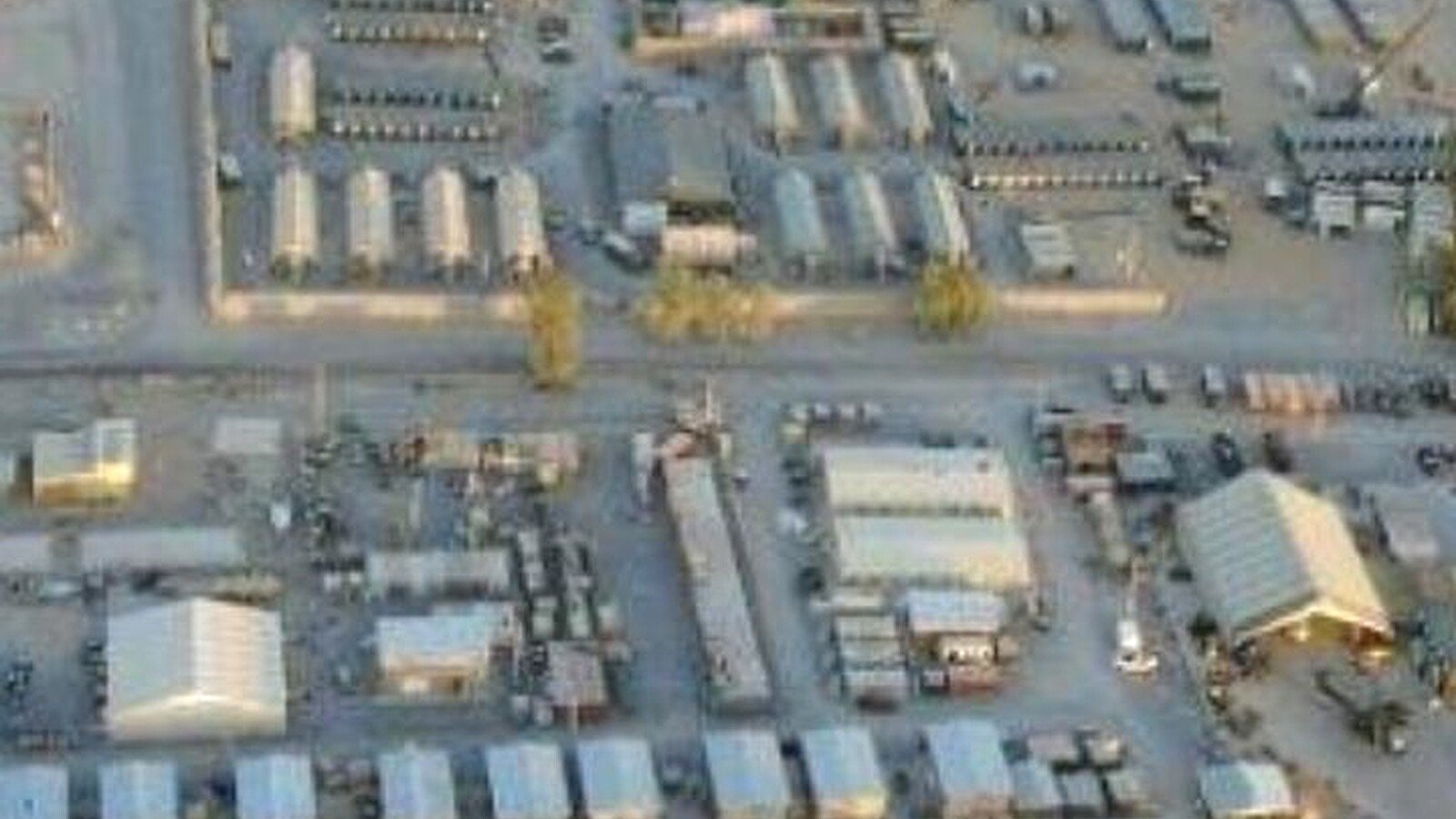




ISLAMABAD: The Pakistan Air Force conducted a precise strike on the Bagram air base as part of the ongoing Operation Ghazab lil-Haq directed against the Afghan Taliban, security sources confirmed on Tuesday.
The operation, launched in late February in response to repeated cross-border attacks and alleged harboring of militants by the Taliban regime, has intensified significantly in recent days.
Security sources cited a detailed damage assessment report purportedly issued by Afghanistan’s Ministry of Defence, which acknowledged substantial losses at the strategically important facility north of Kabul.
According to the sources, the report explicitly detailed the destruction of several high-value military assets during the airstrike.
Among the equipment confirmed destroyed were Black Hawk helicopters, vital for mobility and rapid response operations.
A Hercules cargo aircraft, essential for logistical support and heavy transport, was also listed as lost in the attack.
The assessment further noted the complete destruction of a Tucano aircraft, commonly used for light attack and training roles.
Multiple armoured vehicles stationed at the base suffered irreversible damage, severely impacting ground mobility capabilities.
Other unspecified military equipment fell victim to the precision strikes, contributing to a broader degradation of Taliban operational capacity at the site.
Bagram air base, once the largest US military installation in Afghanistan before the 2021 withdrawal, has been repurposed by the Taliban administration for drone operations and other strategic functions.
The strike occurred amid escalating hostilities that entered their fifth or sixth day, with tit-for-tat actions reported along the Durand Line.
Pakistan has framed Operation Ghazab lil-Haq—translated as “Wrath for Justice” or “Fury for the Truth”—as a necessary defensive measure to counter threats originating from Afghan territory.
Official statements from Pakistani authorities indicate that the operation has targeted numerous locations across Afghanistan, including Kabul, Kandahar, Paktia, and Nangarhar provinces.
Information Minister Attaullah Tarar has provided cumulative figures since the operation’s inception, reporting hundreds of Afghan Taliban combatants killed and injured.
These include over 400 personnel neutralized in initial phases, with additional casualties from overnight border engagements.
The minister has highlighted the destruction of scores of Taliban posts, along with tanks, armoured vehicles, and artillery pieces.
Satellite imagery analyzed by international media has corroborated damage at Bagram, showing flattened hangars and warehouses despite Afghan claims of successfully repelling the assault.
Afghan officials, including spokespersons from the Ministry of National Defense and provincial authorities in Parwan, have maintained that anti-aircraft and missile defense systems thwarted the Pakistani jets’ attempts.
They reported no significant casualties or major structural harm from the incident, which reportedly unfolded around 5 a.m. local time.
However, independent verification through satellite observations has contradicted these assertions, revealing clear evidence of destruction in key sections of the base.
The targeting of Bagram represents a notable escalation, as it strikes at one of the Taliban government’s most prized military assets.
Pakistan’s military leadership has emphasized that the campaign will persist until verifiable assurances are received that the Afghan Taliban will cease facilitating groups responsible for attacks inside Pakistan.
These groups, including elements linked to cross-border terrorism, have been cited as the primary justification for sustained operations.
The broader context involves longstanding tensions over the porous border, militant safe havens, and unresolved disputes regarding the Durand Line demarcation.
Recent weeks have seen a sharp rise in incidents, prompting Pakistan to shift from localized responses to a coordinated air and ground offensive.
Defence Minister Khawaja Asif has underscored the role of advanced Pakistani capabilities, including contributions from women fighter pilots in strikes on key Taliban positions.
The operation’s scale has drawn international attention, with calls for de-escalation amid concerns over regional stability.
Both sides have traded accusations, with Afghanistan claiming retaliatory actions against Pakistani installations and Pakistan asserting dominance in neutralizing threats.
Casualty figures remain contested, with Pakistani sources reporting significantly higher Taliban losses compared to Afghan denials or lower estimates.
The destruction detailed in the Afghan defence ministry report, as relayed by Pakistani security channels, underscores the operational impact achieved thus far.
Analysts observe that such strikes aim to degrade command structures, logistics, and aerial assets available to the Taliban.
As Operation Ghazab lil-Haq continues, the focus remains on compelling behavioral change from the Kabul administration regarding militant support.
The strike on Bagram serves as a stark demonstration of Pakistan’s resolve to protect its sovereignty through decisive military action.
Further developments are anticipated as both militaries maintain high alert postures along the frontier.