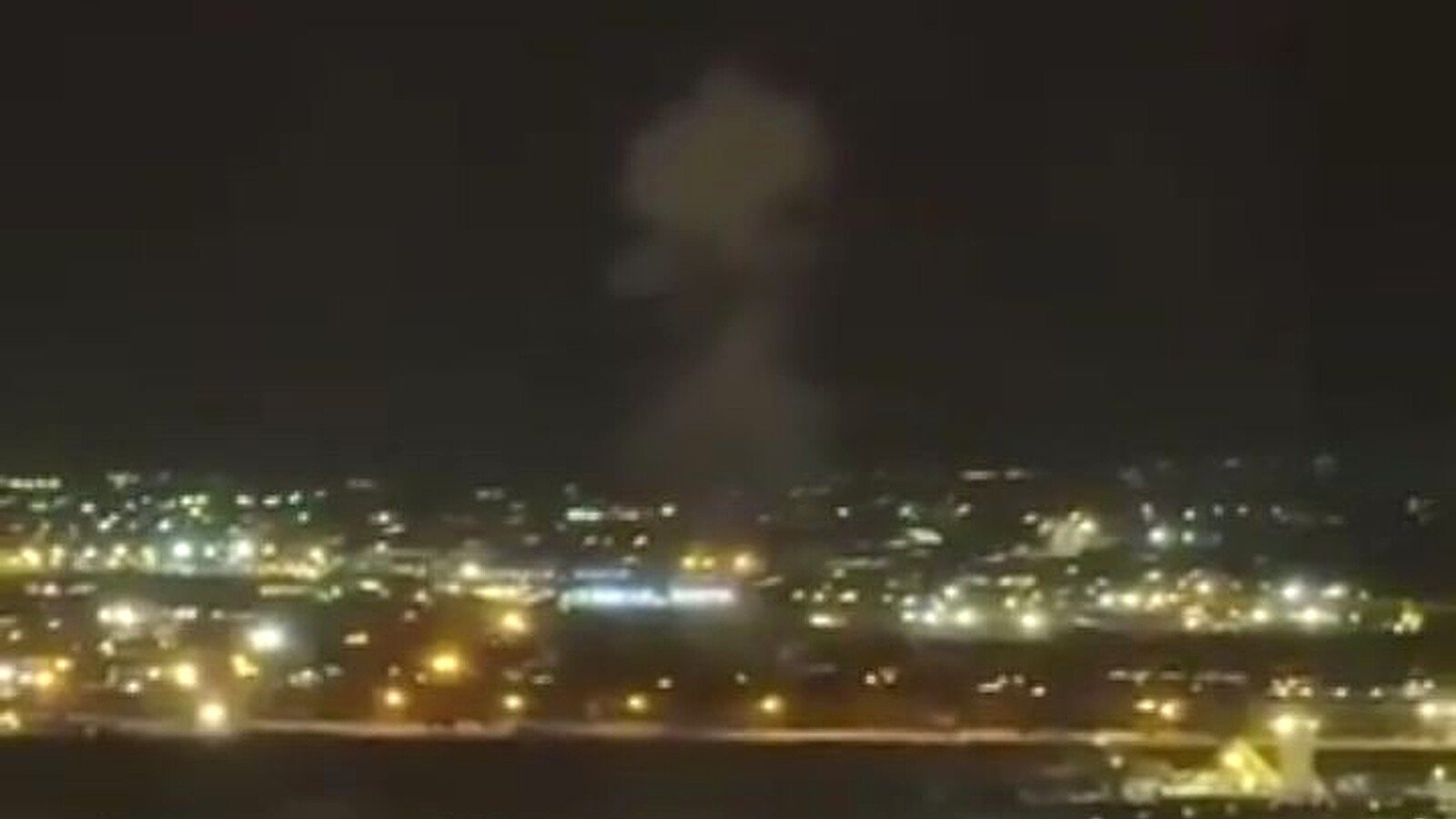




ISLAMABAD: Explosions rocked Iran’s southeastern port city of Chabahar on Saturday as United States and Israeli warplanes conducted coordinated airstrikes across the country, with Iranian state media confirming blasts in the strategic facility located along the Iran-Pakistan border.
The strikes form part of a broader military campaign codenamed Operation Epic Fury, launched by Washington and Jerusalem following repeated warnings over Iran’s nuclear and ballistic missile programs. This marks the most significant escalation since the 12-day air war between Israel and Iran in June 2025.
According to reports citing Iranian state-affiliated outlets, multiple explosions were heard in Chabahar, a key commercial and naval hub on the Gulf of Oman. The port holds particular strategic importance due to its proximity to Pakistan’s Gwadar port and its role in regional trade corridors, including the India-backed International North-South Transport Corridor.
United States Central Command confirmed that American forces struck an Iranian Navy Jamaran-class corvette, leaving the vessel sinking at a pier in Chabahar Port. This naval asset had previously been involved in operations in contested waters, raising concerns about disruptions to maritime security in the Gulf of Oman.
Iranian media described the attacks as targeting military infrastructure rather than purely civilian facilities. Reports indicated strikes on nearby IRGC naval bases, including the Imam Ali Navy Base in the region, alongside missile-related sites. State channels broadcast details of nationwide bombardments affecting over 20 provinces.
The operation followed the reported death of Iran’s Supreme Leader Ayatollah Ali Khamenei in an initial strike on Tehran, a development confirmed by Iranian state television. This loss has plunged the Islamic Republic into uncertainty, with interim leadership arrangements announced amid ongoing retaliatory actions.
In response, Iran’s Islamic Revolutionary Guard Corps launched waves of ballistic missiles and drones toward Israel and United States military installations across the Persian Gulf, including bases in Bahrain, Kuwait, Qatar, and the United Arab Emirates. Iranian forces claimed strikes on the USS Abraham Lincoln aircraft carrier, though these assertions remain unverified by independent sources.
The conflict has drawn in neighboring states, with airspace closures disrupting commercial aviation and shipping warnings issued for the Strait of Hormuz. Protests erupted in Pakistan, where crowds denounced the strikes, leading to clashes and fatalities near the United States consulate in Karachi.
Chabahar’s targeting raises questions about potential impacts on regional connectivity. The port, developed with significant Indian investment, serves as a vital gateway for trade to Afghanistan and Central Asia, bypassing Pakistan. Earlier exemptions from certain sanctions had preserved its operational status, but recent events highlight vulnerabilities in such arrangements.
Analysts note that strikes appeared selective, focusing on military and naval elements while sparing core commercial terminals in some assessments based on satellite imagery. This selectivity may reflect diplomatic considerations involving third-party stakeholders invested in the port’s functionality.
The escalation stems from longstanding tensions exacerbated by Iran’s nuclear advancements and support for proxy groups. Previous confrontations in 2024 and the June 2025 war had already degraded parts of Iran’s missile and air defense capabilities, setting the stage for renewed pre-emptive actions.
United States President Donald Trump described the operations as necessary to eliminate imminent threats and provide Iranians an opportunity to challenge their leadership. Israeli officials characterized the strikes as preventive measures to neutralize regime infrastructure.
As fighting continues into its second day, international calls for de-escalation have intensified. Diplomatic channels remain strained, with no immediate ceasefire in sight. The involvement of Chabahar underscores the conflict’s potential to affect South Asian security dynamics, given the shared border and ethnic ties in Balochistan.
Regional observers warn that prolonged hostilities could lead to broader disruptions in global energy markets and maritime routes. Oil prices have already shown volatility in response to threats against key chokepoints.
The situation remains fluid, with both sides exchanging further strikes and casualty figures mounting across multiple fronts. Confirmation of damage to Chabahar continues to emerge through state media and international monitoring, highlighting the high stakes in this rapidly evolving theater of conflict.