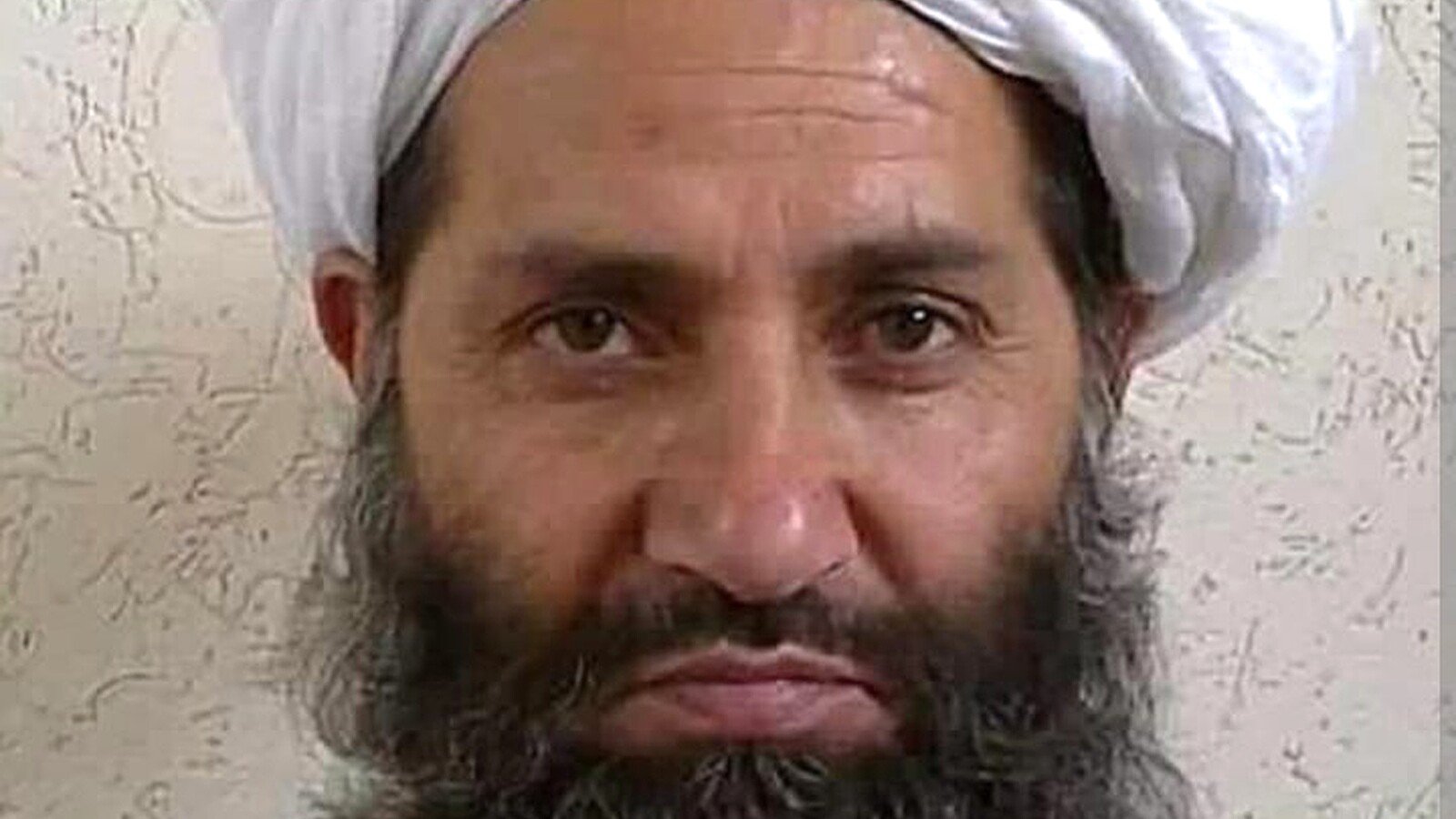




ISLAMABAD: Pakistan is poised to launch a targeted operation to eliminate Mullah Haibatullah Akhundzada, the supreme leader of the Afghan Taliban, if intelligence confirms his precise location, according to reports citing security sources and escalating cross-border hostilities.
The development comes amid a sharp deterioration in Pakistan-Afghanistan relations, driven by persistent attacks attributed to the Tehrik-e-Taliban Pakistan (TTP), which Islamabad accuses Kabul of harboring.
Recent Pakistani airstrikes, described as the largest in scale against Afghan territory, targeted sites in Kabul, Kandahar, and eastern provinces including Nangarhar, Paktia, Paktika, and Laghman on February 27, 2026.
These operations focused on militant infrastructure linked to TTP hideouts, resulting in significant damage, though the Afghan Taliban claimed no major casualties.
Kandahar holds particular significance as the spiritual and operational base for Mullah Haibatullah, who has rarely appeared publicly since assuming leadership in 2016 following the U.S. drone strike that killed his predecessor, Mullah Akhtar Mansour.
Unverified social media claims and Afghan media reports circulated that Mullah Haibatullah was killed or targeted in these strikes, alongside senior commanders, but no official confirmation has emerged from either side.
Pakistan’s defense minister declared an “open war” stance against the Afghan Taliban in response to alleged provocations, underscoring the gravity of the situation.
The TTP, an umbrella militant group with ideological ties to the Afghan Taliban, has intensified attacks inside Pakistan in recent years, killing hundreds of security personnel and civilians.
Pakistan maintains that TTP fighters enjoy sanctuary in Afghan border regions, a charge repeatedly denied by Kabul.
This has led to repeated diplomatic friction, border closures, and military escalations, including fierce clashes in October 2025 that left dozens dead.
Analysts note that Pakistan’s intelligence apparatus, including the Inter-Services Intelligence (ISI), has historically maintained complex relations with Afghan Taliban factions, once providing support during their insurgency against foreign forces.
However, the post-2021 Taliban takeover shifted dynamics, with Islamabad expecting greater cooperation against TTP but facing reluctance from Mullah Haibatullah’s Kandahar-based leadership.
Mullah Haibatullah, a reclusive religious scholar in his late 50s or early 60s, exercises absolute authority over the Taliban, issuing decrees on governance, women’s rights, and foreign policy from Kandahar.
His hardline approach has drawn international criticism, including ICC arrest warrants in 2025 for alleged crimes against humanity related to gender persecution.
Pakistan views him as central to the Taliban’s unwillingness to curb TTP activities, prompting considerations of high-value targeting if actionable intelligence emerges.
Such an operation would mirror past U.S. actions, like the 2016 strike on Mullah Mansour in Pakistan’s Balochistan province, which elevated Mullah Haibatullah.
Security experts highlight that confirmed location intelligence would be critical, given Mullah Haibatullah’s low-profile movements and heavy security.
Pakistan’s military has conducted precision strikes before, but targeting the Taliban supreme leader risks severe retaliation, including escalated TTP attacks or broader Taliban mobilization.
The Afghan Taliban has responded to recent strikes with drone and rocket attacks on Pakistani positions, vowing further defense.
This cycle threatens to spiral into sustained conflict, impacting regional stability in South Asia.
Diplomatic channels remain strained, with little progress in talks mediated by third parties.
Pakistan insists any action would be defensive, aimed at neutralizing threats rather than regime change.
Observers warn that eliminating Mullah Haibatullah could fracture Taliban unity, potentially empowering moderates or hardliners, or invite chaos similar to post-Mansour transitions.
It could also strain Pakistan’s relations with other stakeholders, including China and Gulf states engaging Kabul.
For now, the focus remains on intelligence gathering, with sources indicating readiness for swift action upon verification.
The situation underscores the fragile post-2021 equilibrium, where former allies confront each other over security imperatives.
Pakistan’s security calculus prioritizes border safety, viewing targeted elimination as a potential deterrent against cross-border militancy.
Whether this threshold is crossed depends on the quality of intelligence and the evolving threat landscape.