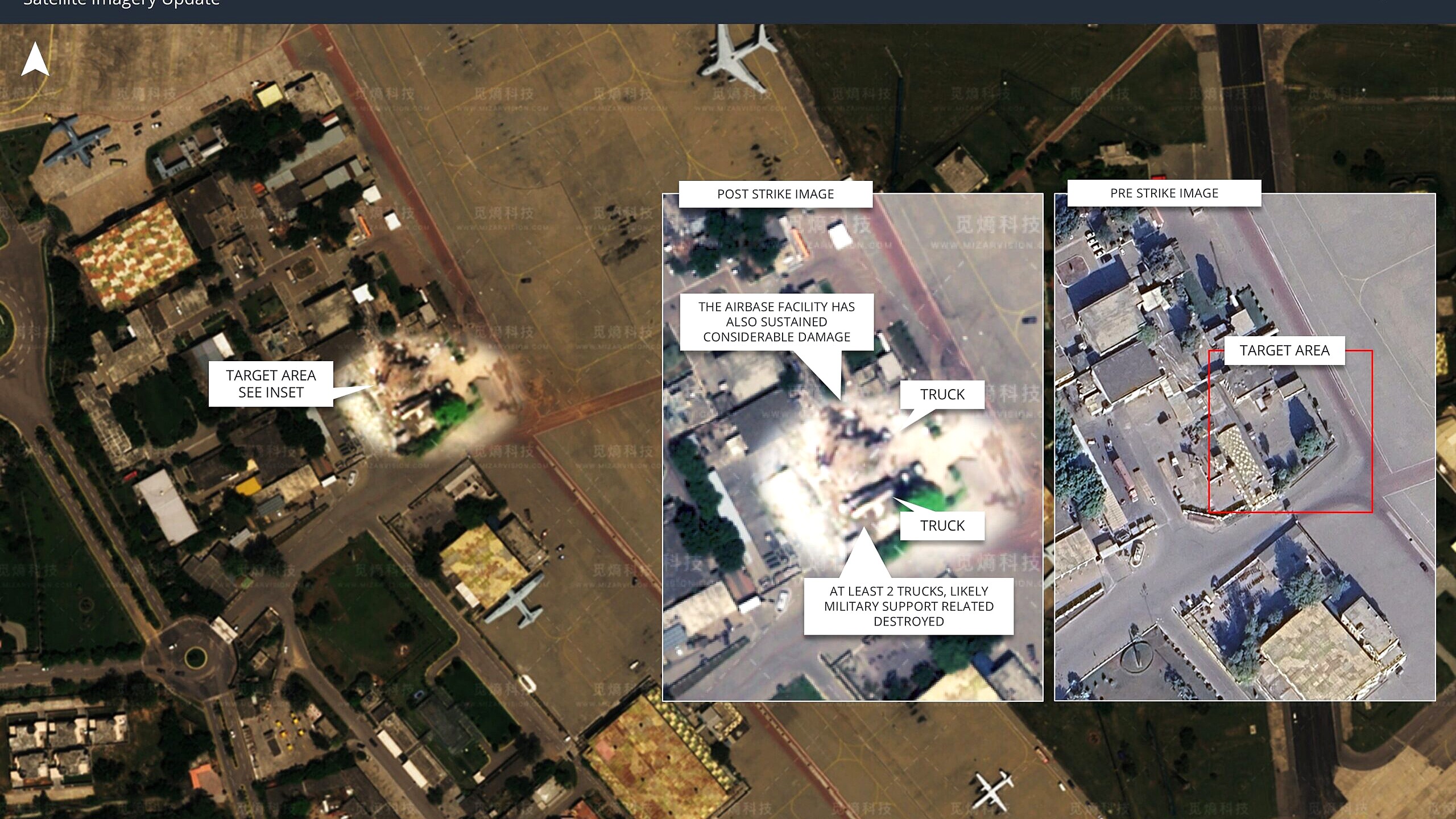




ISLAMABAD: A fabricated narrative alleging Afghan Taliban airstrikes on Pakistan’s strategic Nur Khan Airbase and other military installations has gained traction through social media disinformation and select Indian news channels, despite lacking any credible evidence.
The claim originated from a post by the Afghan Taliban’s Ministry of Defence on social media platforms, describing “precise aerial operations” targeting multiple Pakistani sites, including Nur Khan Airbase in Rawalpindi, the 12 Corps headquarters in Quetta, and locations in Balochistan, Khyber Pakhtunkhwa, and Mohmand.
No supporting proof accompanied the announcement, such as satellite imagery, flight tracking data, ground-level videos, or independent eyewitness accounts from affected areas.
Pakistan’s advanced air defence systems protect key installations like Nur Khan Airbase, located in Chaklala near Islamabad. Local residents and routine activities in Rawalpindi reported no disruptions, intrusions, or explosions consistent with aerial attacks.
The Inter-Services Public Relations (ISPR) has issued no confirmation of any such incident, and silence from official channels aligns with the absence of verifiable damage rather than concealment of success, as alleged by propagators.
Fake accounts, including one styled as “BRICS News,” amplified the story by sharing generic stock images of unrelated airbases and falsely attributing reports to Russian state agency TASS. TASS carried no coverage of the alleged strikes.
Indian media outlets, such as Republic TV in segments on Pakistan-Afghanistan tensions, echoed the claims alongside commentators like Gen D.P. Pandey, framing them as evidence of Pakistani vulnerability without cross-verification.
This pattern reflects a recurring tactic where unconfirmed Taliban boasts follow heavy setbacks in Pakistan’s counter-terrorism efforts, then receive rapid amplification to project weakness in Islamabad.
Reputable international news agencies, including Reuters, BBC, and Associated Press, focused solely on Pakistan’s recent airstrikes inside Afghanistan targeting militant hideouts, with no mention of reciprocal deep strikes by Taliban forces into Pakistani territory.
The Taliban inherited minimal aviation assets after 2021, consisting largely of non-operational or basic helicopters and no known fixed-wing combat aircraft capable of deep penetration missions against defended targets.
Pakistan Air Force maintains layered defences, including surface-to-air missiles and radar surveillance, rendering undetected incursions over major urban centres highly implausible.
Civilian areas near claimed targets, such as Rawalpindi and Quetta, experienced normal operations, with no reports of casualties, structural damage, or emergency responses that would indicate successful attacks.
Propagandists invented details like captured troops, unrest in Karachi and Skardu, and failed Pakistani air defences to embellish the story, tactics common in disinformation campaigns aimed at undermining military morale.
Pakistan’s recent operations inside Afghanistan, including strikes on TTP and affiliated sites, prompted Taliban retaliation claims along the border, but these remained limited to frontier skirmishes rather than deep aerial campaigns.
Defence analysts note that the Taliban’s limited resources and lack of sophisticated drones or jets make coordinated strikes on distant, high-value targets militarily unfeasible without external support, which remains unproven.
The Ministry of Information and Broadcasting’s fact-check unit highlighted the claim as classic propaganda, where a boastful assertion follows losses to portray the adversary as weakened.
No independent verification from neutral observers, satellite firms, or open-source intelligence communities has emerged to support the Taliban’s announcement.
Pakistan’s military continues focused operations against cross-border threats, with emphasis on border security and intelligence-driven actions rather than responding to unverified boasts.
The episode underscores the role of fake pages and biased reporting in escalating perceptions of conflict, often detached from ground realities.
Regional stability hinges on verified information, as amplified falsehoods risk miscalculations amid ongoing border frictions.
Authorities urge reliance on official sources and international credible media for accurate updates on security developments.