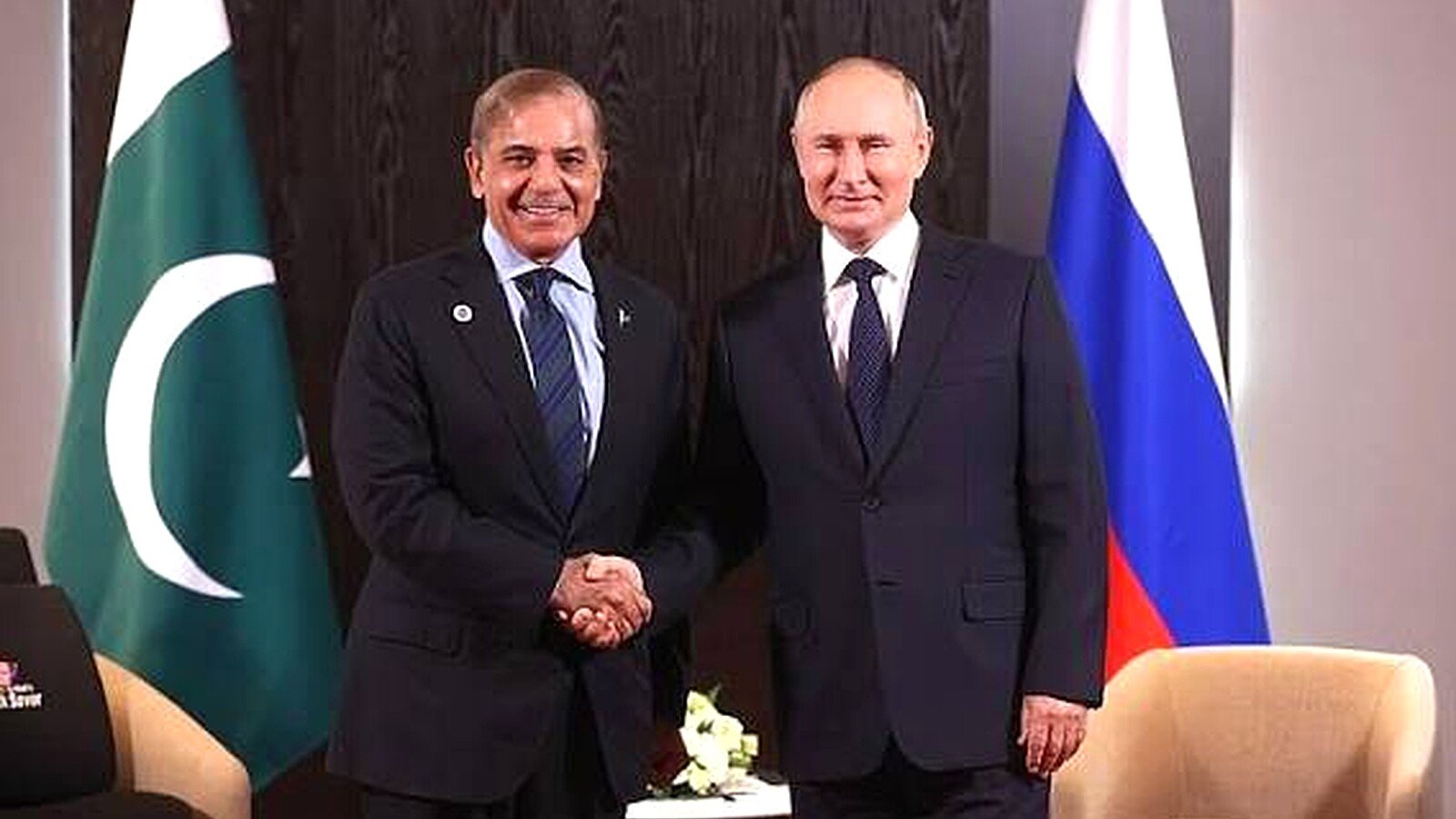




ISLAMABAD: Prime Minister Shehbaz Sharif has postponed his highly anticipated official visit to Russia, originally scheduled for March 3 to 5, citing the prevailing regional and internal situation that demands immediate national attention.
The announcement came through a formal statement from the Prime Minister’s Office on Sunday, highlighting the decision as a prudent step in light of recent developments.
The visit was deemed of great significance for strengthening bilateral relations between Pakistan and Russia, with discussions expected to focus on economic cooperation, energy partnerships, and strategic dialogue.
Russian media had earlier reported the planned dates, indicating preparations for high-level talks potentially involving President Vladimir Putin.
Analysts view the trip as part of Pakistan’s broader efforts to diversify foreign relations amid global geopolitical shifts.
The postponement follows closely on the heels of intensified military operations along the Pakistan-Afghanistan border, where Pakistan launched Operation Ghazab lil-Haq in late February.
This operation was initiated in response to what Pakistani authorities described as unprovoked cross-border aggression by Afghan Taliban forces targeting positions in Khyber Pakhtunkhwa sectors including Chitral, Khyber, Mohmand, Kurram, and Bajaur.
Operation Ghazab lil-Haq, translating to “Wrath for Justice” or “Righteous Fury” in Arabic, involved coordinated airstrikes and ground actions against Taliban military installations in provinces such as Kabul, Kandahar, Paktia, Nangarhar, and Paktika.
Defence officials reported significant results, claiming over 330 Afghan Taliban fighters killed, hundreds injured, and multiple posts destroyed or captured in the initial phases.
The operation marked a sharp escalation in longstanding border tensions, with Pakistan asserting the need to defend its sovereignty against threats linked to militant groups.
Prior incidents, including alleged attacks attributed to Tehreek-i-Taliban Pakistan elements harboured across the border, had already strained relations severely.
The timing of the Russia visit postponement has sparked speculation among strategic observers about underlying diplomatic considerations.
Some analysts suggest the move may reflect efforts to avoid potential friction with major powers, particularly the United States, amid evolving regional dynamics and concerns over international reactions to the border conflict.
Pakistan’s foreign policy has historically balanced relations with both Russia and Western allies, with recent years seeing increased engagement with Moscow through forums like the Shanghai Cooperation Organisation.
The decision to defer the trip underscores the priority given to national security and internal stability during this critical period.
Prime Minister Sharif has convened high-level security meetings to assess the situation, involving provincial chief ministers and military leadership.
These consultations emphasise a unified national response to the multifaceted challenges emerging from the western frontier.
The Prime Minister’s Office reiterated that new dates for the Russia visit would be finalised through mutual consultations with Russian counterparts, signaling continued commitment to deepening ties once conditions permit.
Observers note that the postponement highlights the interconnected nature of Pakistan’s domestic security and foreign engagements.
Regional instability, including cross-border clashes, directly impacts governance and economic priorities, forcing recalibration of diplomatic calendars.
Pakistan and Russia have been working to enhance cooperation in areas such as trade, energy imports, and defence, building on previous high-level interactions.
The planned visit was seen as a milestone in this trajectory, potentially paving the way for concrete agreements.
However, the current border crisis has shifted focus inward, with armed forces engaged in active operations.
Public statements from officials stress that national interests remain paramount, with security considerations overriding scheduled international travel.
The development also comes against a backdrop of broader regional volatility, including developments in the Middle East influencing South Asian calculations.
Pakistan’s response to the Afghan situation has drawn international attention, with calls for restraint from various quarters.
The United States has reportedly acknowledged Pakistan’s right to self-defence in related statements.
As the situation evolves, the government maintains that diplomatic outreach, including with Russia, will resume at an appropriate time.
The postponement reflects a strategic pause rather than a shift in policy direction.
Experts anticipate that once the immediate security threats are addressed, efforts to advance Pakistan-Russia relations will regain momentum.
For now, the leadership remains focused on managing the fallout from Operation Ghazab lil-Haq and ensuring stability along the Durand Line.
This episode illustrates the delicate balance Pakistan navigates in pursuing diversified partnerships while safeguarding territorial integrity.