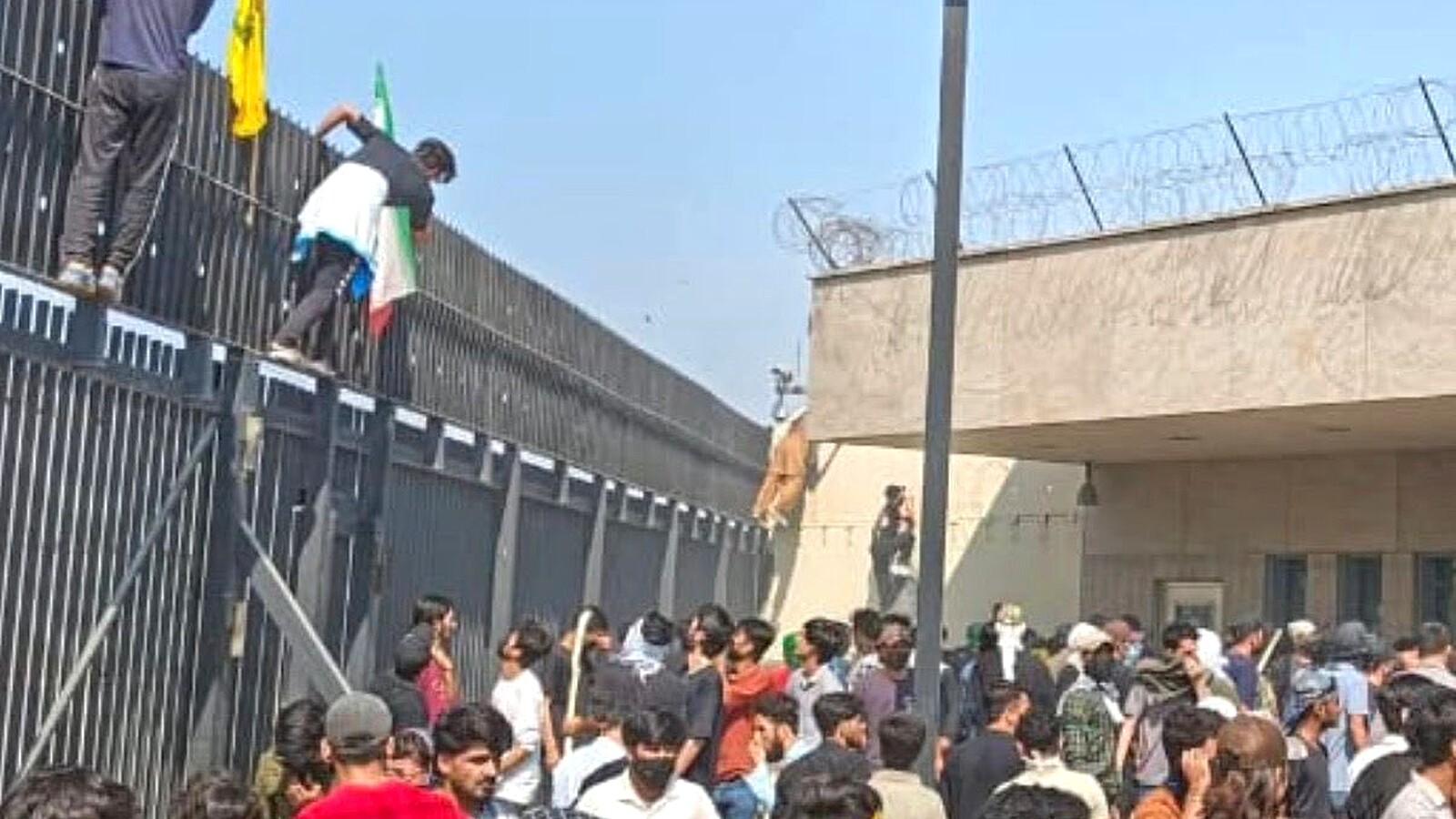




ISLAMABAD: At least nine people were killed and more than 30 injured on Sunday when hundreds of pro-Iran protesters attempted to storm the United States Consulate in Karachi, escalating into violent clashes with police and paramilitary forces.
The incident occurred on Mai Kolachi Road, where demonstrators, primarily from Shia organizations expressing solidarity with Iran, marched toward the consulate following the killing of Iran’s Supreme Leader Ayatollah Ali Khamenei in joint US-Israeli airstrikes the previous day.
Initial reports from rescue services, including the Edhi Foundation, indicated that eight bodies were transferred to Karachi’s civil hospitals, with many victims suffering bullet wounds.
Hospital officials at the Civil Hospital Karachi trauma centre later confirmed the death toll rose to nine after several critically injured succumbed to their injuries.
Dr Mohammad Sabir Memon, executive director of the trauma centre, reported 32 injured persons receiving treatment, highlighting the intensity of the confrontation.
Witness accounts described hundreds of young protesters, some covering their faces, breaching outer security barriers, smashing windows, and setting portions of property ablaze while chanting anti-US and anti-Israel slogans.
Police and Rangers deployed in large numbers responded with tear gas, baton charges, and reportedly live fire to prevent entry into the consular compound.
A senior police official stated that protesters briefly accessed the perimeter but were dispersed, bringing the situation under control after hours of unrest.
The protest formed part of wider demonstrations across Pakistan, including in Lahore and Islamabad, where Shia communities mourned Khamenei’s death and condemned the strikes on Iran.
Shia groups, including those aligned with Millat-e-Jafriya Pakistan traditions, had mobilized rallies to voice outrage over what they termed aggression against Iran and its leadership.
The killing of Khamenei has heightened regional instability, with ripple effects in Shia-majority areas of Pakistan, home to a significant minority sympathetic to Iran’s Islamic Revolution.
Karachi, Pakistan’s largest city and economic hub in Sindh province, has historically witnessed sectarian tensions and protests linked to Middle East conflicts.
Security forces maintained a heavy presence around diplomatic installations, with the US Embassy in Islamabad monitoring developments and issuing advisories to American citizens to avoid crowds and large gatherings.
No immediate casualties were reported among consulate staff or security personnel, though the building sustained damage from stone-throwing and fire.
Protesters had gathered from nearby areas, urged on by speakers condemning foreign intervention in Iranian affairs.
The violence underscores the deep emotional ties between Pakistan’s Shia community and Iran, often leading to street demonstrations during crises involving Tehran.
Authorities have yet to release an official investigation into the exact circumstances of the fatalities, including the use of force by law enforcement.
Rescue workers and medical teams worked under challenging conditions to evacuate the wounded amid ongoing skirmishes.
Dozens of protesters lingered near the site even after dispersal, calling for more to join in solidarity.
This event follows a pattern of protests in Pakistan against perceived Western aggression in the Muslim world, though the scale of casualties marks it as particularly severe.
The US has not issued a detailed statement on the incident, but embassy communications emphasized vigilance in major cities.
Pakistan’s government faces the delicate task of balancing domestic sentiments with diplomatic relations, especially amid broader Middle East volatility.
The death toll and injuries have drawn attention to crowd control measures during high-emotion rallies near sensitive diplomatic sites.
Medical sources noted that many injuries involved blunt trauma from batons alongside gunshot wounds, indicating varied response tactics.
The protest highlights ongoing solidarity movements within Pakistan’s Shia population toward Iran, amplified by recent geopolitical developments.
As investigations continue, the incident serves as a stark reminder of how international conflicts can ignite local unrest in Pakistan’s diverse urban centres.