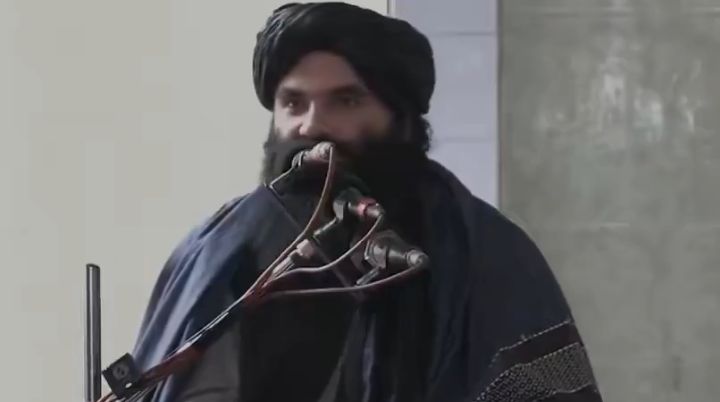




ISLAMABAD: Afghan Interior Minister Sirajuddin Haqqani has described Pakistan as a Muslim nation and a faithful people that have endured significant hardships alongside the Afghan population over many years.
In a recent address delivered during Friday prayers in Khost Province, Haqqani highlighted the shared history of struggles between the two neighbouring countries.
He emphasised that Afghans have faced periods of subjugation and difficult nights together with Pakistanis, contributing to Pakistan’s current position and achievements.
The statement comes against the backdrop of heightened cross-border tensions, including recent military escalations and airstrikes that have led to declarations of open confrontation between Islamabad and the Taliban administration in Kabul.
Haqqani cautioned Pakistan’s current rulers to expand their thinking and outlook, warning that narrow approaches could lead the country in dangerous directions.
He questioned the trajectory of Pakistan’s economy and politics, suggesting that continued actions risk isolating the nation from the global map and regional connectivity.
The minister referred to the rulers seated in power today, urging them to broaden their mindset to avoid steering the country toward isolation.
He described certain moves as weak and advised against them, pointing to the potential long-term consequences for national stability and international standing.
Haqqani made a direct appeal to the Muslim population of Pakistan, its politicians, scholars, and national elders to influence and open the minds of their army.
This call reflects growing concerns over military policies that have strained bilateral relations, particularly amid accusations of militant activities originating from Afghan soil.
He reminded listeners of the asymmetric nature of past conflicts, noting that Afghans fought against global armies and tanks not with matching resources but through the resilience of their people and faith.
The remarks underscore a narrative of shared brotherhood rooted in common religious and historical bonds, even as practical disputes over security and borders persist.
Analysts note that such appeals often aim to address domestic audiences in Afghanistan while pressuring Pakistani decision-makers indirectly.
The timing of Haqqani’s statement coincides with intensified fighting along the Durand Line, where clashes have resulted in casualties and infrastructure damage on both sides.
Pakistan has conducted operations targeting alleged militant hideouts in eastern Afghanistan, prompting strong responses from Taliban officials.
Haqqani’s reference to shared sacrifices recalls the decades of mujahideen resistance against Soviet forces in the 1980s, during which Pakistan provided crucial support and refuge to Afghan fighters.
Millions of Afghan refugees found shelter in Pakistan, and joint efforts contributed to the eventual withdrawal of foreign troops.
However, post-2021 developments have shifted dynamics, with Pakistan accusing the Taliban of failing to curb groups like the Tehrik-i-Taliban Pakistan operating from Afghan territory.
Conversely, Afghan officials have criticised Pakistani military actions as violations of sovereignty.
Haqqani’s plea for wisdom appears aimed at de-escalation through internal reflection in Pakistan rather than direct confrontation.
He positioned the Afghan people as having stood by Pakistan in times of trial, suggesting that current frictions betray that legacy.
The minister’s words also carry a subtle reminder of the Haqqani Network’s historical ties to Pakistani institutions, though recent events have tested those connections.
As tensions mount, regional observers warn that prolonged conflict could exacerbate economic challenges for both nations already grappling with instability.
Pakistan faces mounting security threats from militant attacks, while Afghanistan contends with humanitarian crises and limited international recognition.
Haqqani’s address, while critical of Pakistani leadership, maintains a tone of fraternal advice rather than outright hostility.
He avoided inflammatory ultimatums in this particular statement, focusing instead on appeals to reason and shared values.
The minister’s request to Pakistani civil society elements highlights an attempt to bypass official channels and engage broader societal forces.
Scholars and religious figures in Pakistan have historically played roles in mediating regional issues, including Afghan affairs.
Haqqani’s emphasis on opening minds suggests a desire for policy reconsideration that could restore dialogue.
Dialogue remains a stated priority for the Taliban, with officials repeatedly noting that doors for negotiation stay open despite military exchanges.
The statement reflects the complex interplay of ideology, history, and geopolitics in Pak-Afghan relations.
As the situation evolves, the international community continues to monitor developments closely, urging restraint to prevent further destabilisation in an already volatile region.