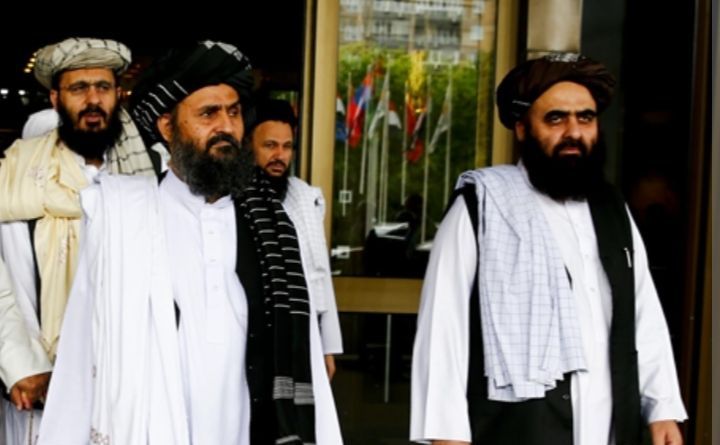




ISLAMABAD: Retired Major General Tariq Rashid, a prominent defence analyst, has asserted that the Afghan Taliban are increasingly acting as proxies for external influences, jeopardising their own stability and regional security. In a recent television appearance on Samaa TV’s programme with Nadeem Malik, the analyst declared that the Taliban’s time in power may soon conclude, potentially leading to their displacement within months.
The statement comes against the backdrop of persistent cross-border militancy and strained bilateral relations between Pakistan and Afghanistan. Major General Rashid emphasised Pakistan’s indispensable role in sustaining Afghanistan’s economy and logistics, describing it as the “lifeline” for the landlocked nation. He argued that the current Taliban leadership fails to recognise this dependency, instead aligning with foreign agendas that undermine mutual interests.
Pakistan has long maintained that the Afghan Taliban provide sanctuary to the Tehreek-e-Taliban Pakistan (TTP), an outlawed militant group responsible for numerous attacks inside Pakistani territory. Official data indicate a significant surge in terrorist incidents since the Taliban’s return to power in 2021, with violence peaking in recent years. Reports from security think-tanks highlight over 600 TTP-linked attacks in 2025 alone, primarily targeting security forces in Khyber Pakhtunkhwa province.
This escalation has prompted Pakistan to conduct targeted airstrikes against suspected TTP hideouts in eastern Afghanistan, including operations in provinces such as Khost, Paktika, and Kunar. Afghan authorities have condemned these actions as violations of sovereignty, claiming civilian casualties and retaliating with border skirmishes. A fragile ceasefire, mediated by Qatar in October 2025, has largely held but remains vulnerable to breakdowns.
Negotiations in Istanbul, involving multiple rounds mediated by Türkiye and Qatar, aimed to establish a joint counter-terrorism mechanism and verify compliance with commitments to curb cross-border activities. However, talks collapsed without resolution, primarily due to disagreements over the Taliban’s handling of TTP sanctuaries. Pakistani officials have repeatedly demanded decisive action against these groups, while the Afghan side denies providing active support.
The Durand Line border continues to serve as a flashpoint, with historical disputes compounded by fencing efforts and militant movements. Pakistan’s military maintains that Afghan soil hosts training camps for TTP fighters, enabling attacks that have resulted in hundreds of security personnel and civilian deaths. United Nations monitoring reports have corroborated concerns about foreign terrorist fighters enjoying greater freedom in Afghanistan post-2021.
Major General Rashid’s analysis underscores a broader strategic shift. He contends that the Afghan Taliban’s apparent subservience to external powers—potentially including regional rivals—has alienated key stakeholders. This dynamic risks isolating the regime further, especially as economic pressures mount due to suspended trade and border closures.
Pakistan’s position remains firm: continued militant activities from Afghan territory threaten national security and necessitate robust responses. Defence officials have warned of potential escalation if safe havens persist, while emphasising dialogue as the preferred path. The analyst’s prediction of the Taliban’s impending downfall reflects growing frustration over unfulfilled commitments made during earlier engagements.
Regional observers note that Afghanistan’s dependency on Pakistan for transit trade, fuel supplies, and humanitarian access cannot be overstated. Disruptions in these channels exacerbate Kabul’s humanitarian challenges, including food insecurity and displacement. Border communities on both sides suffer most from closures, facing livelihood losses and restricted movement.
The Taliban’s ideological affinity with the TTP complicates matters, as shared Pashtun roots and historical ties foster reluctance to confront the group decisively. Yet, failure to address Pakistan’s security concerns perpetuates a cycle of violence that undermines the regime’s legitimacy and invites further isolation.
As tensions persist, the international community monitors developments closely, recognising the potential for wider instability in South Asia. Pakistan’s repeated calls for accountability highlight the need for verifiable actions against transnational threats. Until addressed, the borderlands will remain volatile, with implications extending beyond bilateral relations.
Major General Rashid’s remarks serve as a stark reminder: strategic miscalculations by the Afghan Taliban could accelerate their decline, while Pakistan’s role as a regional stabiliser endures despite challenges. The path forward demands mutual recognition of interdependencies to avert further deterioration.