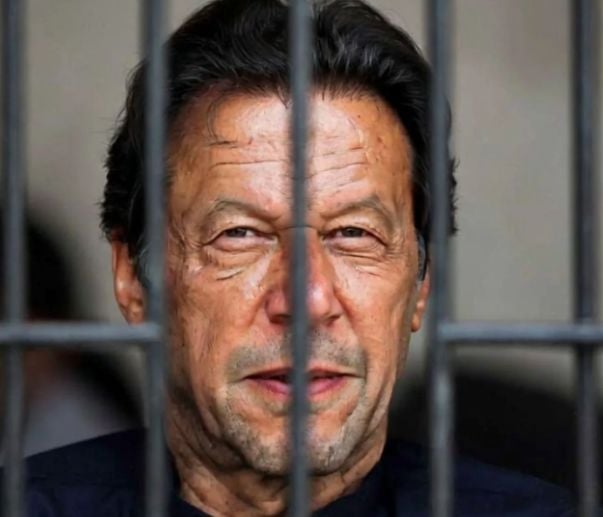




ISLAMABAD: Former prime minister Imran Khan’s prolonged imprisonment has placed Pakistan’s army chief, Field Marshal Asim Munir, in a profound strategic dilemma, where neither keeping the popular leader jailed nor allowing any extreme outcome appears viable without risking severe political backlash.
A recent analysis in The Diplomat highlights this impasse as a classic Catch-22 situation for General Munir. Khan, detained in Adiala Jail since 2023 on multiple charges, remains a potent symbol of resistance against the military’s influence in politics. His continued incarceration fuels public discontent and martyr-like perceptions, while any drastic action against him could ignite widespread unrest.
The roots of this tension trace back to 2019, when Khan, as prime minister, removed then-Lieutenant General Asim Munir from his post as director-general of the Inter-Services Intelligence (ISI) after only eight months. This decision stemmed from reported disagreements over intelligence matters. Munir was reassigned to a corps command in Gujranwala, a move that many observers saw as a demotion. The episode laid the foundation for enduring animosity.
Khan’s ouster through a no-confidence vote in April 2022 escalated the rift. He accused the military establishment, including Munir—who assumed the army chief role in November 2022—of engineering his removal and subsequent legal troubles. Protests following Khan’s initial arrest in May 2023 marked a historic breach, with demonstrators attacking military installations for the first time in Pakistan’s history.
Khan’s health has become a central flashpoint. Family members, including his sisters, have alleged mistreatment in prison, claiming deliberate denial of proper medical care under directives linked to the army chief. Reports indicate issues such as retinal vein occlusion in one eye and overall deterioration. Khan has repeatedly stated from jail that if anything happens to him, General Munir would bear responsibility.
In recent messages conveyed through social media, Khan has labeled Munir as “mentally unstable” and the “most tyrannical dictator” in Pakistan’s history. He accused the army chief of lust for power, moral decline, and policies that have buried the constitution and rule of law. These statements, often released via party channels, intensify scrutiny on the military’s role.
The military’s response has been firm. Spokespersons have dismissed Khan’s criticisms as attempts to sow division between the armed forces and the public. In one instance, following a Khan post attacking Munir, a lengthy press conference described the jailed leader as a national security threat. The army has emphasized its commitment to stability amid rising militancy and regional challenges.
Analysts point to historical precedents that inform Munir’s caution. Past military leaders faced severe consequences for actions against prominent Punjabi figures. For instance, former prime minister Nawaz Sharif was permitted medical treatment abroad in 2019 to avoid backlash in Punjab, the army’s primary recruitment base. Similarly, earlier operations under previous chiefs led to long-term instability.
Pakistan’s Punjab province remains critical. As the largest province and the main source of military personnel, any perceived harm to a Punjabi leader like Khan—whose support base includes significant segments there—could erode institutional legitimacy and recruitment.
The 26th Constitutional Amendment, passed amid allegations of coercion, granted greater control over judicial appointments and extended powers to the military leadership. Critics, including Khan in open letters, argue it was designed to suppress dissent and rig electoral processes. Khan has claimed his cases face undue pressure, with judges operating under intimidation.
Despite these measures, Khan’s Pakistan Tehreek-e-Insaf (PTI) retains substantial popularity. Supporters view his detention as political victimization rather than accountability. Economic challenges, including inflation and instability, compound public frustration, linking grievances to the military’s perceived overreach.
International attention has grown. Reports reference U.S. concerns over human rights and transnational repression. Khan’s global profile as a former cricket star and philanthropist amplifies scrutiny on his conditions.
The Diplomat article argues that containing Khan may inadvertently build his legend. Prolonged detention ties his fate to national stability, making his health a barometer for political calm. Elimination, it warns, could unleash a crisis the state might not survive, drawing parallels to past miscalculations.
Munir’s promotion to Field Marshal and role as Chief of Defence Forces under recent amendments reflect consolidated authority. Yet, this power operates against a backdrop of persistent Khan-led opposition.
Observers note that Khan has rejected reported political deals for release, insisting on justice over compromise. Government aides claim offers were made but declined.
This standoff underscores deeper questions about civil-military relations in Pakistan. The military’s institutional strength contrasts with growing public demands for democratic norms.
As political polarization deepens, the Catch-22 persists: Khan alive in prison sustains opposition momentum, while any other scenario risks explosive consequences. The coming months will test whether the establishment can navigate this without further eroding public trust.