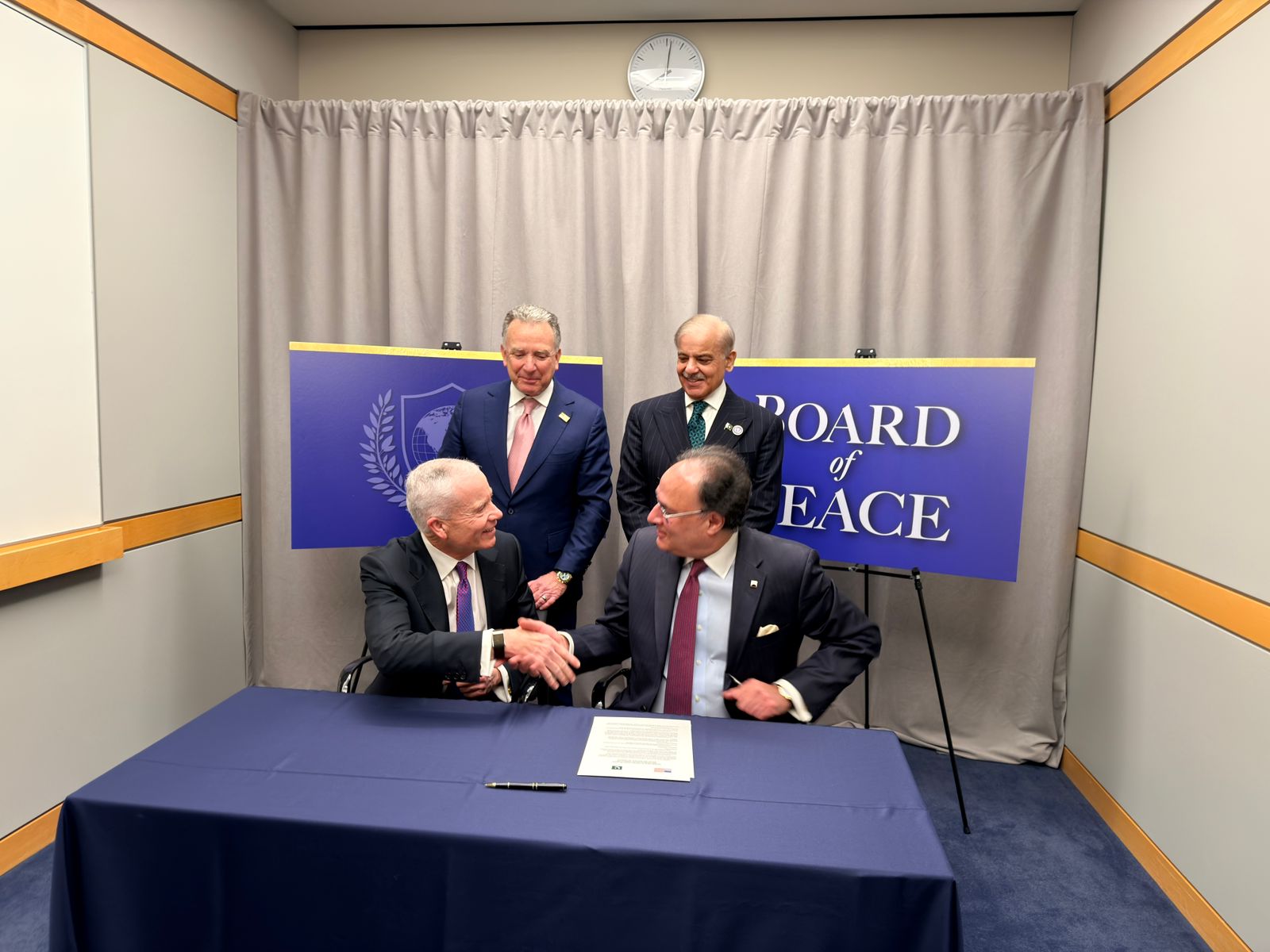




ISLAMABAD: Pakistan and the United States have signed a Memorandum of Understanding to jointly redevelop the historic Roosevelt Hotel in New York, a move that has sparked calls for greater parliamentary oversight amid concerns over transparency in foreign agreements.
The agreement, finalized in Washington on February 19, 2026, establishes a structured framework for cooperation on the operation, maintenance, renovation, and redevelopment of the century-old property located in Midtown Manhattan near Grand Central Terminal and Times Square.
Pakistan’s Finance Ministry described the MoU as a strategic economic initiative undertaken in collaboration with the US General Services Administration. It aims to secure maximum value for the asset while aligning with the government’s ongoing privatization strategy.
The deal was executed by US GSA Administrator Edward C. Forst and Pakistan’s Finance Minister Muhammad Aurangzeb. Prime Minister Shehbaz Sharif and US Special Envoy Steve Witkoff witnessed the signing ceremony.
Officials emphasized that the MoU creates a time-bound mechanism for joint evaluation of technical, commercial, and economic parameters. This approach seeks to reduce execution risks associated with New York’s complex zoning and municipal regulations.
The Roosevelt Hotel, a landmark property, has been owned by Pakistan since Pakistan International Airlines acquired full control following an initial lease in 1979. The hotel ceased operations as a luxury establishment at the end of 2020 due to the Covid-19 pandemic.
Previously, the property served temporarily to house migrants under an arrangement with New York City authorities. Its prime location has long positioned it as one of Pakistan’s most valuable overseas assets.
The initiative forms part of Islamabad’s broader efforts to restructure and privatize state-owned entities. This process remains central to Pakistan’s $7 billion economic programme agreed with the International Monetary Fund.
Privatization and asset optimization are viewed as essential steps toward addressing fiscal challenges and unlocking economic potential from underutilized holdings.
The MoU does not specify financial terms or constitute a final transaction. Instead, it facilitates due diligence, feasibility assessments, and regulatory coordination between the two governments.
Pakistan’s Ministry of Defence is also involved in facilitating the project alongside the GSA, highlighting the inter-agency nature of the cooperation.
The announcement has drawn criticism from opposition figures. PPP stalwart and former Senate chairman Raza Rabbani stated on February 20, 2026, that the deal must be placed before Parliament for scrutiny.
In a press release, Rabbani argued that such significant agreements involving prime national property should not proceed without public or parliamentary confidence. He described the Roosevelt Hotel as a “prime property” requiring transparent dealings.
Rabbani pointed out that an earlier US-related deal concerning minerals in Balochistan was exposed by international media, yet its details remain undisclosed to this day.
He urged the PPP to introduce a private member’s bill mandating parliamentary ratification for all foreign agreements once signed. Rabbani noted that he had previously moved a similar bill during his tenure in the Senate.
Critics argue that bypassing legislative oversight risks undermining accountability in matters of national economic interest. Proponents of the deal counter that the MoU represents a non-binding step toward mutually beneficial progress.
The partnership is seen as strengthening bilateral economic ties between Pakistan and the United States. It reflects shared commitment to disciplined and transparent advancement on high-value projects.
Real estate analysts estimate the Roosevelt Hotel’s redevelopment potential at over $1 billion, given its strategic Manhattan location and historical significance.
The property, named after former US President Theodore Roosevelt, has been dubbed the “New Ellis Island” in past references due to its role in temporary migrant accommodations.
Pakistan’s government maintains that the collaboration will enhance regulatory clarity and maximize transaction value without immediate sale of the asset.
Observers note that successful redevelopment could generate substantial revenue for the exchequer while preserving ownership under a joint venture model involving equity and debt financing.
The deal underscores Islamabad’s push to engage international partners in revitalizing dormant assets amid domestic economic pressures.
As discussions progress, the focus remains on ensuring that any future steps prioritize national interest and institutional transparency.
The Roosevelt Hotel initiative may set a precedent for similar collaborations on other Pakistani overseas properties.
Parliamentary debate on the matter could intensify in coming sessions, particularly if opposition parties pursue legislative measures for greater oversight.