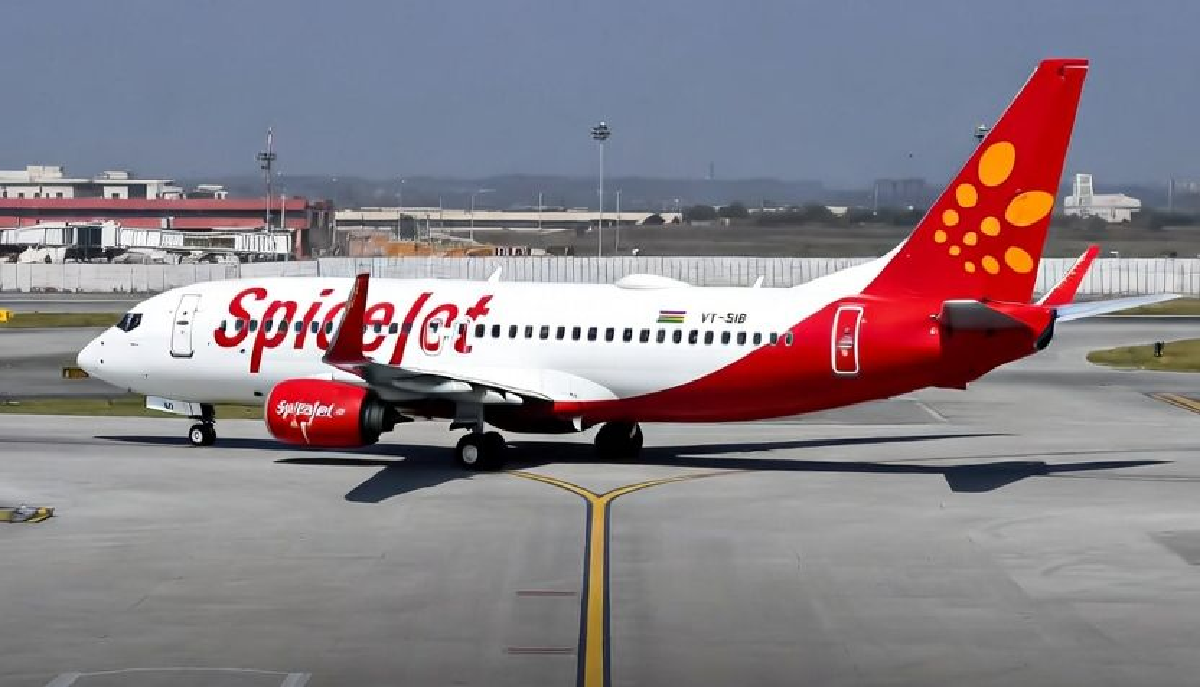




ISLAMABAD: Bangladesh Prime Minister Tarique Rahman has initiated measures perceived as anti-India, highlighted by the recent barring of Indian budget airline SpiceJet from using Bangladeshi airspace over unpaid dues, forcing rerouting of flights and raising operational costs.
The decision by the Civil Aviation Authority of Bangladesh (CAAB) to restrict SpiceJet’s access to its airspace came into effect recently, following prolonged non-payment of air navigation charges, landing fees, parking fees and other related dues. Reports indicate the outstanding amount exceeds $5 million, approximately Rs 42 crore, accumulated over several years despite repeated reminders and negotiations.
This restriction compels SpiceJet to adopt longer alternative routes for affected flights, particularly those originating from Kolkata to destinations such as Guwahati in India’s northeast. The detours add significant flying time, often up to 30 minutes or more per sector, resulting in higher fuel consumption and increased operational expenses for the already financially strained carrier.
SpiceJet has acknowledged the issue and stated that it remains in regular dialogue with Bangladeshi authorities to resolve the matter swiftly. A spokesperson emphasized that the airline’s broader operations remain unaffected, though the rerouting impacts specific regional services reliant on the shorter overflight path through Bangladesh.
The move arrives amid evolving bilateral dynamics under Prime Minister Tarique Rahman’s leadership. Rahman, who assumed office following a decisive electoral victory for the Bangladesh Nationalist Party (BNP), has emphasized a “Bangladesh first” foreign policy approach. He has repeatedly stated that national interests will guide relations with neighbors, including India, without overt hostility.
During the preceding interim administration led by Muhammad Yunus, ties with India deteriorated markedly, marked by heightened anti-India narratives, criticism of bilateral agreements and actions perceived as favoring Pakistan. The period saw strained economic cooperation, security concerns and public rhetoric that strained trust.
Rahman’s government has signaled intentions to stabilize and repair relations. Invitations were extended for Indian representatives to attend his swearing-in, and steps are underway to restore visa services disrupted earlier. Analysts note Rahman’s careful avoidance of inflammatory anti-India rhetoric during the campaign and post-election phase, contrasting with elements from the prior regime.
Despite this, the SpiceJet airspace restriction has drawn attention as an early test of the new administration’s stance on practical bilateral matters. Aviation experts point out that Bangladesh’s airspace provides a critical shortcut for flights connecting eastern India to the northeast, avoiding lengthy detours over the Bay of Bengal or other paths.
The ban on SpiceJet is specific to the airline’s dues default and does not extend to other Indian carriers, which continue normal overflights. This targeted enforcement underscores enforcement of financial obligations rather than a blanket policy against Indian aviation.
Broader implications for India-Bangladesh relations include potential effects on trade, connectivity and people-to-people ties. The northeast region’s access to mainland India relies partly on efficient air routes, and prolonged disruptions could influence regional logistics.
Economic linkages remain vital. Bangladesh benefits from Indian raw materials for its garment sector, while India gains from transit and trade opportunities. Reversing damages from the interim period requires mutual effort, including addressing outstanding issues like river water sharing, border management and minority safety.
Observers suggest Rahman’s administration may prioritize pragmatic diplomacy to revive mutual benefits. His emphasis on independence from both Delhi and Rawalpindi reflects a balanced posture, avoiding escalation while safeguarding sovereignty.
The SpiceJet incident, while commercial in nature, occurs against this geopolitical backdrop. It highlights how financial disputes can intersect with diplomatic relations, potentially amplifying perceptions of friction.
As negotiations proceed, resolution of the dues could pave the way for normalized overflight access. Meanwhile, the episode serves as a reminder of the interconnectedness of economic obligations and bilateral stability in South Asia.
Rahman faces the challenge of balancing domestic nationalist expectations with the necessities of regional cooperation. Sustained dialogue with India will be essential to prevent minor issues from escalating into larger diplomatic strains.
The development underscores the need for robust mechanisms to handle such disputes, ensuring they do not undermine the strategic partnership that has historically benefited both nations.