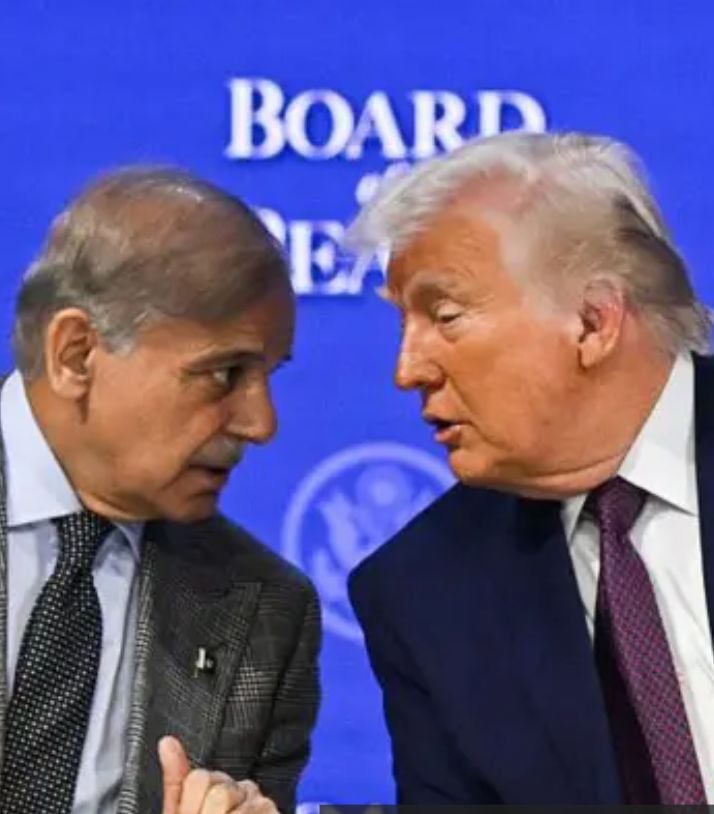




ISLAMABAD: Pakistan appears to be moving closer to a landmark foreign policy decision as signals emerging from high-level engagements in Washington and Munich suggest that Islamabad may be weighing participation in a proposed multinational “Gaza Force,” amid mounting diplomatic pressure and evolving regional alignments.
The development comes at a sensitive moment in global politics. Prime Minister Shehbaz Sharif is currently in the United States for crucial talks with American officials, while earlier this month Chief of Army Staff General Asim Munir held key discussions with the US Secretary of State on the sidelines of the Munich Security Conference. Though no formal announcement has been made, statements by senior Pakistani ministers in recent weeks have hinted that Islamabad could consider contributing troops to an international stabilisation force if certain conditions are met.
The proposal for a multinational presence in Gaza has gained traction following renewed calls in Western capitals for a post-conflict security arrangement that could oversee humanitarian corridors, reconstruction efforts and civil order. Washington has reportedly been consulting several Muslim-majority countries to assess their willingness to contribute forces under a UN-backed or regionally endorsed framework.
Diplomatic sources suggest that Pakistan, given its longstanding participation in United Nations peacekeeping missions, is being viewed as a credible and experienced contributor. According to UN data, Pakistan remains one of the largest troop-contributing countries to peacekeeping operations globally, with thousands of personnel deployed across Africa and other regions over the past decades.
However, the Gaza proposal is qualitatively different. Unlike traditional blue-helmet missions, the envisaged force would operate in a highly volatile and politically sensitive environment. Any deployment would require parliamentary approval and a clearly defined mandate to avoid entanglement in direct hostilities.
During his engagements in Washington, Prime Minister Shehbaz Sharif is believed to have discussed broader regional security cooperation, economic assistance and Pakistan’s role in stabilising conflict zones. Officials familiar with the matter indicate that the United States is keen to build a coalition of Muslim-majority states to lend legitimacy to any future arrangement in Gaza, thereby reducing perceptions of unilateral Western intervention.
Earlier, at the Munich Security Conference, General Asim Munir’s meeting with the US Secretary of State reportedly focused on counterterrorism cooperation, regional stability and defence ties. Observers note that the sequencing of military and civilian engagements underscores the strategic nature of the discussions.
Public remarks by Pakistani ministers have further fueled speculation. Some have stated that Pakistan would “not shy away from its responsibilities” toward the Muslim world, while simultaneously emphasising that any decision would be guided by national interest and parliamentary consensus. The language suggests careful calibration — balancing domestic sensitivities with international expectations.
Analysts argue that Islamabad faces a complex matrix of considerations. On one hand, participation could strengthen ties with Washington at a time when Pakistan is seeking economic relief and enhanced bilateral cooperation. The United States remains a critical partner in areas ranging from trade to security assistance.
On the other hand, deploying troops to Gaza carries significant political risks. Public opinion in Pakistan has been deeply sympathetic to the Palestinian cause, and any perception of aligning too closely with US strategic objectives could provoke domestic backlash. The government would need to clearly articulate the humanitarian and stabilisation mandate of any mission to secure public support.
Regional dynamics also play a decisive role. Reports indicate that other Muslim-majority countries are being approached for potential contributions. If a broad coalition materialises — potentially including states from the Gulf and Southeast Asia — Pakistan may find greater political cover in joining a collective framework rather than acting alone.
Security experts caution that the operational environment in Gaza would pose extraordinary challenges. Urban warfare, fragmented armed groups and unresolved political questions would complicate any peace enforcement role. Without a durable ceasefire and political settlement, even a well-intentioned force could face mission creep.
Economically, Pakistan’s capacity to sustain an overseas deployment is another factor. While peacekeeping missions often include UN reimbursements, a bespoke coalition arrangement may require negotiated funding mechanisms. Given Islamabad’s fiscal constraints, cost-sharing and logistical support would be critical elements of any final decision.
For Washington, engaging Pakistan aligns with a broader strategy of burden-sharing. American policymakers have increasingly emphasised multilateral approaches to conflict stabilisation. Encouraging Muslim-majority states to take visible roles could help mitigate accusations of external imposition and foster regional ownership.
Yet, despite mounting signals, officials maintain that no formal commitment has been made. Government sources insist that discussions remain exploratory and contingent on international consensus, legal frameworks and ground realities in Gaza.
The coming days may prove decisive. Prime Minister Shehbaz Sharif’s engagements in Washington are expected to clarify the extent of American expectations, while follow-up diplomatic consultations could determine whether a structured proposal is placed before Pakistan’s parliament.
If Islamabad ultimately commits troops, it would mark one of the most consequential foreign policy decisions in recent years — redefining Pakistan’s role in Middle Eastern security dynamics and potentially reshaping its strategic relationship with the United States.
For now, the question remains open. But the convergence of diplomatic signals, ministerial hints and high-level military talks suggests that Pakistan is no longer a distant observer in the evolving Gaza equation.